


- Home » How to Apply UAN Fertilizer for Maximum...
How to Apply UAN Fertilizer for Maximum Crop Yield
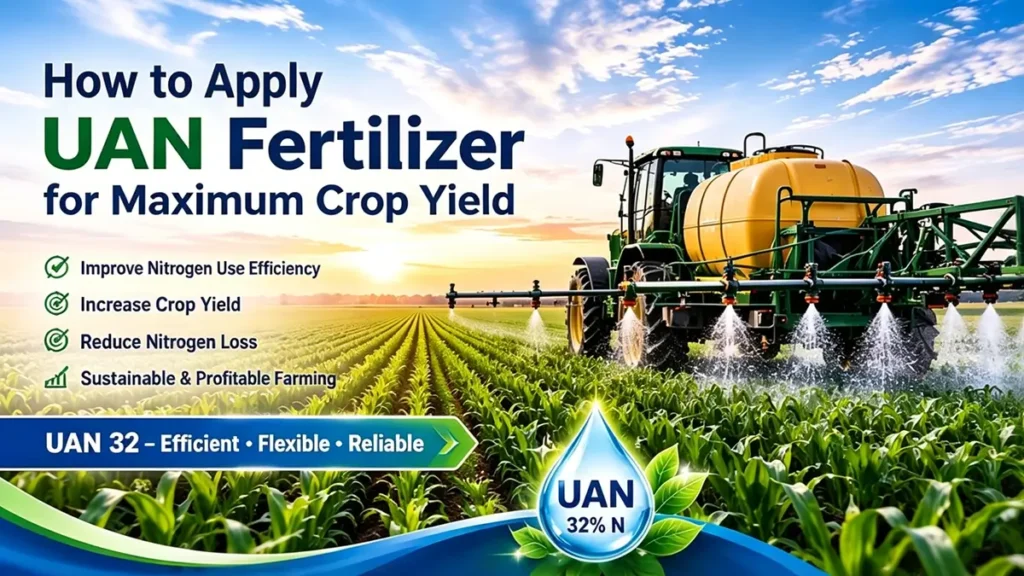
Nitrogen is the primary driver of vegetative growth and yield formation in modern agriculture. Among nitrogen fertilizer options, UAN fertilizer (Urea Ammonium Nitrate solution) has become widely adopted due to its flexibility, compatibility with precision farming systems, and efficient nutrient delivery.
Many growers search for practical guidance such as how to apply UAN 32 fertilizer for corn yield increase, best time to apply liquid nitrogen fertilizer, or UAN side-dress application methods for wheat. This guide consolidates these practices into a structured agronomic approach.
With proper management, UAN can significantly improve nitrogen use efficiency (NUE), reduce nutrient loss, and enhance crop productivity across corn, wheat, rice, vegetables, and oilseed crops.
Table of Contents
- 1. What Is UAN Fertilizer?
- 2. Why Proper UAN Application Matters
- 3. Nitrogen Forms in UAN and Their Functions
- 4. Best Application Methods for UAN Fertilizer
- 5. Optimal Timing for Maximum Yield
- 6. Crop-Specific UAN Strategies
- 7. Recommended UAN Application Rates
- 8. Improving Nitrogen Use Efficiency (NUE)
- 9. Common Mistakes to Avoid
- 10. Environmental Considerations
- 11. Why UAN Is a Preferred Nitrogen Source
- 12. Conclusion
1. What Is UAN Fertilizer?
UAN (Urea Ammonium Nitrate) is a liquid nitrogen fertilizer solution composed of urea, ammonium nitrate, and water.
Common grades include:
| Grade | Nitrogen Content |
|---|---|
| UAN 28 | 28% N |
| UAN 30 | 30% N |
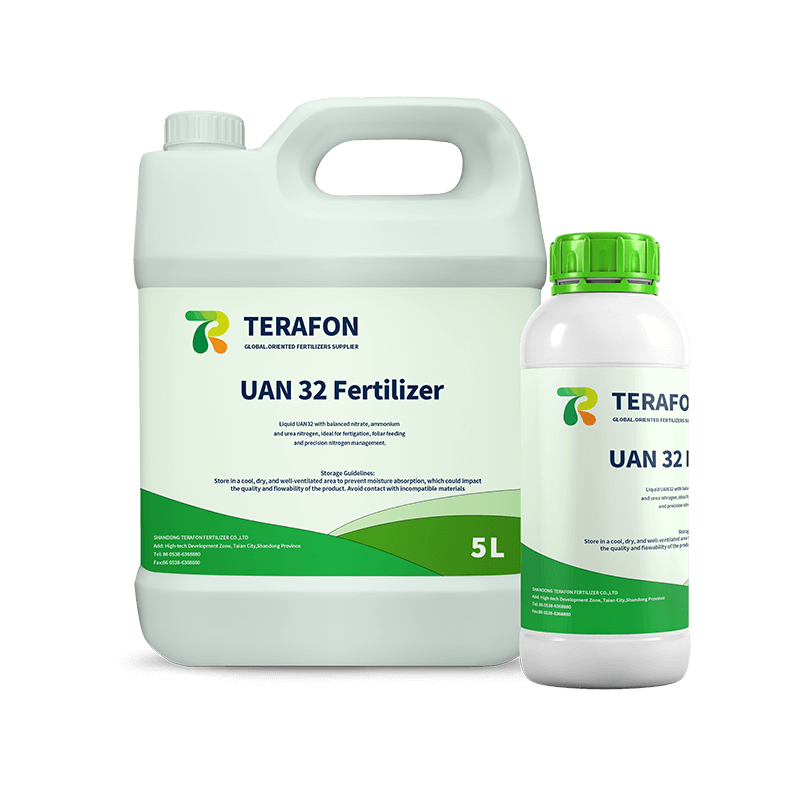
| UAN 32 | 32% N |
Among them, UAN 32 solution fertilizer for high-yield crop production is the most widely used in commercial agriculture due to its high nutrient concentration.
Nitrogen Forms in UAN:
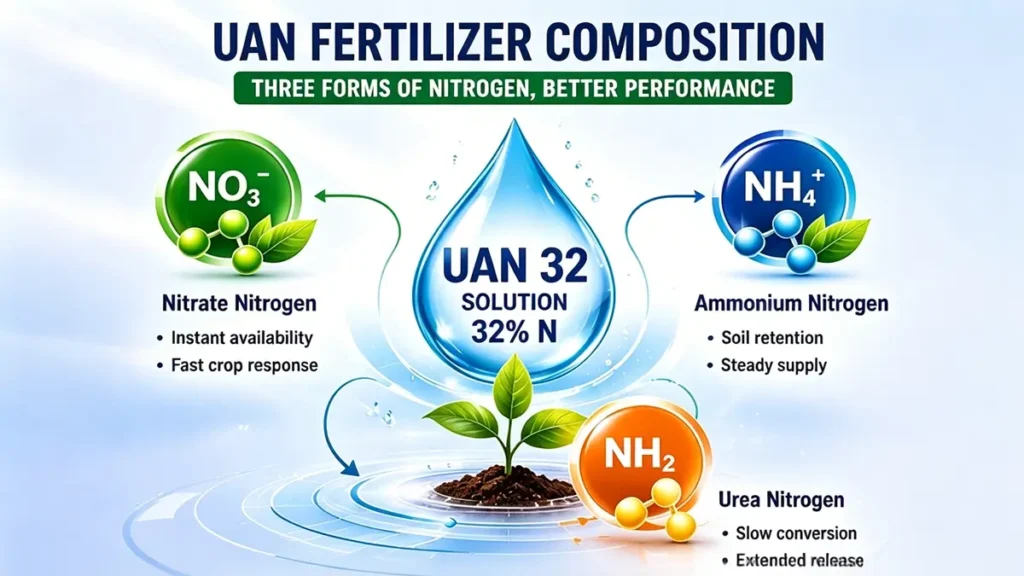
- Nitrate (NO₃⁻) – immediately available
- Ammonium (NH₄⁺) – soil-retained and stable
- Urea (NH₂) – slow conversion, extended release
This combination supports both fast crop response and sustained nitrogen supply throughout the growing season.
2. Why Proper UAN Application Matters
Nitrogen is highly mobile in soil and prone to losses. Improper application can reduce efficiency and increase environmental impact.
Common nitrogen losses include:- Ammonia volatilization
- Nitrate leaching
- Denitrification
- Surface runoff
For growers searching how to reduce nitrogen loss from UAN fertilizer application, the key factors are timing, placement, and weather conditions.
Proper application improves:- Yield stability
- Fertilizer efficiency
- Cost reduction per hectare
- Environmental sustainability
3. Nitrogen Forms in UAN and Their Functions
Nitrate Nitrogen
Fast uptake, supports early growth and greening response.
Ammonium Nitrogen
Binds to soil particles, reducing leaching and providing stable supply.
Urea Nitrogen
Converted by soil microbes, extending nitrogen availability over time.
This balanced nitrogen structure makes UAN ideal for split nitrogen application programs in field crops.
4. Best Application Methods for UAN Fertilizer
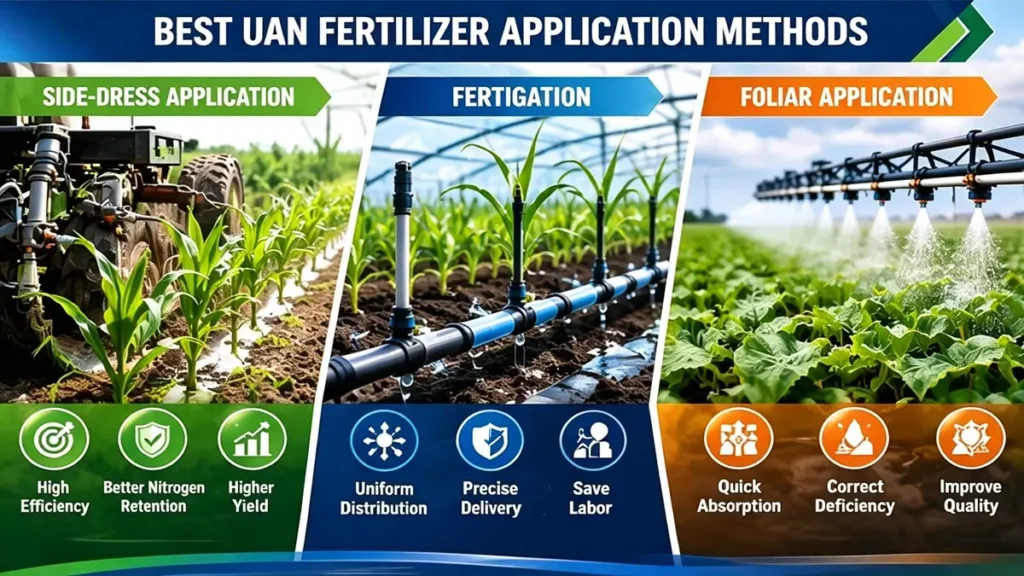
1. Pre-Plant Application
Applied before sowing to build early soil nitrogen supply.
Best for:- Corn
- Wheat
- Rice
Best practice: Incorporate into soil to reduce volatilization.
2. Side-Dress Application (High Efficiency Method)
Applied beside crop rows during active growth.
Common search intent: best side-dress timing for UAN fertilizer in corn V6 stage
Benefits:- Matches crop demand
- Reduces nitrogen loss
- Improves NUE and yield
Injection or banding is more efficient than surface broadcasting.
3. Fertigation (Precision Agriculture Use)
Applied through irrigation systems such as:
Advantages:
- Drip irrigation
- Sprinkler systems
- Center pivot systems
Advantages:
- Uniform distribution
- Reduced labor cost
- Precision nutrient delivery
4. Foliar Application
Used for quick correction of nitrogen deficiency.
Best practice:- Apply in early morning or late afternoon
- Avoid high temperature conditions
- Use diluted solution
5. Optimal Timing for Maximum Yield
Timing is critical in UAN fertilizer management for maximum crop yield.
Split Application Strategy
Instead of one large dose:
Benefits:
- Apply nitrogen in multiple stages
- Align with crop growth stages
Benefits:
- Higher nitrogen recovery
- Reduced leaching risk
- Improved yield consistency
Critical Growth Stages
Corn
Wheat
Rice
- V4–V8 stage (peak nitrogen demand)
- Pre-tasseling stage
Wheat
- Tillering
- Stem elongation
Rice
- Tillering
- Panicle initiation
6. Crop-Specific UAN Application Strategies
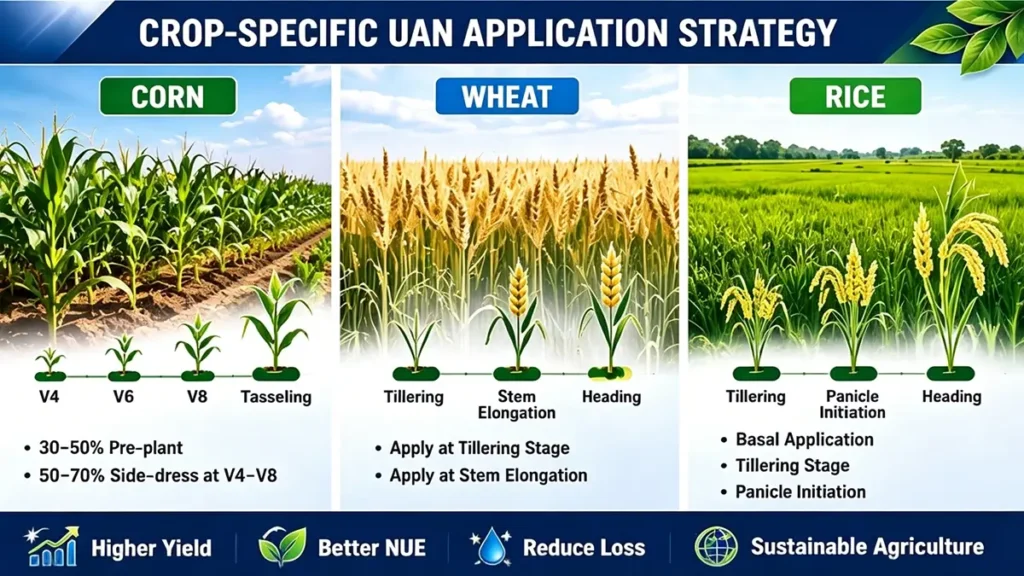
Corn
Typical strategy:
- 30–50% pre-plant
- 50–70% side-dress (V4–V8 stage)
Wheat
- Split into planting, tillering, and jointing stages
Oilseed Crops (Canola, Sunflower)
- Early vegetative stage focus
- Avoid excessive late nitrogen
Vegetables
Often applied via fertigation for:
- Higher quality produce
- Precise nutrient control
7. Recommended UAN Application Rates
Rates vary based on soil test, yield target, and climate.
| Crop | Typical Rate |
|---|---|
| Corn | 150–250 kg/ha |
| Wheat | 100–200 kg/ha |
| Rice | 120–220 kg/ha |
| Soybeans | 80–150 kg/ha |
| Vegetables | 100–200 L/ha |
8. Improving Nitrogen Use Efficiency (NUE)
To maximize efficiency:
- Apply close to crop demand timing
- Use split applications
- Inject or incorporate into soil
- Use urease and nitrification inhibitors
- Adopt precision agriculture tools
These practices are essential for high-efficiency nitrogen fertilizer management systems.
9. Common Mistakes to Avoid
- Applying before heavy rainfall
- Surface broadcasting without incorporation
- Over-application during heat stress
- Ignoring soil test results
10. Environmental Considerations
Proper UAN management supports:
- Reduced nitrate leaching
- Lower greenhouse gas emissions
- Improved groundwater protection
- Sustainable crop production systems
11. Why UAN Is Becoming the Preferred Nitrogen Source
UAN is widely used due to:
- Compatibility with precision farming equipment
- Flexibility in application methods
- Efficiency in large-scale farming operations
- Consistent nitrogen delivery throughout crop growth
12. Conclusion
UAN fertilizer is one of the most efficient nitrogen sources for modern agriculture when applied correctly. Success depends on timing, placement, split application strategy, and nitrogen efficiency management.
By adopting precision agriculture practices and improving nutrient stewardship, growers can achieve higher yields while reducing nitrogen loss.
For consistent quality and agronomic support, Terafon Fertilizer remains committed to providing reliable nitrogen fertilizer solutions for global agriculture.
Frequently Asked Questions (FAQ)
It is used as a liquid nitrogen source to support crop growth and improve yield.
Early growth stages and split applications aligned with crop demand.
UAN provides more flexible application and better precision farming compatibility.
Yes, it is widely used in fertigation systems.
Related Articles
Get a Catalog & Best Price
Recommended Fertilizers
UAN 32 Fertilizer
Standard Granular NPK Fertilizer
Urea Fertilizers
Nitrogen Fertilizers
Suitable Crops
Cereal Crop

Leafy & Fruiting Vegetables

Oil Crops

Fruit Crops
Best UAN Fertilizer for Tomato Plants
Learn how to use UAN (Urea Ammonium Nitrate) fertilizer for tomatoes to improve nitrogen efficiency, promote healthy growth, and increase yield and fruit quality. Discover proper application methods, dosage, and feeding schedules for home gardens, greenhouses, and commercial production.
