- Home » What Is Controlled-Release Fertilizer....
What Is Controlled-Release Fertilizer? Types, Benefits, and How It Works
Controlled-release fertilizer (CRF) is designed to regulate when and how quickly plant nutrients become available after application. Unlike conventional soluble fertilizers, which can release nutrients rapidly when exposed to moisture, controlled-release fertilizers gradually supply nutrients over a defined period.
This technology is commonly used in field crops, horticulture, greenhouse production, turf, nursery plants, and specialty crops. Terafon Fertilizer provides controlled-release fertilizer solutions designed for different crop nutrition requirements, including NPK controlled-release formulations and polymer-coated fertilizer products.
Table of Contents
- 1. What Is Controlled-Release Fertilizer?
- 2. How Does Controlled-Release Fertilizer Work?
- 3. Controlled-Release vs Slow-Release Fertilizer
- 4. Types of Controlled-Release Fertilizer
- 5. Polymer-Coated Urea and NPK Fertilizer
- 6. What Factors Affect Nutrient Release?
- 7. How Long Does Controlled-Release Fertilizer Last?
- 8. Benefits and Limitations of Controlled-Release Fertilizer
- 9. Applications of Controlled-Release Fertilizer
- 10. How to Choose a Controlled-Release Fertilizer
- Conclusion: Choosing the Right Seaweed Fertilizer Partner
1. What Is Controlled-Release Fertilizer?
Controlled-release fertilizer is a fertilizer formulated to control the rate, pattern, and duration of nutrient release.
Many commercial controlled-release fertilizers use a soluble fertilizer core surrounded by a coating or incorporated into a controlled-release matrix. Polymer-coated urea is one of the most common examples.
The basic process is:
Soil moisture → nutrient dissolution → controlled diffusion → nutrient availability → plant uptake
The purpose is not simply to make fertilizer dissolve slowly. The objective is to extend nutrient availability and better match nutrient supply with crop demand.
Controlled-release fertilizers can contain nitrogen, phosphorus, potassium, or combinations of these nutrients. The exact release period depends on product formulation and environmental conditions.
2. How Does Controlled-Release Fertilizer Work?
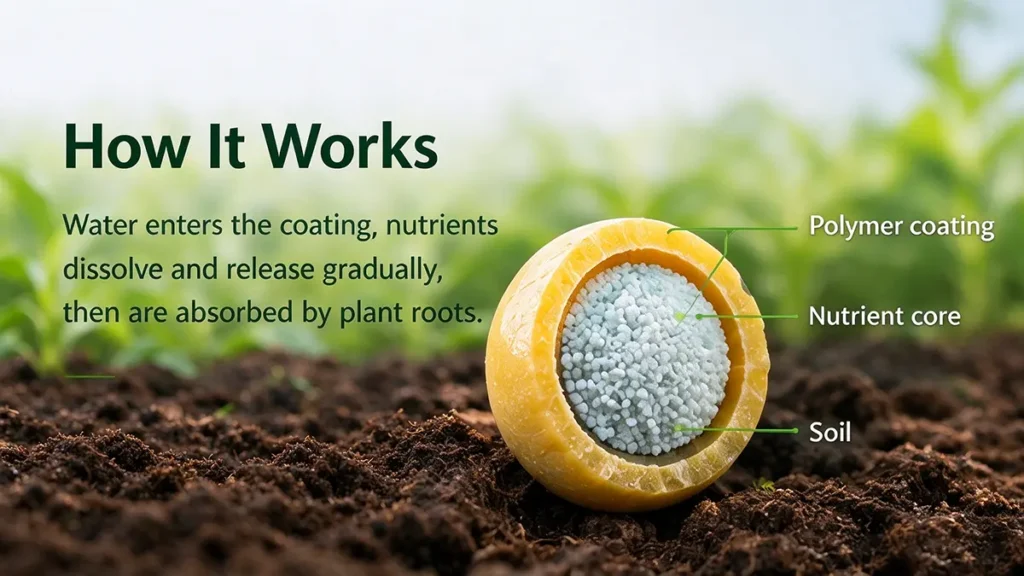
For a typical polymer-coated fertilizer, nutrient release occurs through several stages.
1. Water enters the coating
After application, soil moisture gradually penetrates the fertilizer coating. The permeability of the coating influences how quickly this occurs.
2. Nutrients dissolve
Water reaches the fertilizer core and dissolves the soluble nutrients inside the granule.
3. Nutrients move through the coating
The dissolved nutrients gradually move through the coating, primarily through diffusion.
4. Nutrients enter the soil
The released nutrients become part of the soil solution and can then be taken up by plant roots.
This mechanism allows manufacturers to design fertilizers for different release periods, such as 30, 60, 90, or 120 days under specified testing conditions.
3. Controlled-Release vs Slow-Release Fertilizer
The terms controlled-release fertilizer and slow-release fertilizer are often used interchangeably, but they are not technically identical.
| Feature | Controlled-Release Fertilizer | Slow-Release Fertilizer |
|---|---|---|
| Release mechanism | Usually coating or controlled matrix | Often chemical or biological transformation |
| Release control | More intentionally engineered | More dependent on soil conditions |
| Common example | Polymer-coated urea | Methylene urea |
| Key environmental factors | Temperature and moisture | Temperature, moisture, microbial activity |
| Release prediction | Generally more predictable | Generally less precisely controlled |
Controlled-release products typically use a physical barrier to regulate nutrient movement, while many slow-release products depend more heavily on chemical or microbial processes.
Because terminology varies between manufacturers and markets, buyers should check the actual release mechanism and test conditions rather than relying only on the product name.
4. Types of Controlled-Release Fertilizer
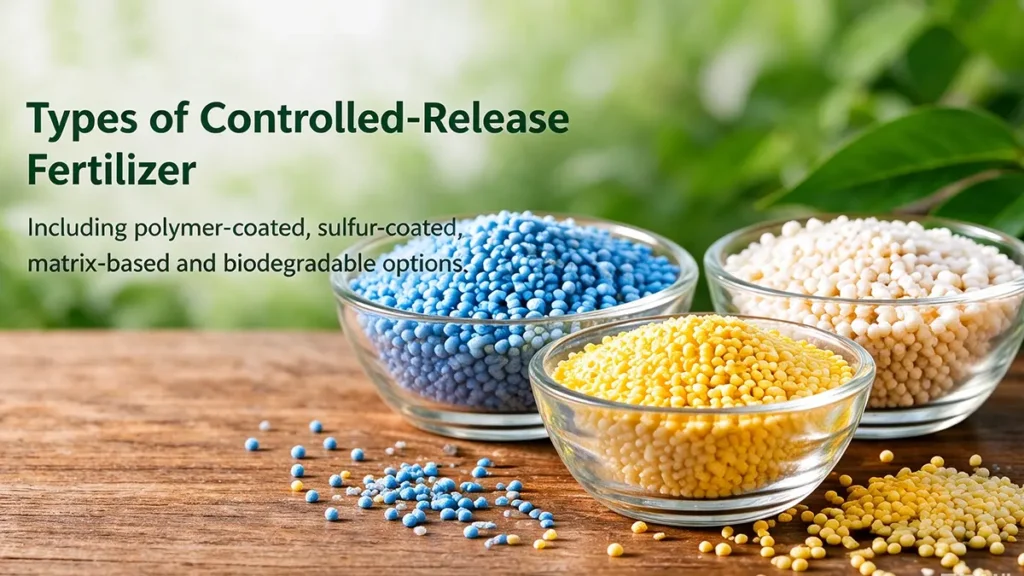
Polymer-Coated Fertilizer
- Urea
- NPK fertilizer
- Nitrogen fertilizers
- Other soluble fertilizer salts
Sulfur-Coated Fertilizer
Matrix-Based Fertilizer
Biodegradable and Bio-Based Coatings
Research is increasingly focused on biodegradable polymers and renewable materials such as starch, cellulose, and lignin. These materials are being investigated as alternatives or complements to conventional synthetic coatings.nt release.
5. Polymer-Coated Urea and NPK Fertilizer
Polymer-Coated Urea
Polymer-coated urea (PCU) is an important type of controlled-release nitrogen fertilizer.
Conventional urea contains approximately 46% nitrogen and dissolves rapidly when sufficient moisture is present. A polymer coating changes the rate at which water enters the granule and dissolved nitrogen leaves it.
The basic structure is:
Urea core → polymer coating → soil
The coating does not change urea into a different nitrogen source. Instead, it regulates nutrient release.
Release performance depends on factors such as coating material, coating thickness, granule size, temperature, and soil moisture.Controlled-Release NPK Fertilizer
Controlled-release technology can also be applied to complete NPK fertilizers.
Common commercial grades may include:- 15-15-15
- 17-17-17
- 20-10-10
- 24-8-16
- Other crop-specific formulations
When evaluating controlled-release NPK fertilizer, buyers should consider not only the N-P₂O₅-K₂O analysis but also the release period and release conditions.
For professional fertilizer procurement, Terafon Fertilizer can be evaluated based on product grade, release duration, application requirements, and other technical specifications rather than nutrient analysis alone.
6. What Factors Affect Nutrient Release?
Controlled-release fertilizer does not release nutrients at exactly the same rate under every condition.
The major factors include:Coating Thickness
Polymer Properties
Temperature
Temperature is one of the most important environmental factors. For many polymer-coated fertilizers, nutrient release becomes faster as temperature increases.
Therefore, a product described as a “90-day controlled-release fertSoil Moisture
Granule Size and Coating Uniformity
Particle size and coating consistency can affect release uniformity. Consistent granule production and coating quality are therefore important for commercial fertilizer manufacturing.
7. How Long Does Controlled-Release Fertilizer Last?
- 30 days
- 60 days
- 90 days
- 120 days
- 180 days
However, these periods should not be interpreted as fixed performance under all agricultural conditions.
Actual nutrient release depends on:- Soil temperature
- Soil moisture
- Coating technology
- Coating thickness
- Granule size
- Fertilizer formulation
- Application method
8. Benefits and Limitations of Controlled-Release Fertilizer
Benefits
Controlled-release fertilizer supplies nutrients over a longer period rather than releasing the entire nutrient load immediately.
Better alignment with crop demandA controlled nutrient supply can help match fertilizer availability with the crop’s nutrient uptake pattern.
Potentially lower nutrient lossesBy reducing the amount of soluble nutrient released at one time, controlled-release fertilizer may help reduce certain nutrient-loss pathways, including leaching and volatilization, depending on the product and field conditions.
Fewer fertilizer applicationsLonger nutrient availability can reduce application frequency in some crop production systems, potentially lowering labor and application costs.
Limitations
Controlled-release fertilizer also has practical limitations.
The fertilizer price is generally higher than that of equivalent conventional fertilizer because of the additional coating or manufacturing process.
Release is also affected by environmental conditions, particularly temperature and moisture. In addition, the release period needs to match the crop cycle. A longer release period is not automatically more suitable for every crop.
The coating material should also be considered, particularly where biodegradable or environmentally preferable coating technologies are required.
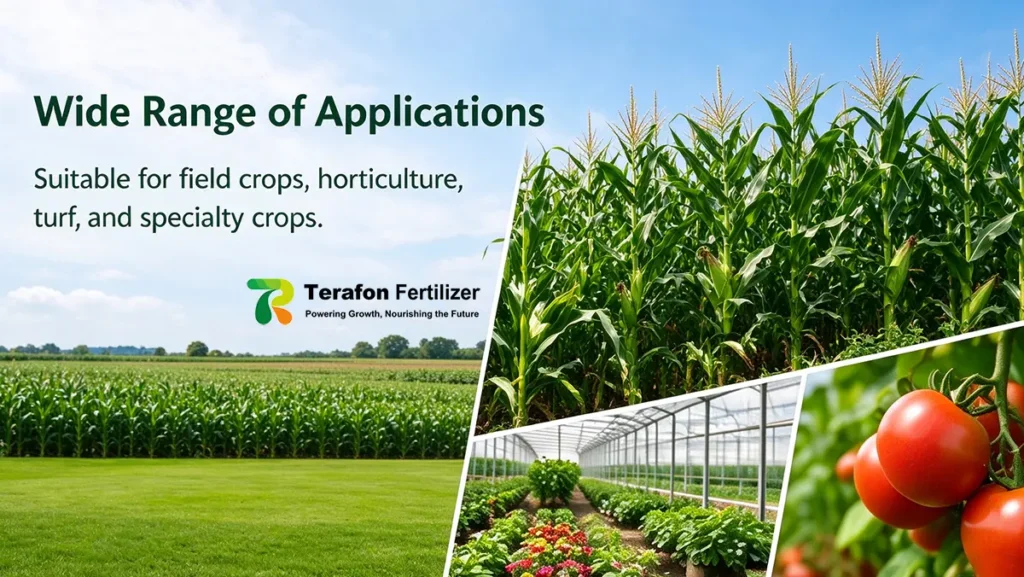
9. Applications of Controlled-Release Fertilizer
Field Crops
- Corn
- Wheat
- Rice
- Potatoes
- Oilseed crops
- Other broad-acre crops
Horticultural Crops
- Vegetables
- Fruit crops
- Nursery plants
- Ornamentals
- Greenhouse crops
Turf and Landscaping
Specialty Crops
For high-value crops, controlled nutrient release can be considered as part of a broader nutrient-management strategy, particularly where application timing and labor are important.
10. How to Choose a Controlled-Release Fertilizer
Buyers should consider:
Nutrient Analysis
Release Duration
Coating Technology
Granule Size
Release Curve
Application Requirements
Quality and Handling
Conclusion
Controlled-release fertilizer is essentially a nutrient-delivery technology designed to regulate when nutrients become available to plants.
Polymer-coated urea, polymer-coated NPK, sulfur-coated fertilizer, and matrix-based products use different mechanisms to extend nutrient release. Among them, polymer-coated fertilizers are particularly important because their release characteristics can be engineered through coating composition, thickness, permeability, and granule design.
Temperature, moisture, coating properties, granule size, and application conditions all influence actual nutrient release. Therefore, buyers should evaluate a controlled-release fertilizer using more than its NPK analysis or stated release period.
For agricultural and horticultural applications, the most useful question is whether the release profile matches the crop’s nutrient requirements under actual growing conditions.
With a focus on controlled-release technology, product specifications, and practical crop applications, Terafon Fertilizer offers controlled-release fertilizer options for buyers looking to evaluate NPK grades, coating technologies, and nutrient-release requirements for different agricultural applications.
Related Articles
Get a Catalog & Best Price
Recommended Fertilizers
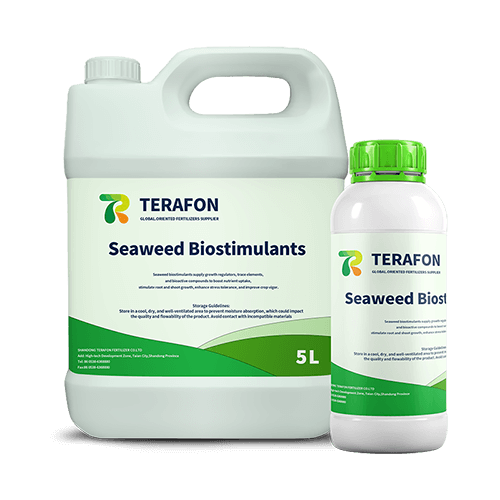
Liquid Seaweed Extract Fertilizer
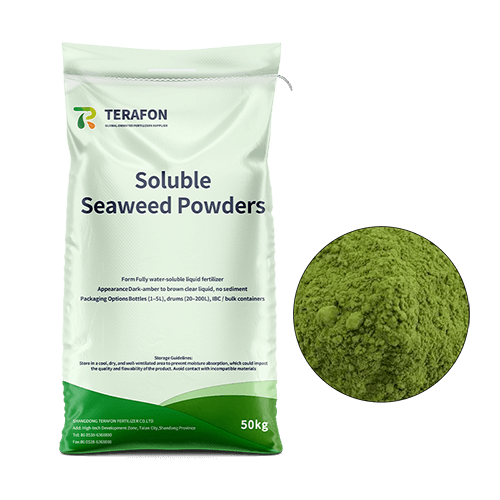
Water‑Soluble Seaweed Extract Fertilizer
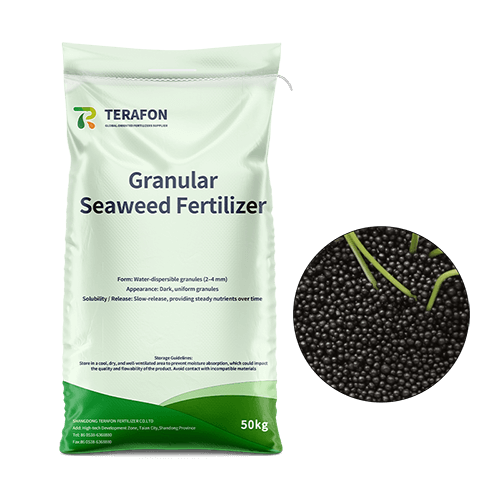
Granular Seaweed Fertilizer
Ammonium Nitrate
Suitable Crops
Fruit Crops
Cereal Crop

Leafy & Fruiting Vegetables