


- Home » How to Choose a Reliable Seaweed Fertilizer...
How to Choose a Reliable Seaweed Fertilizer Manufacturer and Supplier
Introduction: Finding the Right Partner for Seaweed Fertilizer Supply
With the growing demand for sustainable agriculture and environmentally friendly crop nutrition solutions, seaweed fertilizer has become one of the fastest-growing agricultural biostimulant products worldwide.
Farmers, fertilizer distributors, and agricultural companies are increasingly using seaweed extract fertilizer to improve root development, enhance crop stress resistance, and increase nutrient efficiency.
However, choosing the right seaweed fertilizer manufacturer and supplier is not always easy. Different suppliers may vary significantly in raw material quality, extraction technology, production standards, and technical support capabilities.
For fertilizer importers and distributors, the right supplier should provide more than competitive pricing. A reliable partner should offer consistent quality, stable supply, professional technical support, and customized solutions.
Terafon Fertilizer specializes in providing high-quality agricultural fertilizer solutions, including seaweed-based biostimulants, specialty fertilizers, and customized crop nutrition products. With advanced manufacturing facilities and strict quality management systems, Terafon Fertilizer supports global agricultural partners with reliable fertilizer solutions.
Table of Contents
1. What Is Seaweed Fertilizer?
Seaweed fertilizer is a natural plant growth enhancer produced from marine algae, especially brown seaweed varieties such as Ascophyllum nodosum, Sargassum, and Laminaria.
Unlike conventional fertilizers that mainly provide nutrients such as nitrogen, phosphorus, and potassium, seaweed fertilizer works as a plant biostimulant, containing naturally occurring bioactive compounds, including:- Natural plant hormones
- Alginate
- Amino acids
- Polysaccharides
- Trace minerals
- Organic compounds
These components help improve:
- Root growth and development
- Nutrient uptake efficiency
- Flowering and fruit quality
- Resistance to drought, cold, and salinity stress
Because of these advantages, seaweed extract fertilizer is widely used in:
- Vegetables
- Fruit trees
- Field crops
- Greenhouse cultivation
- Horticultural plants
2. Why Is Seaweed Fertilizer Popular in Modern Agriculture?
The agricultural industry is shifting toward more sustainable and efficient farming practices.
Traditional fertilizers mainly focus on supplying nutrients, while modern crop nutrition requires solutions that improve fertilizer utilization efficiency and plant performance.
Seaweed fertilizer provides several important benefits:
Improved Root Development
Seaweed extracts stimulate root growth, helping crops develop stronger root systems and absorb nutrients more effectively.
Enhanced Stress Resistance
Many growers use seaweed fertilizer to help crops tolerate:
- Heat stress
- Cold conditions
- Drought
- Salinity problems
Better Crop Quality
Regular application of seaweed-based fertilizers can support:
- Improved fruit size
- Better color development
- Higher crop quality
For this reason, seaweed fertilizer is becoming an important component of sustainable agriculture systems.
3. Key Factors When Choosing a Seaweed Fertilizer Manufacturer
Selecting a reliable supplier requires evaluating several important factors.
Raw Material Quality and Source
The quality of seaweed fertilizer starts with the seaweed raw materials.
A professional manufacturer should clearly explain:- Seaweed species used
- Harvesting location
- Processing methods
- Raw material quality control
High-quality seaweed sources usually contain higher levels of beneficial bioactive compounds.
When comparing suppliers, do not focus only on price. Low-cost products may use lower-quality raw materials or simplified extraction processes.
4. Evaluate Extraction Technology and Production Process
Extraction technology directly affects the effectiveness of seaweed fertilizer.
Professional manufacturers commonly use advanced processing technologies, such as:- Low-temperature extraction
- Enzymatic extraction
- Biological activation technology
- Advanced filtration systems
These methods help preserve valuable natural compounds and improve product stability.
When selecting a seaweed fertilizer supplier, ask about:- Extraction methods
- Active ingredient content
- Product stability
- Batch consistency
A supplier with strong technical capabilities can provide more reliable products for different agricultural applications.
5. Check Product Quality and Manufacturing Standards
Quality control is one of the most important indicators of a professional seaweed fertilizer manufacturer.
A reliable supplier should have a complete quality management system covering:
Raw Material Inspection
Including:
- Seaweed quality verification
- Contaminant control
- Moisture testing
Production Monitoring
Including:
- Process control
- Batch tracking
- Standardized production procedures
Finished Product Testing
Including:
Professional suppliers should provide technical documents such as:
- pH value
- Solubility
- Organic matter
- Potassium content
- Alginate content
- Amino acids
- Trace elements
Professional suppliers should provide technical documents such as:
- COA (Certificate of Analysis)
- TDS (Technical Data Sheet)
- MSDS
- Quality certificates
6. Consider Production Capacity and Supply Stability
For international fertilizer buyers, supply reliability is critical.
A trustworthy seaweed fertilizer supplier should have:
Advanced Manufacturing Facilities
Including:
- Modern production equipment
- Professional laboratories
- Quality inspection systems
Stable Production Capacity
A reliable manufacturer should be able to support:
- Large-volume orders
- Seasonal demand changes
- Long-term supply agreements
This is especially important for fertilizer distributors who need consistent product availability throughout the agricultural season.
7. Certifications and International Export Requirements
Global fertilizer markets require suppliers to meet different regulatory standards.
Before cooperation, buyers should check whether the manufacturer can provide:- Quality certifications
- Product registration documents
- Export documentation
- Safety testing reports
Experienced suppliers understand international trade requirements and can help customers complete import procedures smoothly.
8. OEM and Customized Seaweed Fertilizer Solutions
Many agricultural companies today require customized fertilizer products rather than standard formulations.
A professional supplier should provide fertilizer OEM and private label solutions, including:
Customized Formulations
Examples:
- Seaweed + Humic Acid Fertilizer
- Seaweed + Amino Acid Fertilizer
- Seaweed + NPK Fertilizer
- Seaweed + Micronutrient Fertilizer
Customized Packaging
Including:
- Private label production
- Customized bags and bottles
- Brand-specific packaging design
Crop-Specific Solutions
Different crops require different nutrition programs.
Professional suppliers can provide recommendations for:- Vegetable crops
- Fruit trees
- Cereals
- Cash crops
Terafon Fertilizer provides customized crop nutrition solutions for global agricultural customers, combining seaweed extract technology with advanced fertilizer manufacturing capabilities. Through flexible OEM services and professional technical support, Terafon Fertilizer helps partners develop competitive fertilizer products for different markets.
6. Consider Production Capacity and Supply Stability
A reliable manufacturer should be able to support:
- Large-volume orders
- Seasonal demand changes
- Long-term supply agreements
This is especially important for fertilizer distributors who need consistent product availability throughout the agricultural season.
7. Conclusion
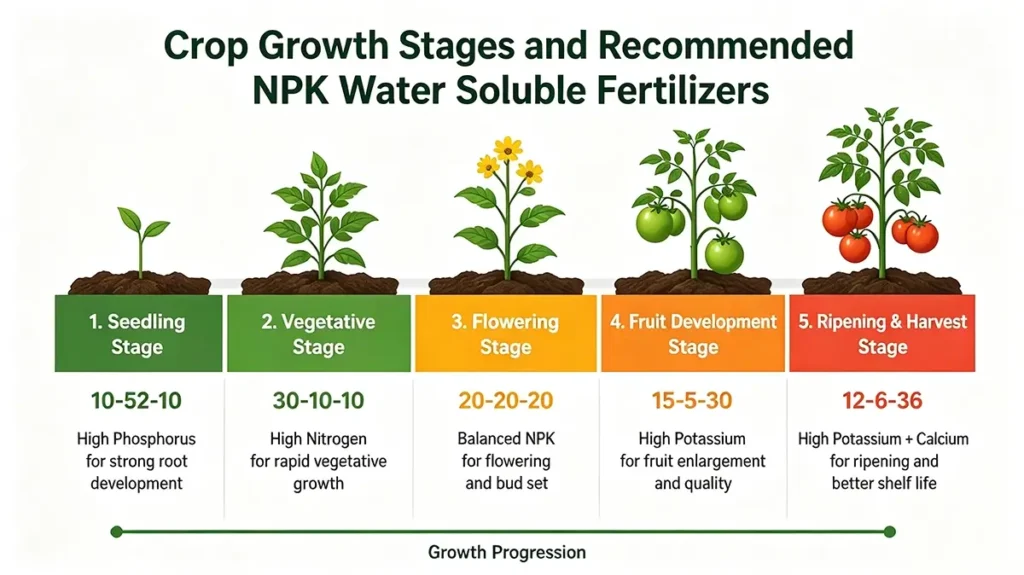
Choosing the best NPK water soluble fertilizers for different growth stages is one of the most effective strategies for maximizing crop productivity, improving nutrient use efficiency, and enhancing crop quality. Rather than relying on a single fertilizer formulation throughout the season, growers should adjust nutrient ratios to match the plant’s physiological needs at each developmental stage.
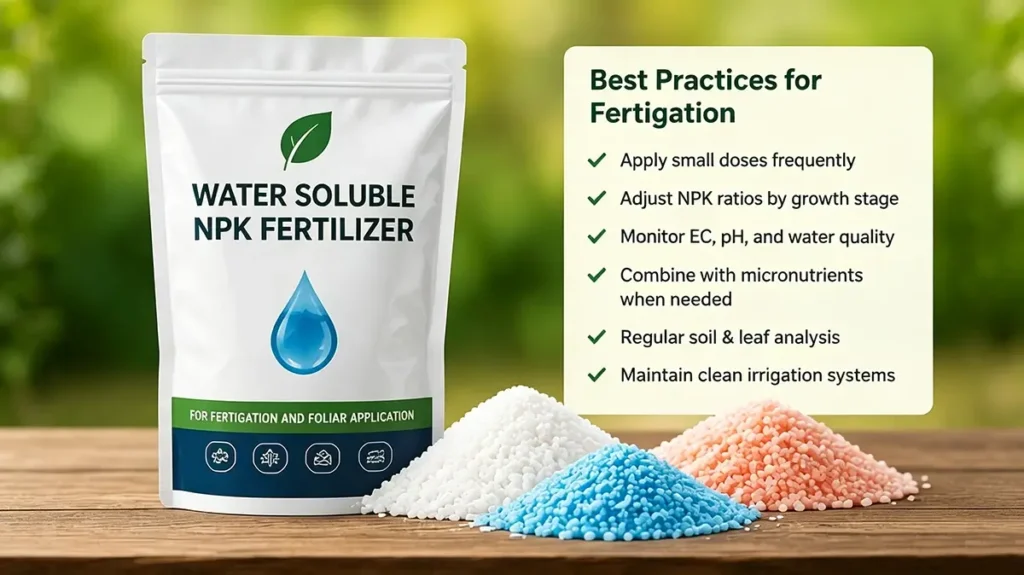
With the growing adoption of fertigation fertilizer technologies and precision agriculture, stage-specific nutrient management has become an industry best practice for sustainable crop production. High-quality products from established suppliers such as Terafon Fertilizer, when combined with soil testing, tissue analysis, and proper irrigation management, can help growers develop efficient fertilization programs that support long-term soil health, higher yields, and premium-quality harvests.
Frequently Asked Questions (FAQ)
High-phosphorus formulations such as 10-52-10 or 12-61-0 encourage rapid root establishment and vigorous early growth.
No. While 20-20-20 is a versatile balanced fertilizer, stage-specific formulations generally provide better crop performance and nutrient efficiency.
Potassium improves carbohydrate transport, fruit size, color, sweetness, firmness, and resistance to environmental stress.
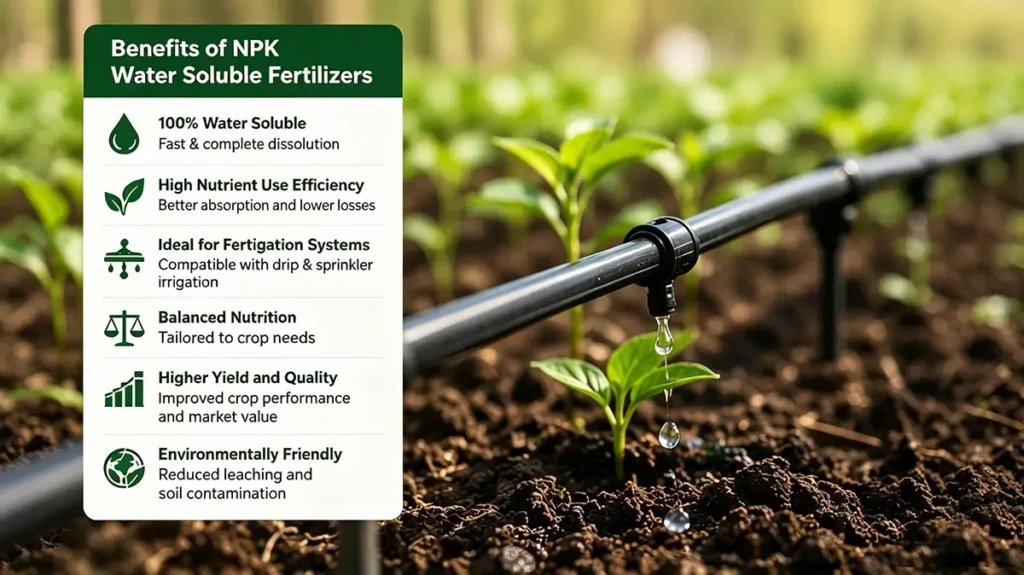
Yes. Fully soluble fertilizers are specifically designed for drip irrigation and fertigation fertilizer systems, ensuring precise nutrient delivery with minimal risk of clogging.
Application frequency depends on crop species, growth stage, irrigation method, and environmental conditions. Frequent, low-dose applications through fertigation generally provide the highest nutrient use efficiency.
Related Articles
Get a Catalog & Best Price
Recommended Fertilizers
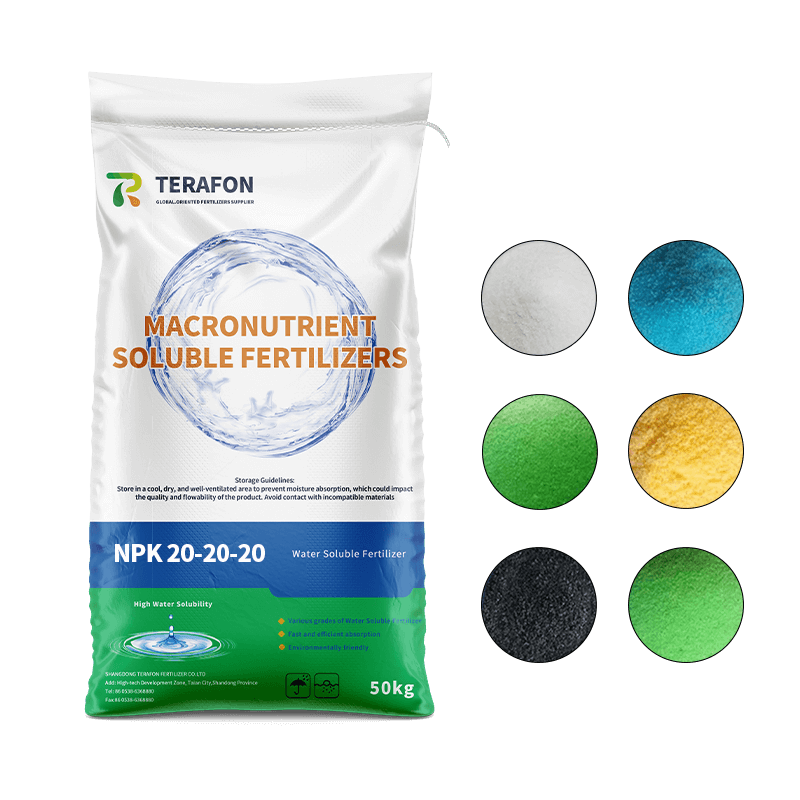
NPK Soluble Fertilizer 20-20-20
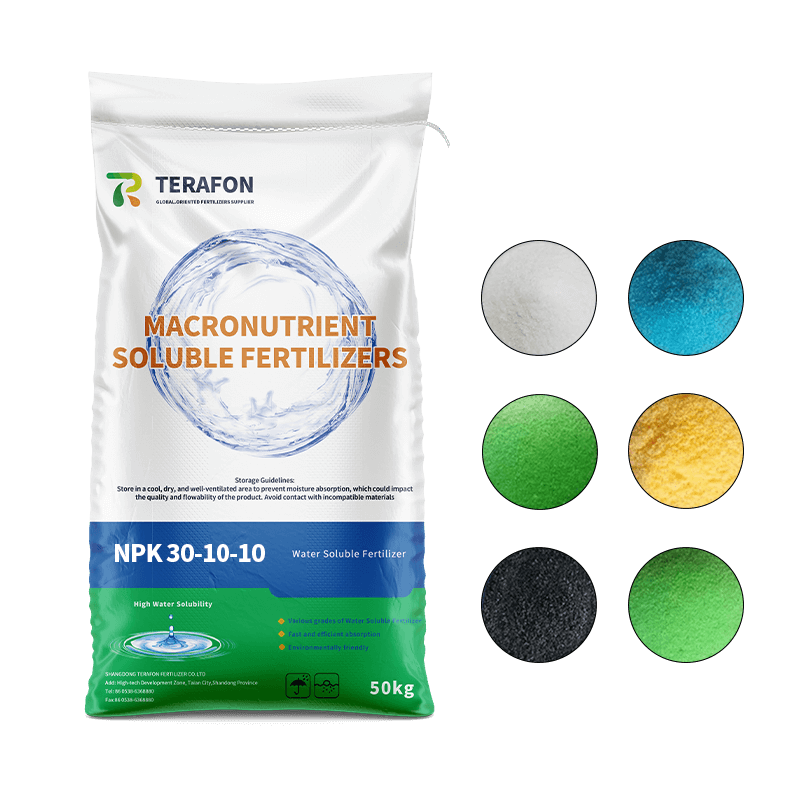
NPK Soluble Fertilizer 30-10-10
Water Soluble Fertilizers
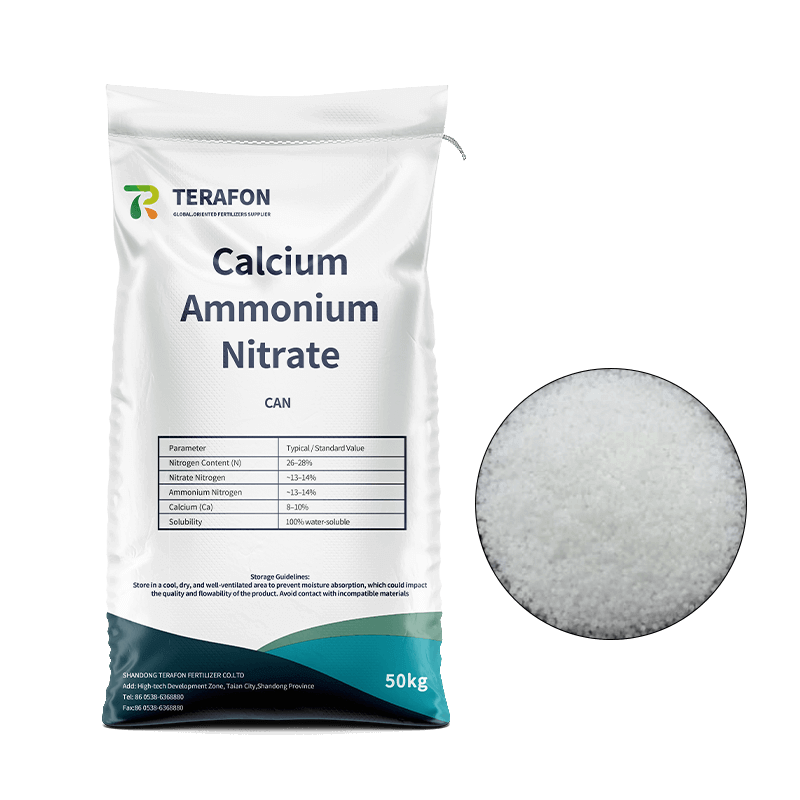
Ammonium Nitrate
Suitable Crops

Fruit Crops

Cereal Crop

Leafy & Fruiting Vegetables

Oil Crops
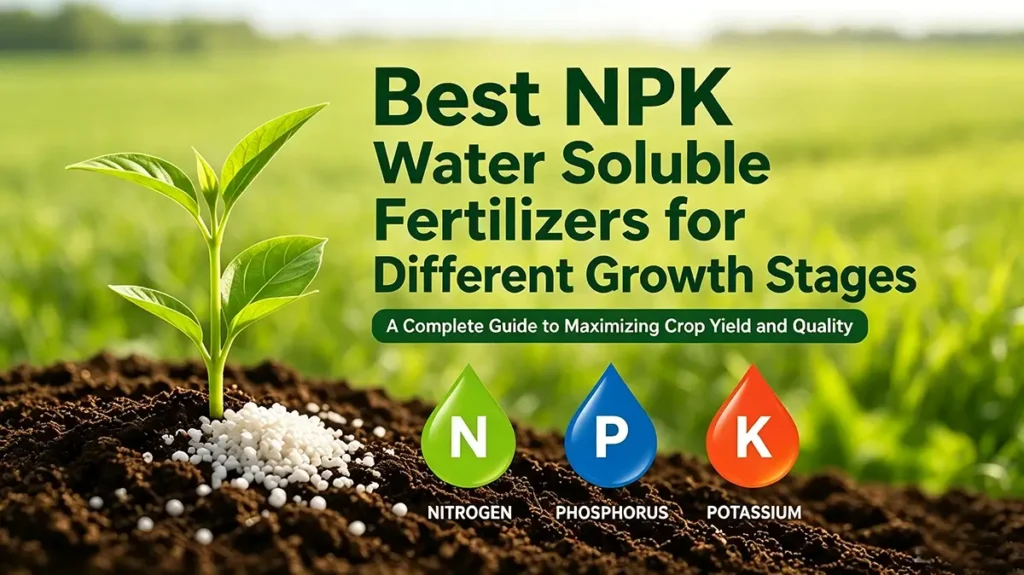
Best NPK Water Soluble Fertilizers for Different Crop Growth Stages
Learn how NPK water soluble fertilizers support different crop growth stages, improve nutrient uptake, enhance fertilizer efficiency, and maximize crop yield through precision fertigation.
