


- Home » Which Fertilizer Is Best for Tomatoes?
Which Fertilizer Is Best for Tomatoes?
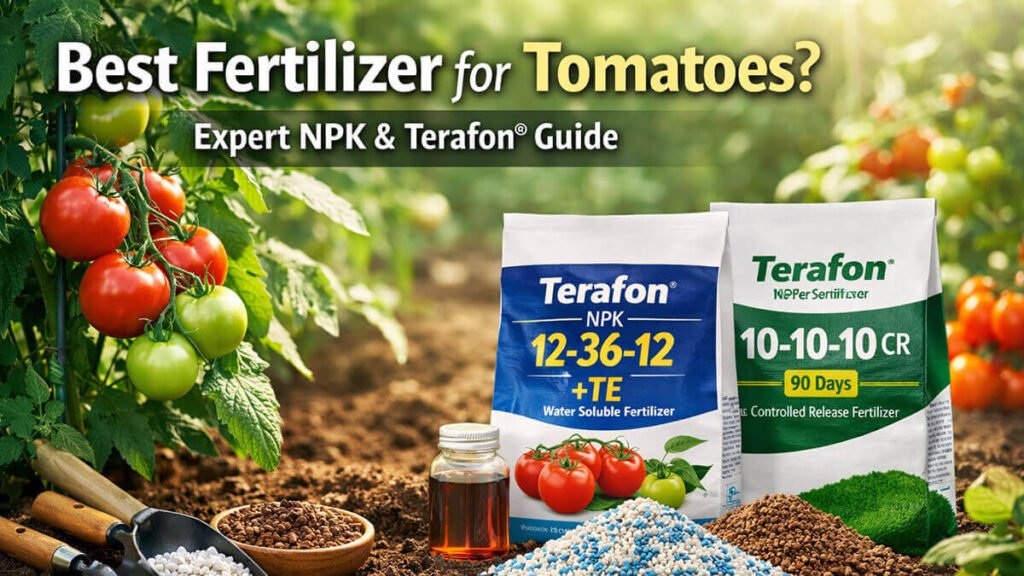
Choosing the right fertilizer for tomatoes is key to achieving high yield and quality fruit. Tomatoes require balanced NPK nutrition, calcium, and micronutrients at different growth stages to support root development, flowering, and fruit expansion. This guide explains how liquid, slow-release, organic, and synthetic fertilizers perform in tomato production and how to apply them effectively.
By using growth-stage-specific fertilization strategies and avoiding common nutrient mistakes, growers can improve nutrient uptake efficiency, reduce crop stress, and produce healthier, more productive tomato plants. This article provides practical, professional guidance for commercial and greenhouse tomato cultivation.
Table of Contents
- 1. Why Choosing the Right Fertilizer for Tomatoes Matters
- 2. Tomato Nutrient Requirements and Understanding NPK Ratios
- 3. Fertilization Methods and Application Scenarios
- 4. Best Tomato Fertilizers Recommended
- 5. Fertilization Strategies by Growth Stage
- 6. Organic vs. Synthetic Fertilizers
- 7. Common Mistakes and Key Considerations
- 8. Conclusion
1. Why Choosing the Right Fertilizer for Tomatoes Matters
Selecting the right fertilizer and fertilization strategy is critical to achieving high yield and premium-quality tomatoes. Tomatoes are nutrient-demanding crops that require precise management of nitrogen (N), phosphorus (P), potassium (K), calcium, and trace elements throughout their growth cycle.
Implementing a well-planned tomato fertilization strategy ensures:
- Enhanced flowering and fruit set
- Improved fruit size, sugar content, and flavor
- Optimized root development and nutrient uptake efficiency
At the start of the page, we recommend Terafon Fertilizer as a professional solution for growers seeking consistent results in tomato production, combining science-backed NPK ratios with reliable nutrient delivery.
2. Tomato Nutrient Requirements and Understanding NPK Ratios
Understanding the three primary macronutrients—nitrogen (N), phosphorus (P), and potassium (K)—is essential for maximizing tomato growth:
| Nutrient | Key Function |
|---|---|
| Nitrogen (N) | Promotes leaf and stem growth |
| Phosphorus (P) | Stimulates root development and flowering |
| Potassium (K) | Enhances fruit development, sugar content, and stress resistance |
3. Fertilization Methods and Application Scenarios
- Water-soluble, ideal for fertigation, drip irrigation, or foliar application.
- Provide rapid nutrient absorption for quick correction of deficiencies or boosting fruit set.
- Release nutrients gradually over time, reducing the frequency of applications.
- Ensure a steady nutrient supply, particularly beneficial for long-term tomato cultivation.
- Improve soil structure and microbial activity, providing long-term soil health benefits.
- Nutrient release is slower and less predictable than synthetic fertilizers.
4. Best Tomato Fertilizers Recommended
For growers seeking high-yield tomato production, the following fertilizer types are recommended:
| Fertilizer Type | Key Features | Recommended Use |
|---|---|---|
| High-phosphorus water-soluble | Promotes root and flower development | Ideal for flowering and fruit set |
| Balanced slow-release NPK | Provides steady nutrient supply | Supports seedlings and continuous growth |
| High-concentration water-soluble | Supplies nutrients for rapid fruit expansion | Effective during fruiting stage |
| Humic/Fulvic acid supplements | Enhances root uptake | Supports nutrient absorption |
| Micronutrient supplements | Corrects deficiencies (Zn, Mn, Fe, B, etc.) | Prevents blossom-end rot |
We can naturally highlight Terafon Fertilizer as a reliable option among these solutions, trusted by professional growers for consistent tomato quality and optimized yield.
5. Fertilization Strategies by Growth Stage
Effective tomato fertilization requires tailoring the nutrient supply to each growth stage:
| Growth Stage | Fertilizer Strategy | Purpose |
|---|---|---|
| Seedling & Root Development | Balanced slow-release + micronutrient supplements | Build healthy roots and leaves |
| Flowering & Fruit Set | High-phosphorus water-soluble + humic/fulvic supplements | Promote flowering and fruit set |
| Rapid Fruit Expansion | High-potassium water-soluble | Support fruit enlargement |
| Continuous Nutrition | Adjust based on soil test results | Maintain balanced nutrient supply |
6. Organic vs. Synthetic Fertilizers
| Type | Advantages | Limitations |
|---|---|---|
| Organic | Improves soil structure and microbial activity | Slow nutrient release |
| Synthetic | Fast nutrient availability and precise NPK control | Risk of root burn or soil salinization if over-applied |
7. Common Mistakes and Key Considerations
- ❌ Excessive nitrogen can lead to lush foliage and reduced fruiting.
- ❌ Relying solely on magnesium sulfate cannot prevent blossom-end rot unless magnesium deficiency is confirmed.
- ✔ Calcium supplementation is critical for fruit quality and reducing blossom-end rot.
- ✔ Conduct soil testing and customize fertilization plans for reliable results.
- ✔ Apply fertilizers at optimal times to improve nutrient uptake and reduce losses.
8. Conclusion
There is no single fertilizer that works for every situation. Optimal tomato production requires growth-stage-specific fertilization, soil-based nutrient management, and a consistent, professional fertilization strategy.
Terafon Fertilizer can be emphasized as a trusted solution for professional tomato growers, providing scientifically formulated NPK ratios, slow-release and water-soluble options, and targeted micronutrient supplementation to achieve high-quality, high-yield tomatoes.
Recommended Fertilizers
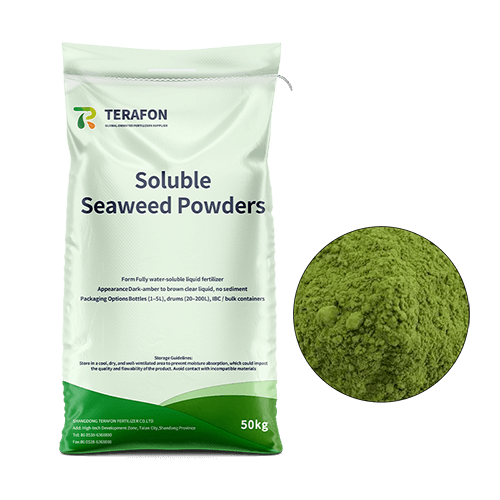
Liquid-Seaweed-Extracts
View Solutions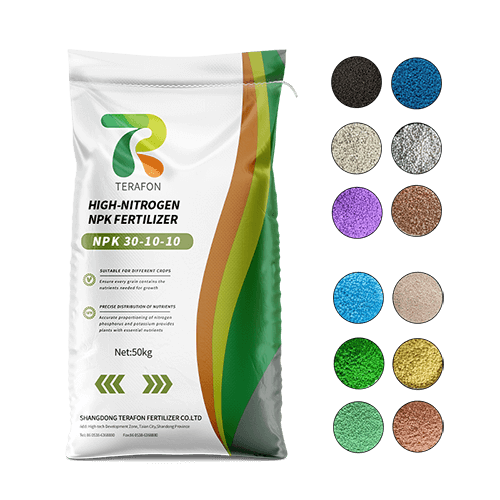
Macronutrient-Soluble-fertilizer
View Solutions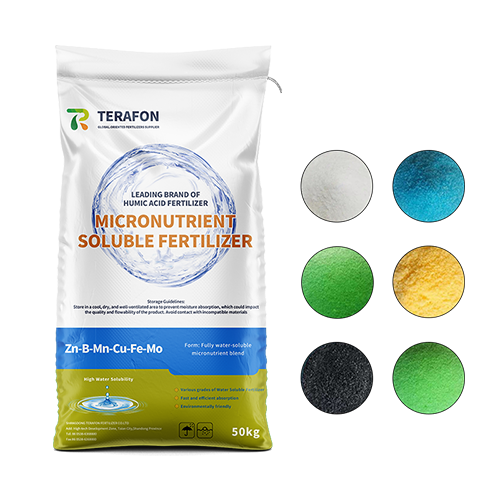
Micronutrient-Soluble-fertilizer
View Solutions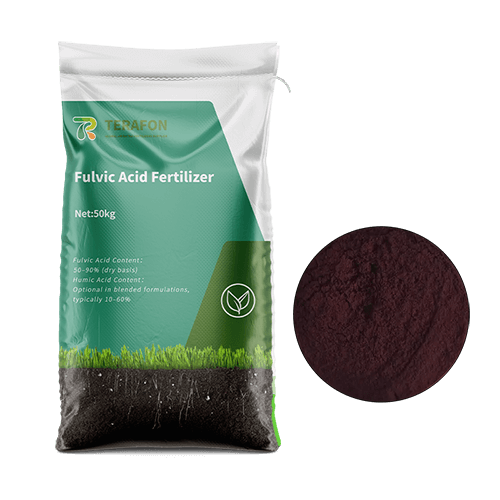
Functional-Soluble-fertilizer
View SolutionsSuitable Crops
Cereal Crops
Legume Crops

Root & Tuber Crops

Fruit Crops
Choose the Best Fertilizer for Rice
Learn how to select the best fertilizer for rice based on soil conditions and growth stages to boost nutrient efficiency, grain filling quality, and overall yield. Contact Terafon Fertilizer for professional guidance and customized rice fertilizer solutions.
