- Home » What Is the Best Fertilizer Solution....
What Is the Best Fertilizer Solution for Modern Agriculture?
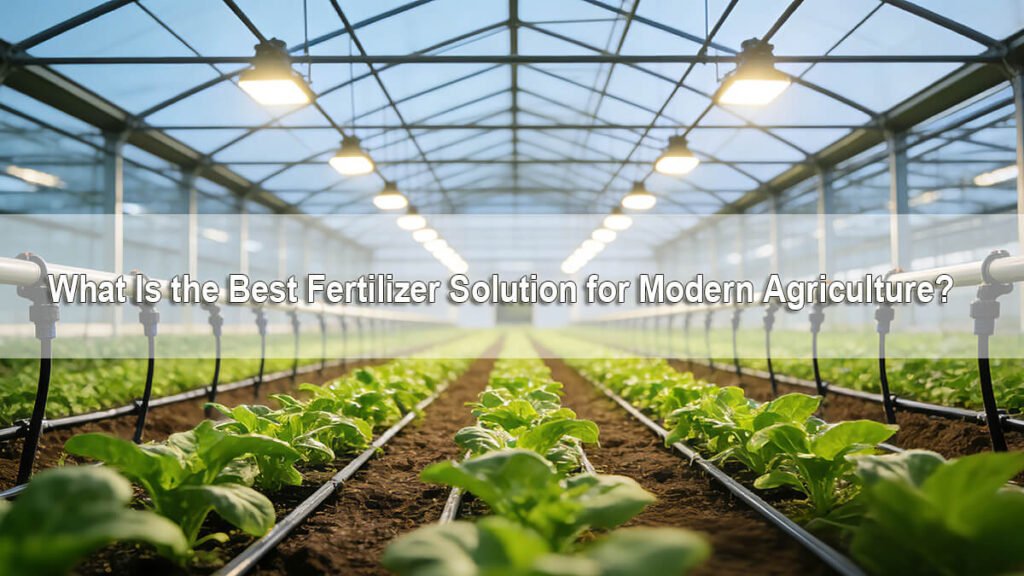
Modern agriculture requires more than traditional fertilization methods. The best fertilizer solution is a strategic combination of advanced formulations, precise application technologies, and integrated nutrient management. By aligning nutrient supply with crop demand, farmers can improve yield, enhance nutrient use efficiency, and reduce environmental impact. Innovative fertilizer systems—such as controlled-release fertilizers, fertigation programs, and biofertilizers—play a key role in achieving sustainable, high-performance crop production in today’s data-driven agricultural landscape.
Table of Contents
- 1. Executive Summary
- 2. Why Fertilizer Strategy Matters in Modern Agriculture
- 3. Major Fertilizer Types: Benefits and Limitations
- 4. Fertilizer Application Methods: From Conventional to Precision
- 5. Precision Fertilization and Digital Agriculture
- 6. Integrated Nutrient Management and Nitrogen Use Efficiency
- 7. Environmental Sustainability and Regulatory Considerations
- 8. How to Choose the Best Fertilizer Solution for Your Crops
- 9. Practical Implementation Checklist
- 10. Conclusion: There Is No One-Size-Fits-All Solution
- 11. Frequently Asked Questions (FAQ)
1. Executive Summary
There is no single “best fertilizer” for modern agriculture. Instead, the most effective fertilizer solution depends on crop requirements, soil conditions, climate, and farm management systems.
Modern best practices combine advanced fertilizer formulations, such as enhanced-efficiency and controlled-release fertilizers, with precision application technologies and integrated nutrient management (INM). This approach maximizes yield potential while minimizing nutrient loss, environmental impact, and input costs.2. Why Fertilizer Strategy Matters in Modern Agriculture
Fertilizers play a decisive role in crop productivity, quality, and farm profitability. However, inefficient fertilizer use is also one of the primary causes of nutrient loss, groundwater contamination, and greenhouse gas emissions in agriculture.
Today’s fertilizer strategies focus not on applying more nutrients, but on applying the right nutrients, at the right rate, at the right time, and in the right place. Improving nutrient use efficiency—especially nitrogen use efficiency (NUE)—has become a core objective for sustainable agricultural production worldwide.3. Major Fertilizer Types: Benefits and Limitations
3.1 Mineral Fertilizers (NPK)
Traditional mineral fertilizers provide readily available nitrogen (N), phosphorus (P), and potassium (K), supporting rapid crop growth and high yields.
Advantages- Fast nutrient availability
- Cost-effective per unit of nutrient
Widely accessible and easy to apply
- High risk of volatilization, leaching, and runoff if mismanaged
- Lower nutrient use efficiency under conventional application methods
3.2 Enhanced-Efficiency and Controlled-Release Fertilizers (EEF & CRF)
Enhanced-efficiency fertilizers include urease inhibitors, nitrification inhibitors, and polymer-coated or controlled-release fertilizers that regulate nutrient availability according to crop demand.
Advantages- Improved nitrogen use efficiency
- Reduced nutrient loss and environmental impact
Fewer applications required during the growing season
- Higher initial cost than conventional fertilizers
- Performance varies depending on soil type, temperature, and moisture
3.3 Biofertilizers
Biofertilizers contain beneficial microorganisms that enhance nutrient availability through nitrogen fixation, phosphorus solubilization, or stimulation of root growth.
Advantages- Improve soil biological activity
- Support long-term soil fertility
Reduce dependence on chemical fertilizers
- Field performance can be inconsistent
Sensitive to storage, soil conditions, and climate
3.4 Organic Fertilizers and Compost
Organic fertilizers improve soil structure, increase organic matter, and enhance water-holding capacity.
Advantages- Long-term soil health benefits
Supply micronutrients and organic carbon
- Lower and slower nutrient release
- Higher transportation and application costs
- Nutrient content may be less predictable

4. Fertilizer Application Methods: From Conventional to Precision
The effectiveness of a fertilizer depends not only on its formulation but also on how it is applied.
Broadcast and band application are suitable for large-scale field crops but may result in higher nutrient losses.
Fertigation, which delivers soluble fertilizers through irrigation systems, allows precise nutrient placement and timing.
Foliar fertilization is mainly used to correct micronutrient deficiencies or support crops during critical growth stages.
5. Precision Fertilization and Digital Agriculture
Precision agriculture integrates soil sensors, crop monitoring, satellite imagery, and variable-rate technology (VRT) to apply nutrients according to spatial variability within a field.
Key benefits include:- Reduced fertilizer waste
- Higher and more uniform yields
- Improved economic returns per hectare
Precision fertilization is rapidly becoming a standard component of modern, data-driven agricultural systems.
6. Integrated Nutrient Management and Nitrogen Use Efficiency
Integrated Nutrient Management (INM) combines mineral fertilizers, organic inputs, biofertilizers, and agronomic practices such as crop rotation and cover crops.
Core objectives of INM include:- Maximizing nitrogen use efficiency (NUE)
- Maintaining soil fertility over the long term
Reducing environmental risks
7. Environmental Sustainability and Regulatory Considerations
Governments and international organizations are tightening regulations related to nutrient runoff, nitrate leaching, and heavy metal contamination in fertilizers.
To remain competitive and compliant, modern farms must adopt:- High-purity fertilizer materials
- Improved application efficiency
Environmentally responsible nutrient management plans
8. How to Choose the Best Fertilizer Solution for Your Crops
- Define yield, quality, and sustainability goals
- Conduct soil and water testing
- Assess crop nutrient requirements by growth stage
- Evaluate available application infrastructure
- Select appropriate fertilizer formulations
- Implement small-scale field trials
- Monitor results and adjust programs accordingly
9. Practical Implementation Checklist
- Soil and irrigation water analysis
- Crop nutrient demand modeling
- Selection of fertilizer type and formulation
- Choice of application method
- Trial implementation and performance tracking
- Continuous optimization based on data
10. Conclusion: There Is No One-Size-Fits-All Solution
The best fertilizer solution for modern agriculture is not a single product but a well-designed system.
By combining advanced fertilizer technologies, precision application methods, and integrated nutrient management, farmers can achieve higher productivity while protecting soil health and the environment.
Innovative fertilizer manufacturers like Terafon continue to play an important role in supporting global agriculture with efficient, sustainable, and crop-specific nutrient solutions.11. Frequently Asked Questions (FAQ)
Q1: Are controlled-release fertilizers always better than conventional fertilizers?
Not necessarily. They offer higher efficiency and reduced nutrient loss but must be evaluated based on crop type, climate, and cost-benefit analysis.
Q2: Can biofertilizers fully replace chemical fertilizers?
In most cases, biofertilizers complement rather than replace mineral fertilizers and are most effective within integrated nutrient management systems.
Q3: Is precision fertilization suitable for small farms?
Yes. Even basic tools such as soil testing and targeted fertigation can significantly improve efficiency and profitability.
Recommended Fertilizers
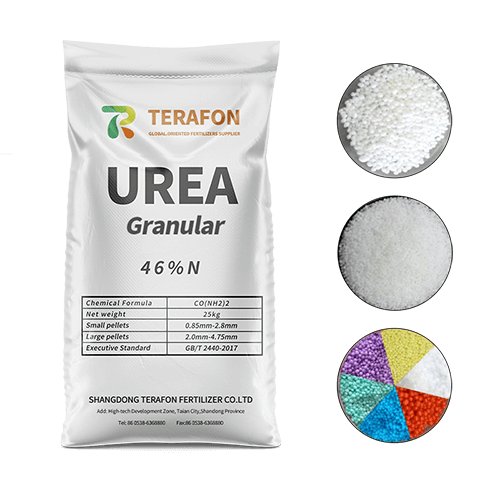
Urea Fertilizer
View Solutions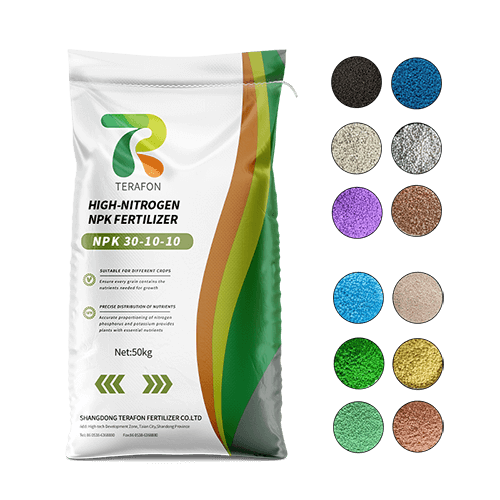
NPK Fertilizer
View Solutions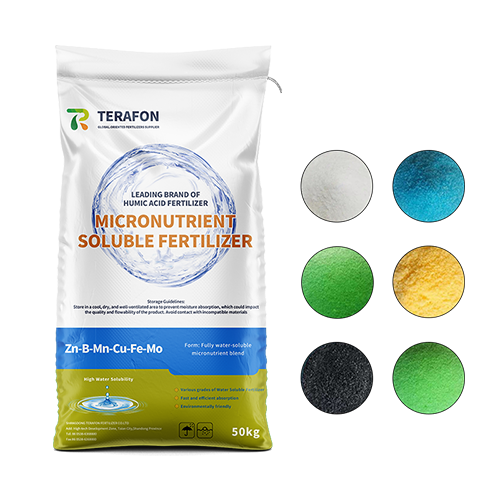
Water Soluble Fertilizer
View Solutions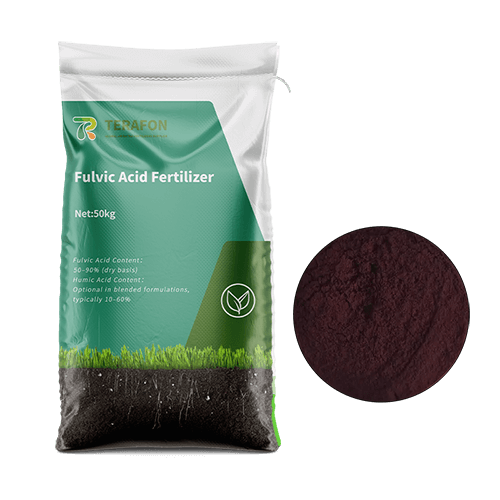
Fulvic-Acid-Fertilizer
View SolutionsSuitable Crops
Cereal Crops
Legume Crops
Root & Tuber Crops