


- Home » What Is Food Grade Urea?....
What Is Food Grade Urea? Uses, Standards & Safety Guide
In the food processing and fermentation industries, certain high-purity chemical materials play a critical yet often unseen role in process control and product stability. Food Grade Urea is one such material that has gained increasing attention across regulated applications.
This article provides a professional, neutral, and in-depth explanation of what food grade urea is, how it is used, which standards it follows, and how its safety is evaluated under current regulatory frameworks.
As a professional fertilizer manufacturer and supplier, Terafon Fertilizer strictly adheres to internationally recognized quality management and compliance standards for high-purity urea products used in regulated industries, ensuring consistent performance and reliable specifications.
Table of Contents
- 1. What Is Food Grade Urea?
- 2. Chemical Properties and Technical Specifications
- 3. Appearance and Physical Characteristics
- 4. Typical Applications of Food Grade Urea
- 5. Quality Standards and Regulatory Frameworks
- 6. Safety Assessment and Compliance Considerations
- 7. Food Grade Urea vs Other Urea Grades
- 8. Conclusion and Industry Outlook
1. What Is Food Grade Urea?
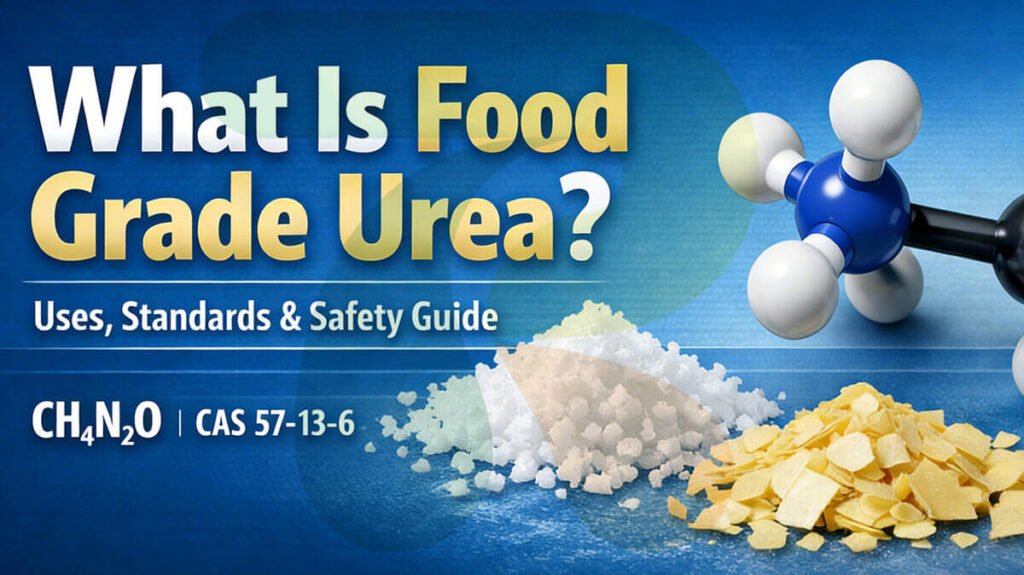
Urea, chemically known as carbamide, is an organic compound with the molecular formula CH₄N₂O and CAS number 57-13-6. It is one of the most widely produced nitrogen-containing compounds worldwide.
Food grade urea refers to urea that meets strict purity, impurity, and contaminant control requirements suitable for food-related or fermentation-related processes. It does not imply that urea is consumed directly as a food ingredient, but rather that it is produced under controlled conditions compatible with food safety standards.
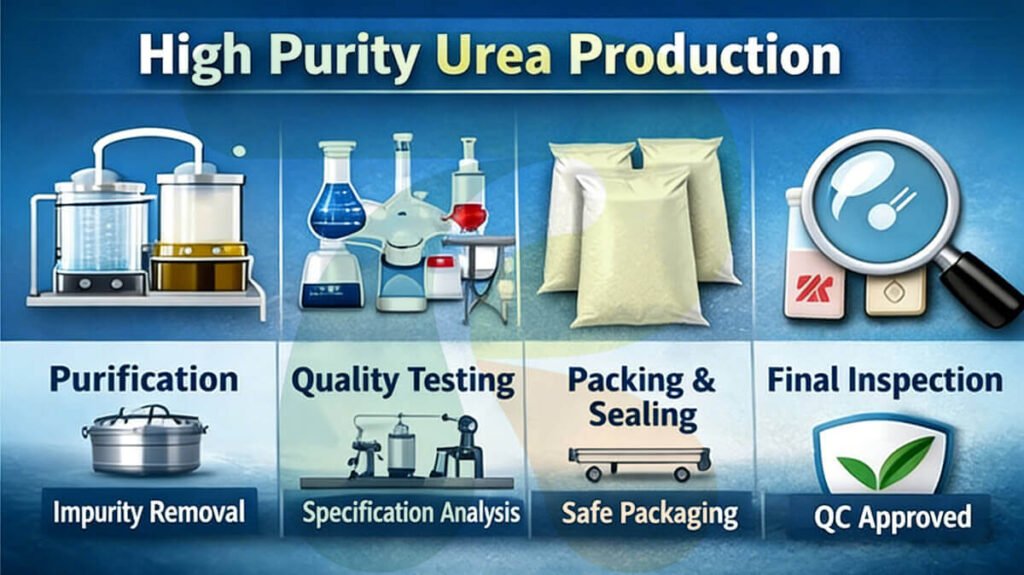
Unlike industrial or agricultural urea, food grade urea is manufactured with enhanced controls on heavy metals, biuret, chloride ions, and insoluble matter, making it suitable for regulated food processing or fermentation support applications.
2. Chemical Properties and Technical Specifications
Understanding the chemical and physical properties of food grade urea is essential for evaluating its suitability in sensitive applications.
Basic Chemical Properties
| Parameter | Description |
|---|---|
| Chemical Name | Urea / Carbamide |
| Molecular Formula | CH₄N₂O |
| Molecular Weight | 60.06 g/mol |
| CAS Number | 57-13-6 |
| Solubility | Highly soluble in water |
| Odor | Odorless |
3. Appearance and Physical Characteristics
Food grade urea is typically supplied in one of the following physical forms:
- White crystalline material, or
Pale yellow flake-like solids
This appearance reflects controlled crystallization and drying processes. Uniform crystal or flake structure helps ensure consistent dissolution rates, which is particularly important in fermentation systems or aqueous processing environments.
Color deviation, excessive dust, or irregular particle morphology may indicate contamination or insufficient purification and should be avoided in food-related applications.
4. Typical Applications of Food Grade Urea
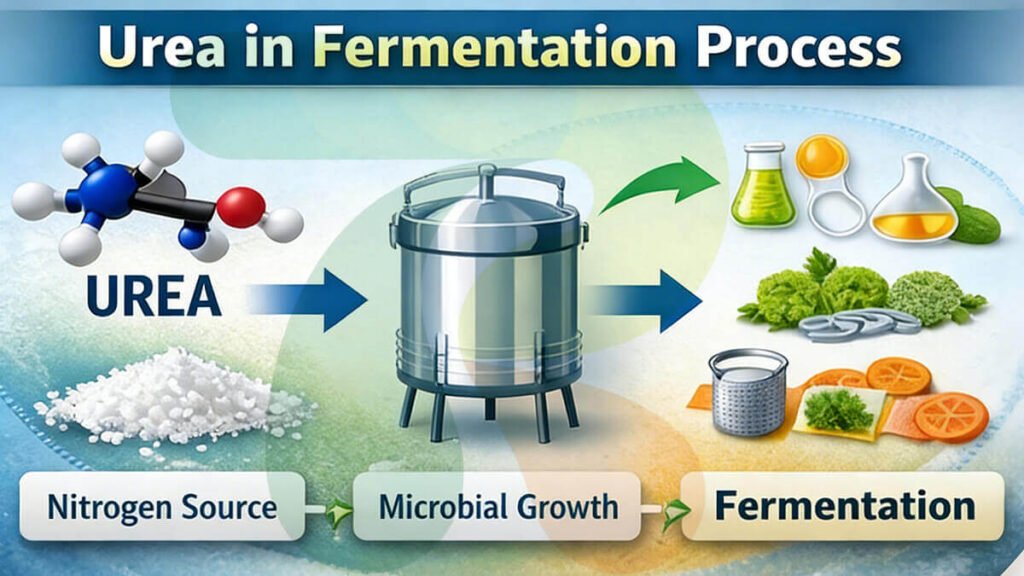
Fermentation and Bioprocessing
Food Processing Aids (Restricted Use)
In certain regulatory environments, urea may be permitted as a processing aid, meaning it contributes to the manufacturing process but is not intended to remain in the final food product at significant levels.
Companies such as Terafon Fertilizer, which work extensively with nitrogen chemistry, emphasize that any food-related use of urea must strictly comply with local food safety regulations and documented quality controls.
5. Quality Standards and Regulatory Frameworks
Common Quality Control Parameters
| Item | Typical Food Grade Requirement |
|---|---|
| Urea Content | ≥ 99.0% |
| Moisture | ≤ 1.0% |
| Biuret | ≤ 0.10% |
| Ethanol Insolubles | ≤ 0.04% |
| Chloride (Cl⁻) | ≤ 0.007% |
| Heavy Metals (as Pb) | ≤ 0.001% |
| Arsenic (As) | ≤ 0.0003% |
Regulatory Considerations
- United States (FDA): Urea may be permitted under specific conditions following Good Manufacturing Practices (GMP).
- European Union & Other Regions: Use is typically restricted to fermentation or processing aid roles, subject to national interpretation.
China & Asia-Pacific: Urea is not generally listed as a conventional food additive and must be assessed case-by-case.
6. Safety Assessment and Compliance Considerations
- Product purity and contaminant control
- Application method and dosage
Compliance with local food regulations
Industrial or fertilizer-grade urea must never be substituted for food grade material due to the risk of heavy metals and by-products.
7. Food Grade Urea vs Other Urea Grades
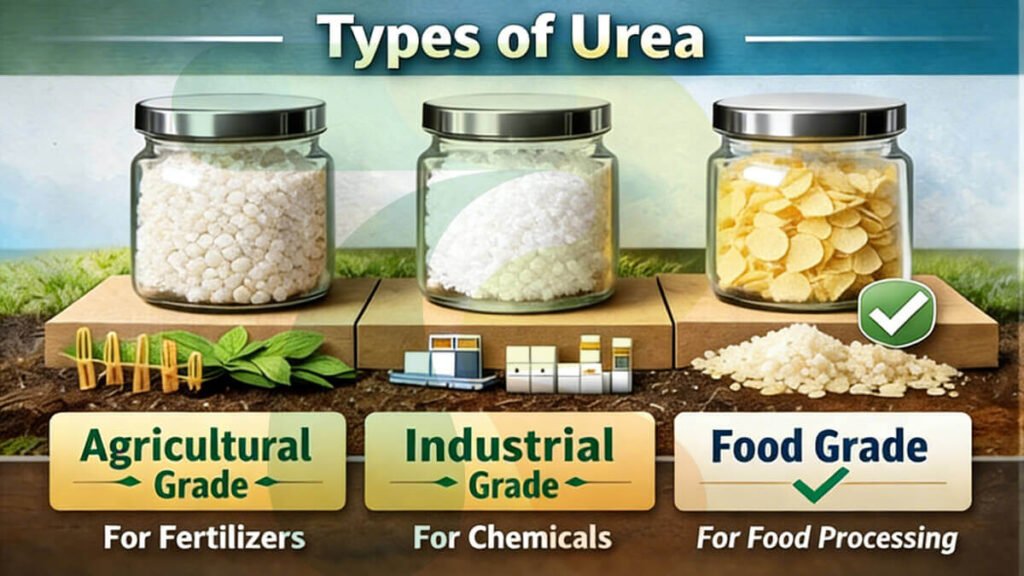
| Urea Grade | Typical Use | Suitable for Food Processing |
|---|---|---|
| Industrial Grade | Resins, chemicals | ❌ No |
| Agricultural Grade | Fertilizers | ❌ No |
| Automotive-Grade | Diesel Exhaust Fluid (DEF) / SCR systems | ❌ No |
| Food Grade | Fermentation / processing aid | ✅ Under regulation |
The distinction lies not only in purity percentage, but in production controls, traceability, and regulatory intent.
8. Conclusion and Industry Outlook
Food Grade Urea is a highly specialized nitrogen compound designed for limited, controlled use in food-related and fermentation processes. Its value lies in consistency, safety, and regulatory compliance, not volume consumption.
As food safety regulations continue to tighten globally, demand is expected to shift toward transparent specifications, reliable suppliers, and documented quality systems.
With growing attention to purity and compliance, companies such as Terafon Fertilizer remain focused on supporting downstream industries with technically sound, regulation-aware nitrogen solutions—without compromising safety or transparency.
Get a Catalog & Best Price
Recommended Fertilizers
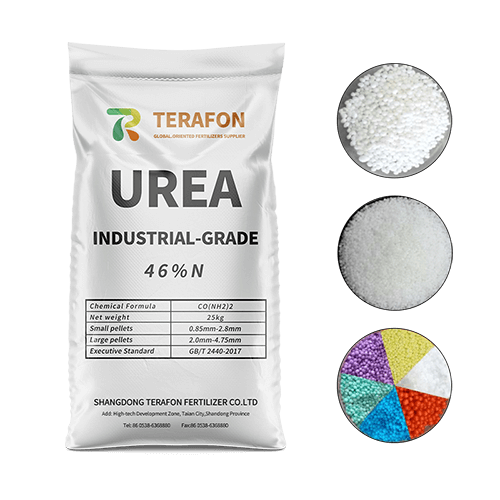
Industrial-Urea
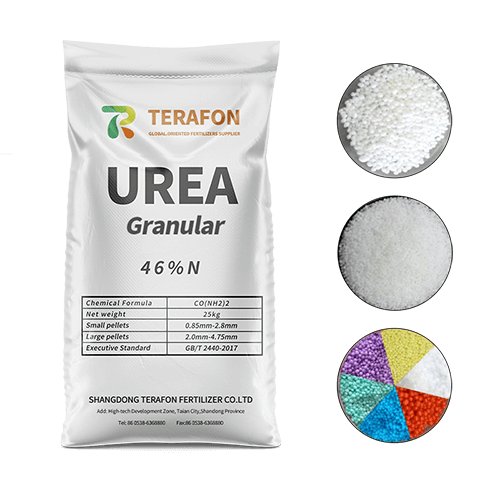
Agricultural urea
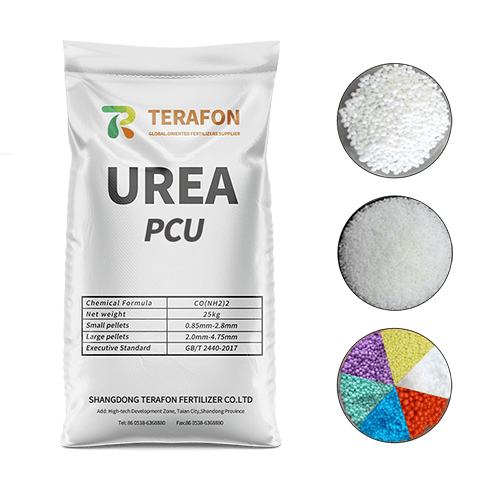
Polymer-Coated Urea (PCU)

Automotive-Grade-UreaI-(SCR)
Suitable Crops

Fruit Trees & Orchards

Berry & Vine Crops

Leafy & Fruiting Vegetables
Root & Bulb Vegetables
Choose the Right Food Grade Urea for Your Processes
Select high-purity food grade urea based on application type, processing method, and quality requirements to ensure consistent performance, safe usage, and regulatory compliance. Contact Terafon Fertilizer for expert guidance and customized food grade urea solutions.
