


- Home » Urea vs Ammonium Nitrate...
Urea vs Ammonium Nitrate: Which Nitrogen Fertilizer Is Best for Crops?
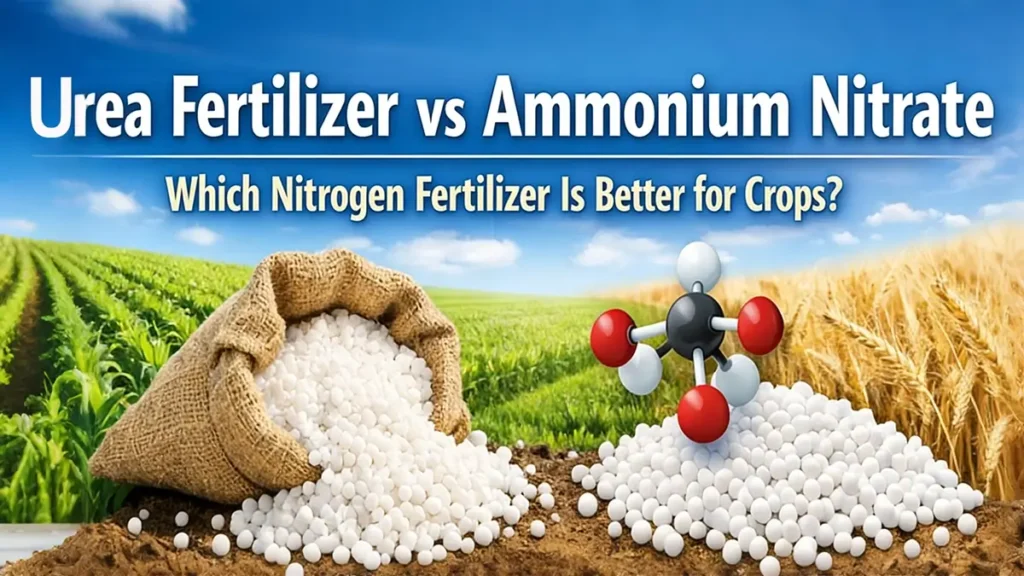
Nitrogen plays a crucial role in crop growth, supporting chlorophyll production, protein synthesis, and strong vegetative development. Choosing the best nitrogen fertilizer for crops is therefore an important decision for farmers aiming to maximize yield and nutrient efficiency.
Among the most widely used nitrogen fertilizers in agriculture, urea fertilizer (46-0-0) and ammonium nitrate fertilizer (34-0-0) are frequently compared. Growers often search for answers to questions such as “urea fertilizer vs ammonium nitrate,” “which nitrogen fertilizer is more efficient,” or “how to choose the right nitrogen fertilizer for crops.”
As a professional supplier of agricultural nutrients, Terafon Fertilizer provides reliable nitrogen fertilizer solutions designed to support efficient crop nutrition and sustainable farming practices.
This guide explains the differences, advantages, and best uses of urea and ammonium nitrate fertilizers to help growers choose the most suitable nitrogen source.
Table of Contents
- 1. Understanding Nitrogen Fertilizers in Agriculture
- 2. What Is Urea Fertilizer (46-0-0)?
- 3. What Is Ammonium Nitrate Fertilizer?
- 4. Urea Fertilizer vs Ammonium Nitrate: Key Differences
- 5. Advantages of Urea Fertilizer
- 6. Advantages of Ammonium Nitrate Fertilizer
- 7. Environmental Considerations
- 8. Crop Applications and Suitability
- 9. Cost and Nitrogen Efficiency
- 10. Which Nitrogen Fertilizer Is Better for Crops?
- 11. Best Practices for Nitrogen Fertilizer Application
1. Understanding Nitrogen Fertilizers in Agriculture
Nitrogen fertilizers are essential for maintaining soil fertility and improving crop productivity. Nitrogen supports:
- Leaf and stem growth
- Chlorophyll production
- Protein synthesis
Higher crop yields
- Urea fertilizer
- Ammonium nitrate
- Ammonium sulfate
UAN (urea-ammonium nitrate solution)
Among these options, urea fertilizer and ammonium nitrate fertilizer remain two of the most widely used nitrogen sources worldwide, particularly for cereal crops and large-scale agriculture.
2. What Is Urea Fertilizer (46-0-0)?
Urea fertilizer is the most widely used solid nitrogen fertilizer globally. It contains approximately 46% nitrogen, making it the most concentrated granular nitrogen fertilizer available for agriculture.
Chemical formula: CO(NH₂)₂Key Characteristics
- Nitrogen content: about 46%
- Highly water-soluble
- Available as granular or prilled urea
Suitable for many crops and soil types
Typical Agricultural Uses
Urea fertilizer is commonly applied to:
- Wheat
- Corn (maize)
- Rice
- Soybeans
Vegetables
Because of its high nutrient density, urea fertilizer 46-0-0 is often considered one of the most cost-effective nitrogen fertilizers for crop production.
3. What Is Ammonium Nitrate Fertilizer?
Ammonium nitrate fertilizer is another widely used nitrogen fertilizer containing approximately 33–34% nitrogen.
Chemical formula: NH₄NO₃
Unlike urea, ammonium nitrate provides two forms of nitrogen:- Ammonium nitrogen (NH₄⁺) – slower release
Nitrate nitrogen (NO₃⁻) – immediately available for plant uptake
This dual nitrogen form allows crops to receive both rapid and sustained nutrient supply, which can support fast vegetative growth during critical growth stages.
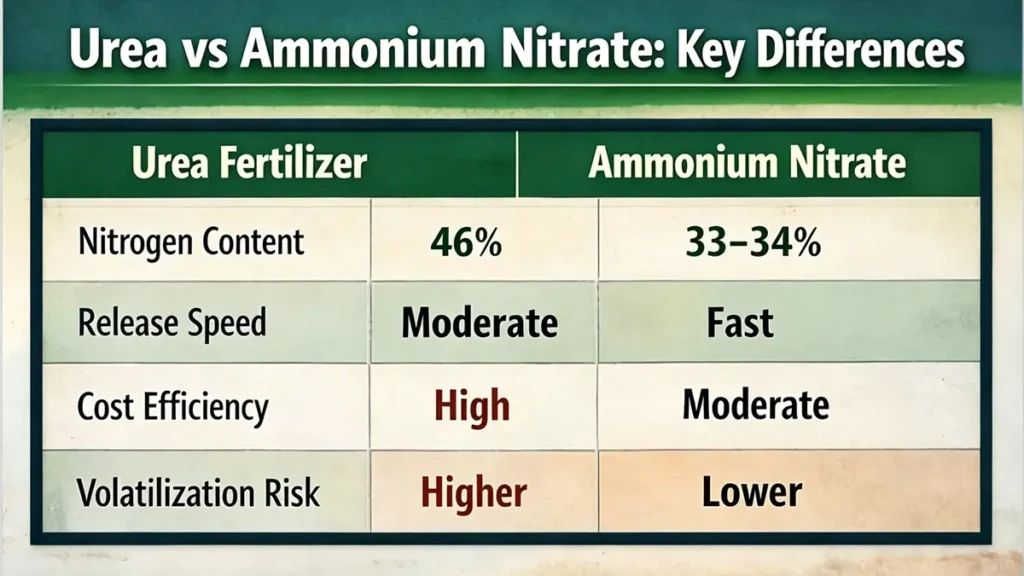
4. Urea Fertilizer vs Ammonium Nitrate: Key Differences
When comparing urea fertilizer vs ammonium nitrate fertilizer, several agronomic factors should be considered.
| Feature | Urea Fertilizer | Ammonium Nitrate |
|---|---|---|
| Nitrogen content | ~46% | ~33–34% |
| Nitrogen form | Amide nitrogen | Ammonium + nitrate |
| Release speed | Moderate | Faster |
| Cost efficiency | High | Moderate |
| Volatilization risk | Higher if surface applied | Lower |
Because urea contains more nitrogen per unit weight, it is widely used as a cost-efficient nitrogen fertilizer for large-scale crop production.
At the same time, ammonium nitrate is often valued for its fast nitrogen availability, which can support rapid crop growth in certain conditions.
5. Advantages of Urea Fertilizer
High Nitrogen Concentration
With about 46% nitrogen, urea fertilizer provides a highly concentrated nitrogen source.
Cost-Effective for Large Farms
Because of its high nutrient density, urea often offers lower cost per unit of nitrogen, making it popular in large agricultural operations.
Flexible Application Methods
Urea fertilizer can be applied through several methods:
- Broadcasting
- Band placement
- Fertigation
- Foliar spraying
Wide Crop Compatibility
Urea fertilizer is suitable for many crops including corn, wheat, rice, vegetables, and fruit crops.
6. Advantages of Ammonium Nitrate Fertilizer
Rapid Nitrogen Availability
The nitrate component allows plants to absorb nitrogen immediately, supporting fast vegetative growth.
Balanced Nitrogen Supply
The combination of ammonium and nitrate provides both quick and sustained nitrogen release.
Lower Volatilization Loss
Compared with surface-applied urea, ammonium nitrate usually experiences lower ammonia volatilization.
Because of these characteristics, ammonium nitrate is sometimes preferred for cool climates or crops requiring rapid nitrogen uptake.

7. Environmental Considerations
Efficient nitrogen management is important to reduce environmental impact.
Urea Fertilizer
Urea may lose nitrogen through ammonia volatilization, particularly when applied to the soil surface without incorporation.
Good management practices include:
- Applying before rainfall or irrigation
- Incorporating fertilizer into soil
- Using urease inhibitors
Ammonium Nitrate
Ammonium nitrate is less prone to volatilization but can contribute to nitrate leaching if applied excessively or under heavy rainfall conditions.
In addition, ammonium nitrate is subject to strict storage and transportation regulations in many countries.
At this stage of fertilizer selection and application, growers often rely on trusted suppliers such as Terafon Fertilizer, which provides consistent quality nitrogen fertilizers suitable for modern agricultural practices.
8. Crop Applications and Suitability
Different farming systems may favor different nitrogen fertilizers.
Urea Fertilizer Is Commonly Used For
- Large-scale cereal crops
- Rice and wheat production
- Corn cultivation
- Fertigation systems
Ammonium Nitrate Is Often Used For
- High-value crops
- Vegetables and fruit crops
- Regions with cooler climates
Rapid nitrogen correction
The most suitable fertilizer depends on soil conditions, crop nutrient demand, and climate.
9. Cost and Nitrogen Efficiency
Farmers usually evaluate nitrogen fertilizers based on cost per unit of nitrogen and overall nutrient efficiency.
Because urea contains more nitrogen, it generally provides lower cost per kilogram of nitrogen compared with ammonium nitrate.
However, ammonium nitrate may offer higher short-term nitrogen availability, particularly in cooler soils where urea conversion may slow down.
For this reason, some fertilization programs combine multiple nitrogen sources, such as UAN (urea-ammonium nitrate solution), to balance nutrient release.

10. Which Nitrogen Fertilizer Is Better for Crops?
The best nitrogen fertilizer depends on specific farming conditions.
Choose Urea Fertilizer If
- You need a cost-effective nitrogen fertilizer for large crop areas
- Crops include wheat, rice, or corn
- Fertilizer can be incorporated into soil
Choose Ammonium Nitrate If
- Crops require rapid nitrogen availability
- Soil temperatures are low
Volatilization losses must be minimized
In practice, agronomists often recommend selecting fertilizers based on soil tests, climate conditions, and crop growth stages.
11. Best Practices for Nitrogen Fertilizer Application
To improve nitrogen efficiency and crop productivity:
Apply at the correct growth stage
Nitrogen should be applied during active crop growth periods.
Use split fertilizer applications
Multiple smaller applications help reduce nitrogen loss.
Incorporate fertilizer into soil
This improves nutrient availability and reduces volatilization.
Monitor soil nutrient levels
Regular soil testing helps determine the appropriate fertilizer rate.
Conclusion
Both urea fertilizer and ammonium nitrate fertilizer are essential nitrogen sources for modern agriculture.
Urea fertilizer remains the most widely used option due to its high nitrogen content, cost efficiency, and versatility across many crops. Meanwhile, ammonium nitrate offers rapid nitrogen availability and lower volatilization risk, making it valuable in specific conditions.
Ultimately, the best nitrogen fertilizer for crops depends on soil conditions, climate, crop type, and nutrient management strategies. By understanding the differences between urea and ammonium nitrate, farmers can improve fertilizer efficiency and achieve more sustainable crop production.
For growers seeking consistent quality and reliable agricultural nutrient solutions, Terafon Fertilizer offers a range of nitrogen fertilizers designed to support efficient crop nutrition and modern farming systems.
Frequently Asked Questions (FAQ)
Urea fertilizer contains 46% nitrogen in an amide form, while ammonium nitrate provides 33–34% nitrogen in both ammonium and nitrate forms. Ammonium nitrate is absorbed faster, whereas urea requires soil conversion before plants can use it.
Ammonium nitrate fertilizer delivers nitrate nitrogen that plants can absorb immediately, offering faster nitrogen availability than urea fertilizer.
Efficiency depends on soil, crop type, and climate. Ammonium nitrate is ideal for rapid nitrogen uptake and cooler soils, while urea is economical and suitable for high-volume crop production.
Urea fertilizer is commonly used for corn, wheat, and rice due to its high nitrogen content. Ammonium nitrate can be used when crops need fast nitrogen availability.
Yes. Products like UAN (urea-ammonium nitrate solution) combine both fertilizers, providing immediate and sustained nitrogen for crops.
Related Articles
Get a Catalog & Best Price
Recommended Fertilizers
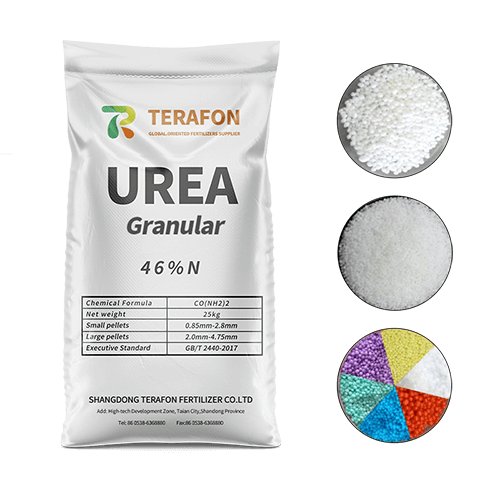
Urea-46%-Granular
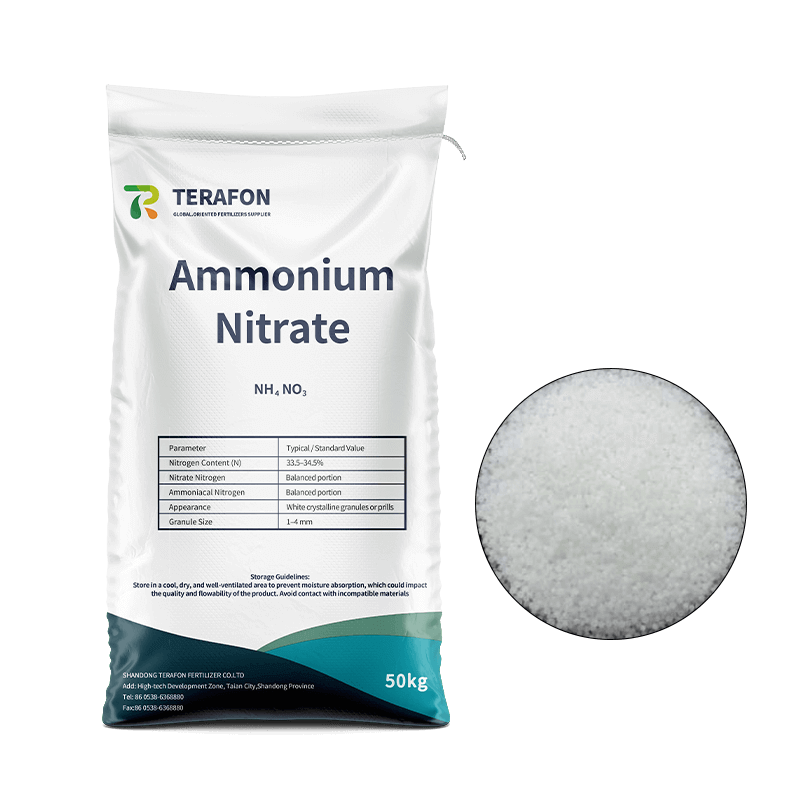
Ammonium-Nitrate
Calcium-Ammonium-Nitrate
Calcium Nitrate
Suitable Crops
Cereal Crop

Fruit Trees

Berry & Vine Crops

Leafy & Fruiting Vegetables
Nitrogen Fertilizer: Enhancing Crop Growth and Yield
Apply nitrogen fertilizers like urea or ammonium nitrate through soil, fertigation, or foliar spray to provide essential nitrogen for healthy crops. Proper application supports strong growth and higher yields. Terafon Fertilizer offers reliable urea and ammonium nitrate products for efficient and sustainable crop nutrition.
