


This comprehensive guide explores sulfur (S) elements, their forms, physiological functions, and best management strategies. It details how to identify, prevent, and correct sulfur deficiency in plants, along with modern tools for precision nutrient management. Integrating soil testing, sulfur balancing, and advanced technologies, this guide helps farmers and agronomists enhance crop yield, quality, and sustainability.
1. What Are Sulfur Elements and Their Role
The Importance of Sulfur for Plants
Sulfur is a vital secondary macronutrient essential for amino acid and protein synthesis, enzyme activation, and chlorophyll formation. It plays a key role in photosynthesis and nitrogen efficiency. Deficiency in sulfur leads to stunted growth, chlorosis in young leaves, and lower protein and oil content in crops.
Key Roles of Sulfur:- Protein formation: Integral component of cysteine and methionine, essential amino acids.
- Enzyme activation: Enhances biochemical reactions and metabolic activity.
- Chlorophyll synthesis: Promotes photosynthesis and vibrant green leaf color.
- Nitrogen utilization: Improves nitrogen efficiency and reduces nutrient waste.
- Stress tolerance: Strengthens plant defense against diseases and environmental stress.
2. Types of Sulfur Fertilizers
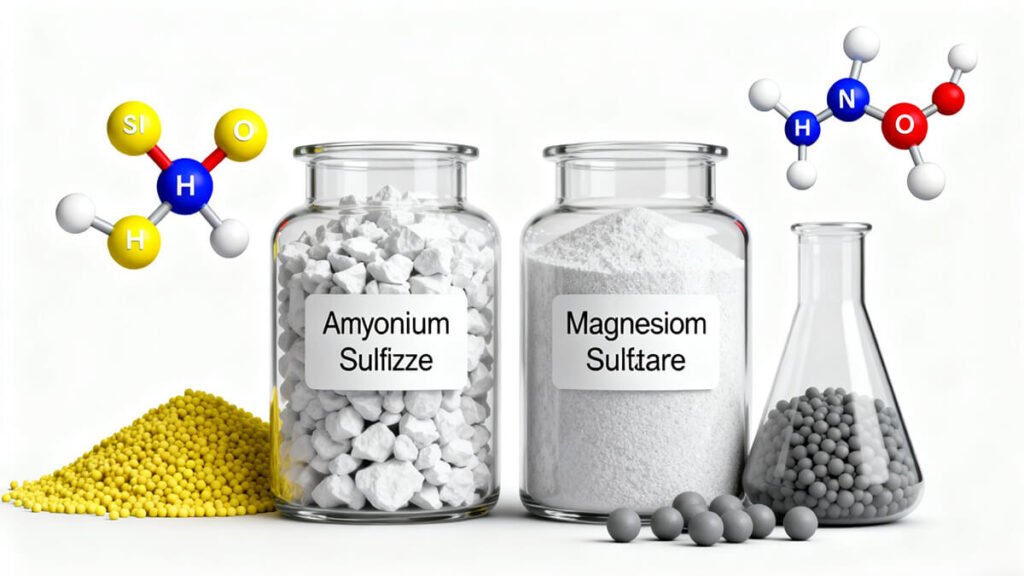
Sulfur fertilizers exist in both elemental and sulfate forms, offering flexibility for various soil types and crops.
2.1 Water-Soluble Sulfate Fertilizers
Examples: Ammonium sulfate ((NH₄)₂SO₄), Magnesium sulfate (MgSO₄), Potassium sulfate (K₂SO₄)
Characteristics: Provide immediately available sulfate-sulfur for rapid plant uptake.
Advantages: Fast correction of deficiency; suitable for fertigation and foliar application.
Best for: Rapidly growing crops, vegetables, and oilseeds.
2.2 Elemental or Slow-Release Sulfur Fertilizers
Examples: Elemental sulfur (S⁰), Bentonite sulfur
Characteristics: Oxidized slowly by soil microbes, providing long-term sulfur release.
Advantages: Improves sulfur availability throughout the season; helps lower soil pH in alkaline soils.
Best for: Long-duration crops and calcareous or alkaline soils.
2.3 Organic Sulfur Sources
Examples: Manure, compost, gypsum, plant residues
Characteristics: Supply sulfur naturally while improving soil structure and microbial activity.
Best for: Organic farming systems and long-term soil health.
3. How to Apply Sulfur Elements
Sulfur mobility in soil depends on its chemical form. Sulfate-sulfur is mobile and easily leached, while elemental sulfur requires microbial oxidation before plant uptake.
Application Forms
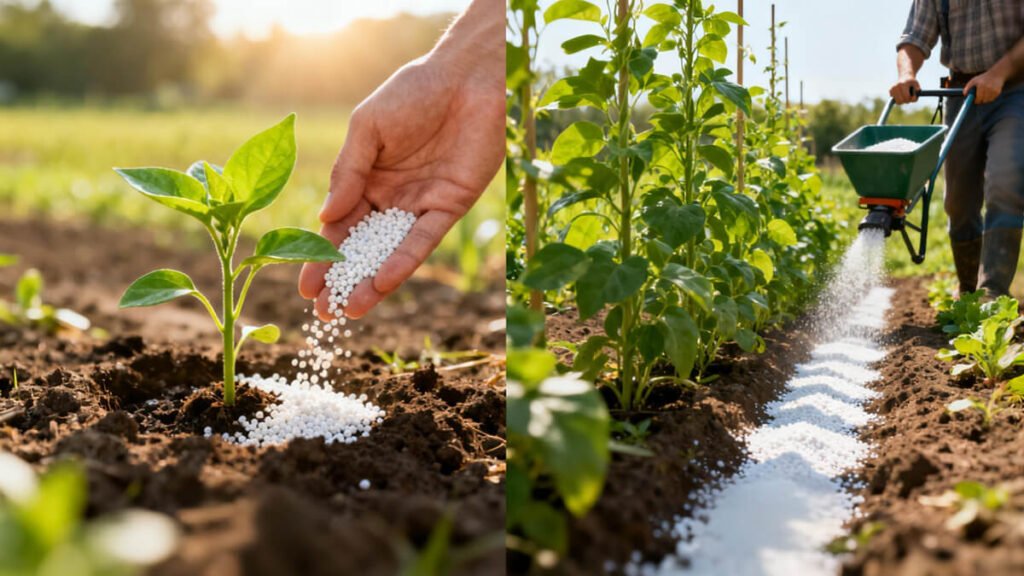
- Granular: For base application and long-term soil enrichment.
Liquid: Ideal for fertigation or foliar sprays to address quick deficiencies.
Application Methods:
- Broadcasting: Spread evenly before planting or soil incorporation.
- Band placement: Apply close to the root zone for better uptake.
Fertigation: Apply dissolved sulfur sources for uniform distribution.
Best Practices:
- Apply sulfur before planting or during early vegetative growth.
- Combine sulfur with nitrogen for efficient protein synthesis.
- Avoid excessive irrigation that may leach sulfate-sulfur in sandy soils.
Signs of Sulfur Deficiency
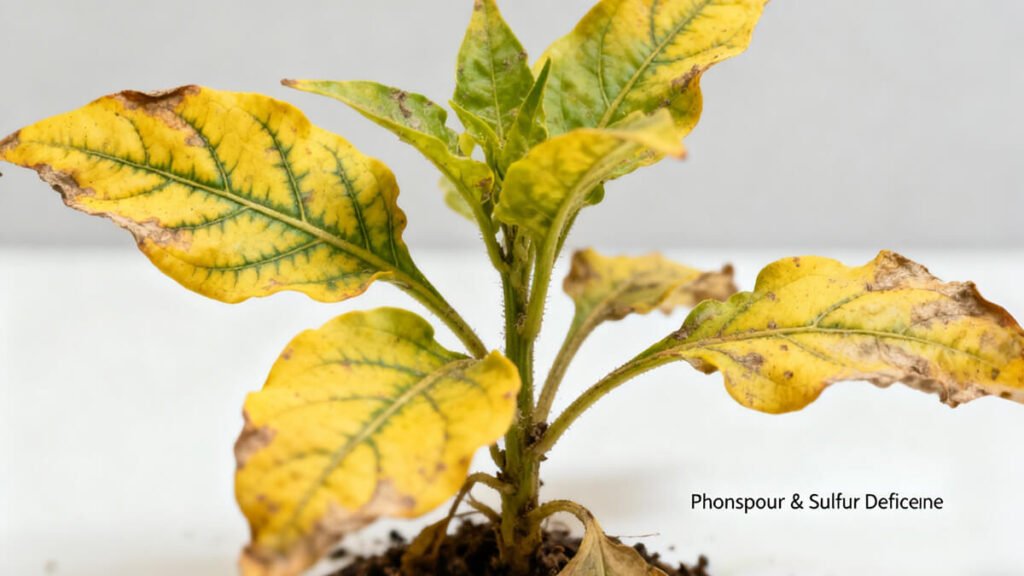
- Uniform yellowing of young leaves: Unlike nitrogen deficiency (older leaves first), sulfur deficiency appears on new growth.
- Stunted growth: Reduced plant height and leaf size.
- Delayed maturity: Prolonged vegetative growth period.
- Low protein and oil content: Poor grain or seed quality.
🔍 Pro Tip: Regularly monitor young leaves, especially in light or sandy soils where sulfur leaching is common.
5. Factors Causing Sulfur Deficiency
- Low organic matter content and intensive cropping.
- Reduced atmospheric sulfur deposition due to cleaner air.
- Sandy or leaching-prone soils.
- Excessive rainfall or irrigation washing out sulfate.
- Imbalanced fertilization neglecting sulfur input.
- High nitrogen application increasing sulfur demand.
6. How to Address Sulfur Deficiency

Inorganic Sources: Ammonium sulfate, potassium sulfate, and magnesium sulfate provide fast-acting sulfate-sulfur.
Strategies:
- Conduct soil and tissue tests to identify sulfur requirements.
- Apply sulfur fertilizers before planting or in split doses for long-term effectiveness.
- Combine sulfate and elemental sulfur for both quick and extended availability.
7. Optimal Timing for Sulfur Application
- Base application: Before planting for strong seedling establishment.
- Early vegetative stage: Ensures adequate sulfur for chlorophyll and protein synthesis.
- Reproductive stage: Maintain supply during flowering and pod/grain formation.
- Avoid heavy irrigation after application to reduce leaching losses.
8. How to Determine When to Apply Sulfur
- Soil analysis: Measure sulfate-sulfur and organic matter content.
- Plant tissue testing: Evaluate sulfur concentration in young leaves or petioles.
- Visual inspection: Watch for chlorosis on new leaves and reduced vigor.
- Growth stage correlation: Apply sulfur according to critical crop demand periods.
9. How to Prevent Sulfur Deficiency
- Incorporate organic matter regularly to maintain sulfur reserves.
- Follow the 4R Principle: Right Source, Right Rate, Right Time, Right Place.
- Rotate with deep-rooted crops to recycle subsoil sulfur.
- Use controlled-release or elemental sulfur in light soils.
- Balance sulfur with nitrogen, phosphorus, and magnesium for optimal nutrient uptake.
10. Modern Technologies in Sulfur Management
- Nutrient management software: Calculate sulfur demand and optimize fertilizer blends.
- Soil sensors and leaf analyzers: Monitor real-time sulfur status.
- GPS-based application systems: Enable precise sulfur placement.
- Remote sensing & drones: Detect sulfur deficiency through canopy color and spectral data.
- Decision Support Systems (DSS): Integrate soil, crop, and climate data for efficient nutrient management.
Table of Contents
- 1. What Are Sulfur Elements and Their Role
- 2. Types of Sulfur Fertilizers
- 3. How to Apply Sulfur Elements
- 4. Signs of Sulfur Deficiency
- 5. Factors Causing Sulfur Deficiency
- 6. How to Address Sulfur Deficiency
- 7. Optimal Timing for Sulfur Application
- 8. How to Determine When to Apply Sulfur
- 9. How to Prevent Sulfur Deficiency
- 10. Modern Technologies in Sulfur Management
Recommended Fertilizers
Urea Fertilizer
View Solutions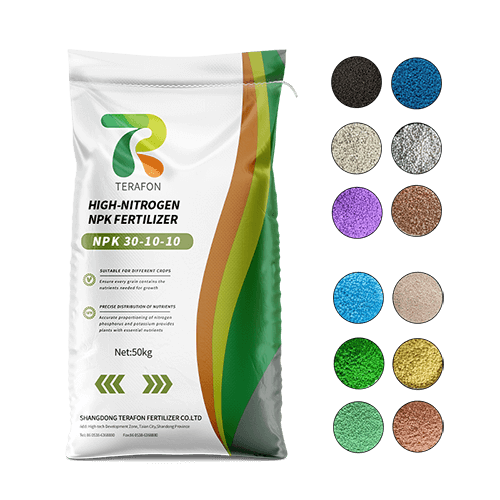
NPK Fertilizer
View Solutions
Water Soluble Fertilizer
View Solutions
Fulvic-Acid-Fertilizer
View SolutionsSuitable Crops
Cereal Crops

Legume Crops

Root & Tuber Crops

Fruit Crops
Sulfur Fertilizers: Nutrient Balance and Crop Quality
Sulfur fertilizers support protein synthesis, improve crop metabolism, and enhance overall plant health, while optimized formulations maintain soil nutrient balance and long-term fertility. Terafon Fertilizer provides reliable solutions for efficient and sustainable farming.
