


- Home » Seaweed Fertilizer vs Humic Acid...
Seaweed Fertilizer vs Humic Acid: Optimal Choice for Crop Growth
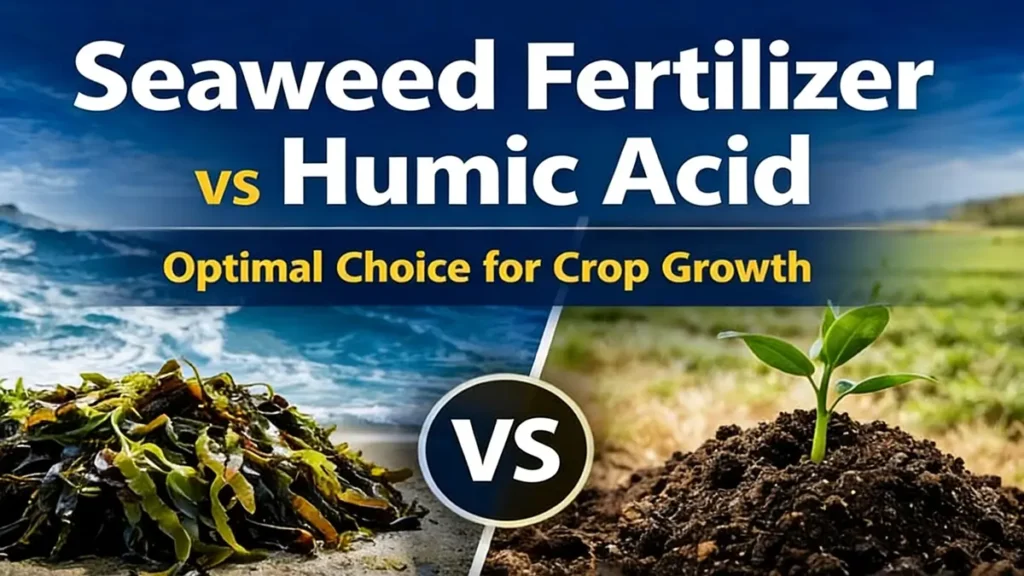
In modern sustainable agriculture, organic biostimulants such as seaweed extract fertilizers and humic acid soil conditioners are increasingly important for enhancing soil fertility and crop productivity. Both improve root systems, stress tolerance, and nutrient efficiency, but they differ in composition, mechanisms, and applications. Understanding these differences helps growers select the best organic biostimulants for crops. Trusted providers, including Terafon Fertilizer, offer high-quality seaweed extract and humic-based solutions that support sustainable crop growth and soil health.
Table of Contents
- 1️⃣ Understanding Seaweed Fertilizer and Humic Acid
- 2️⃣ How Seaweed Fertilizer Enhances Crop Growth
- 3️⃣ How Humic Acid Improves Soil and Plant Performance
- 4️⃣ Key Differences Between Seaweed Fertilizer and Humic Acid
- 5️⃣ Choosing Between Seaweed Fertilizer and Humic Acid
- 6️⃣ Synergy: Combining Seaweed Extract and Humic Acid
- 7️⃣ Practical Tips for Application
- 8️⃣ Conclusion
1️⃣ Understanding Seaweed Fertilizer and Humic Acid
Seaweed fertilizer comes from marine algae and contains micronutrients, trace minerals, vitamins, and plant hormones like cytokinins and auxins. These compounds stimulate plant metabolism, enhance root and shoot growth, and improve stress resilience. Seaweed extract fertilizers are widely recognized in organic crop production, supporting yield and quality.
Humic acid, extracted from decomposed organic matter, is primarily a soil conditioner that improves water retention, nutrient availability, and root development. Both products are used globally in high-value crop cultivation. For growers seeking reliable solutions, Terafon Fertilizer provides carefully formulated seaweed and humic products designed for various soil and crop types.

2️⃣ How Seaweed Fertilizer Enhances Crop Growth
Seaweed extract fertilizers supply essential bioactive compounds that stimulate root growth, enhance nutrient uptake efficiency, and increase stress tolerance. These fertilizers are highly effective in foliar spraying, fertigation, and hydroponic systems, providing rapid absorption and visible plant growth improvements.
Key Benefits:
- Enhances root and shoot growth for better biomass accumulation.
- Improves tolerance to drought, heat, and transplant stress.
- Supports soil microbial activity, contributing to long-term soil fertility.
Ideal for organic and sustainable crop production, especially when combined with high-quality formulations from trusted suppliers like Terafon Fertilizer.
3️⃣ How Humic Acid Improves Soil and Plant Performance
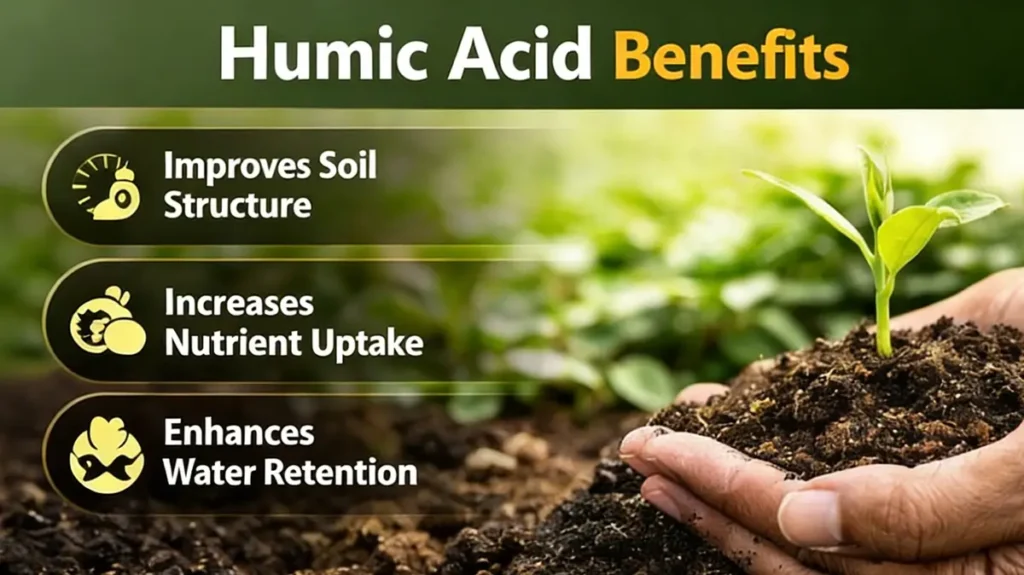
Humic acid works primarily as a soil amendment, enhancing water retention, nutrient availability, and cation exchange capacity. It stimulates root elongation and nutrient absorption, particularly in degraded or low-fertility soils.
- Enhances soil structure and water-holding capacity.
- Promotes robust root systems and better nutrient absorption.
- Reduces fertilizer requirements by improving nutrient efficiency.
- Improves crop performance on degraded, clay, or sandy soils.
4️⃣ Key Differences Between Seaweed Fertilizer and Humic Acid
| Feature | Seaweed Fertilizer | Humic Acid |
|---|---|---|
| Source | Marine algae extract | Soil organic matter |
| Primary Function | Plant biostimulation & micronutrients | Soil conditioning & nutrient availability |
| Contains Natural Plant Hormones | Yes | No (but promotes auxin-like root activity) |
| Improves Soil Structure | Moderate | Strong |
| Enhances Stress Tolerance | High | Moderate |
| Typical Applications | Foliar spray, fertigation | Soil amendment, pre-season incorporation |
Summary: Seaweed extract fertilizers excel in rapid plant stimulation and stress tolerance, while humic acid is ideal for long-term soil fertility improvement and nutrient efficiency.
5️⃣ Choosing Between Seaweed Fertilizer and Humic Acid
Growers should select based on crop type, soil condition, and production goals:
- 🌿 Seaweed Fertilizer: Best for early growth stages, stress mitigation, and improving crop quality.
- 💪 Humic Acid: Optimal for soil fertility enhancement, water retention, and nutrient availability.
🌾 Combined Use: Integrating both provides synergistic benefits, supporting root biomass, nutrient efficiency, and yield.
6️⃣ Synergy: Combining Seaweed Extract and Humic Acid
Combining seaweed extract and humic acid produces synergistic benefits, often outperforming the effects of either input applied alone. Humic acid improves soil nutrient availability, while seaweed extract provides bioactive compounds that enhance growth and stress tolerance. This combination is particularly effective for tomatoes, fruit trees, and other high-value crops, supporting sustainable crop growth strategies.

7️⃣ Practical Tips for Application
- Follow recommended dilution rates and application schedules for optimal results.
- Apply foliar sprays during cool parts of the day for maximum absorption.
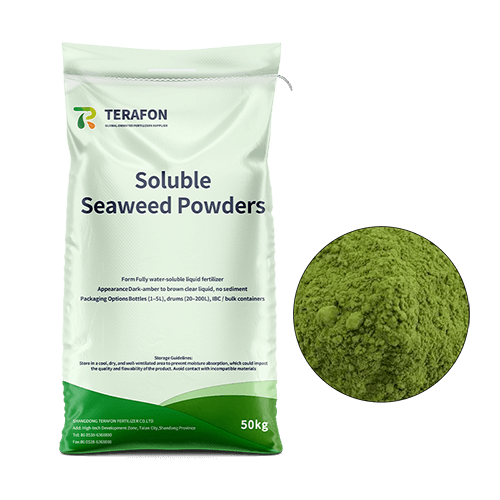
- Ensure powdered humic acid or seaweed formulations are properly dissolved or incorporated to enhance uniform nutrient delivery.
Monitor crop response and adjust application methods based on plant stage and soil fertility conditions.
8️⃣ Conclusion
Neither seaweed fertilizer nor humic acid is universally “better”; instead, they play complementary roles in organic crop management. Seaweed extracts provide rapid growth stimulation and stress resilience, while humic acid strengthens soil structure and nutrient efficiency. Integrating both, particularly with high-quality products from Terafon Fertilizer, can improve crop yield, quality, and soil health, supporting sustainable agriculture goals for both commercial and high-value crops.
Frequently Asked Questions (FAQs)
Humic acid primarily enhances soil physical and chemical properties by improving water retention, nutrient availability, and cation exchange capacity, which supports stronger root systems. Seaweed fertilizer, on the other hand, supplies bioactive compounds that directly stimulate plant growth in addition to improving soil health.
Yes — combining seaweed extract with humic acid can produce synergistic benefits. Humic acid improves nutrient availability and soil structure, while seaweed extract supplies growth‑stimulating compounds that improve stress resistance and crop vigor, leading to healthier plants and improved yields.
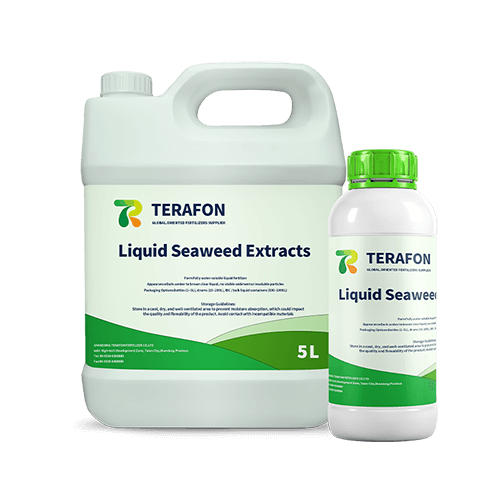
Seaweed extract fertilizers can be applied as a foliar spray, soil drench, or through irrigation systems. Recommended dilution and frequency depend on crop type and growth stage; for example, many liquid seaweed extracts are applied every 10–15 days during active growth to enhance rooting and stress tolerance.
Yes. Because seaweed extract fertilizers are derived from natural seaweed biomass and contain no synthetic chemicals, they are compatible with organic and sustainable farming practices and can be included in certified organic production systems.
Seaweed extract contains organic compounds that can serve as food for beneficial soil microorganisms, supporting microbial growth and activity. Enhanced microbial populations help break down organic matter and make nutrients more available for plant uptake, leading to overall healthier soil ecosystems.
Related Articles
Recommended Fertilizers
Soluble-Seaweed-Powders
Liquid-Seaweed-Extracts
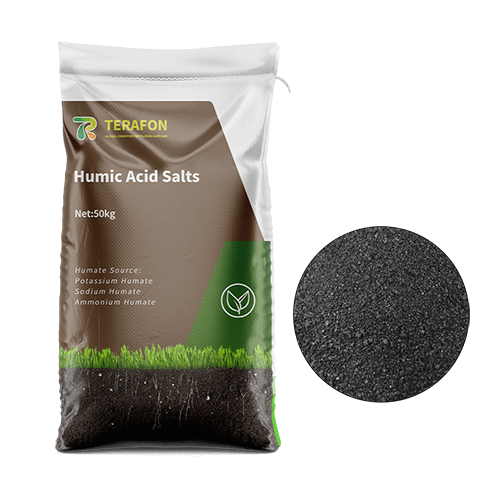
Ammonium Humate Fertilizer
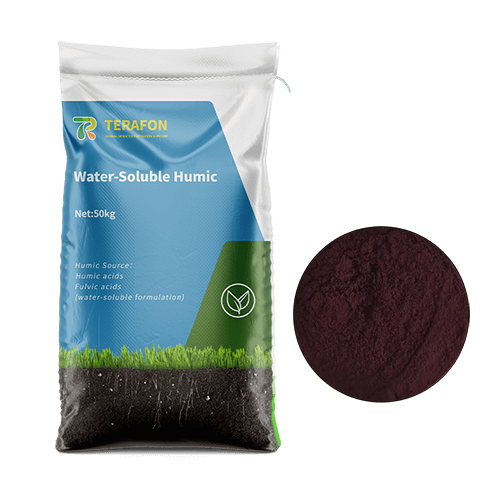
Ammonium Humate Fertilizer
Suitable Crops

Industrial & Bio-Processing Crop

Fruit Trees & Orchards

Leafy & Fruiting Vegetables

Root & Bulb Vegetables
Seaweed Fertilizer vs Humic Acid: Crop Growth Benefits
Compare seaweed fertilizer and humic acid for crops. Seaweed extracts boost root growth and stress tolerance, while humic acid improves soil and nutrient uptake. Terafon Fertilizer provides reliable solutions for sustainable farming.
