


- Home » Seaweed Fertilizer for Crop Stress Tolerance...
Seaweed Fertilizer for Crop Stress Tolerance & Root Growth
(With practical application guidelines and optimized strategies for sustainable, high‑yield farming)

At the forefront of modern sustainable agriculture, Terafon Fertilizer has integrated advanced biostimulant strategies into crop nutrition programs. One of the most impactful and research‑validated of these is seaweed fertilizer, a natural solution for enhancing plant health, improving nutrient uptake in crops, and boosting resilience under adverse environmental conditions.
Seaweed fertilizer—especially when used as a seaweed extract biostimulant—not only supplies essential nutrients but also delivers biologically active compounds that regulate growth, improve soil conditions, and enhance resilience to drought, salinity, and temperature stress. This comprehensive guide blends scientific insight with field‑proven seaweed fertilizer application methods and practical use rates suitable for diverse crop systems.
Table of Contents
- 1. What Is Seaweed Fertilizer and Why It Matters
- 2. Seaweed Fertilizer’s Key Bioactive Components and Action Mechanisms
- 3. How Seaweed Fertilizer Promotes Root Development
- 4. Seaweed Fertilizer and Enhanced Stress Resistance Mechanisms
- 5. Practical Seaweed Fertilizer Application Methods and Use Rates
- 6. Crop‑Specific Application Examples
- 7. Enhanced Yield and Quality: What the Research Shows
- Conclusion: Seaweed Fertilizer as a Cornerstone of Sustainable Crop Nutrition
1. What Is Seaweed Fertilizer and Why It Matters
Seaweed fertilizer is derived from marine algae—primarily brown seaweed species—and is rich in bioactive molecules such as polysaccharides, amino acids, vitamins, and plant‑derived hormones like auxins and cytokinins. Unlike traditional chemical fertilizers, seaweed extracts:
- Improve plant physiological functions
- Enhance nutrient absorption efficiency
- Support sustainable crop growth under environmental stress
Help maintain soil microbial activity and structure
Studies show that crops treated with seaweed extract based fertilizers often exhibit enhanced growth, increased yield, and improved quality parameters compared with untreated controls. In field conditions, average crop yield increases of around 15% have been observed with regular seaweed fertilizer use.
2. Seaweed Fertilizer’s Key Bioactive Components and Action Mechanisms
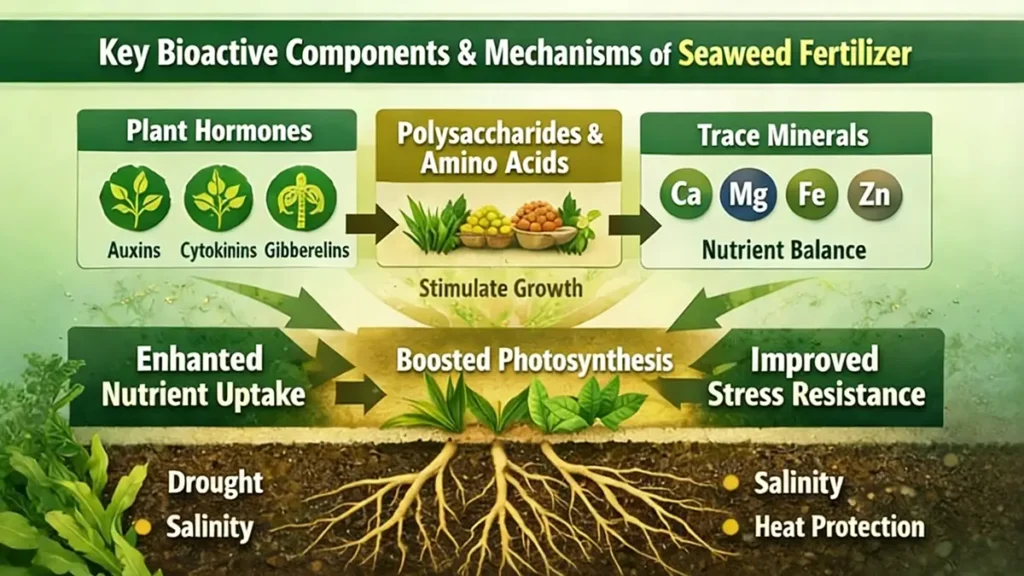
The effectiveness of seaweed fertilizer arises from its complex biochemical profile, which enables multiple growth‑enhancing and stress‑mitigating functions:
🌱 Major Bioactive Compounds
- Plant hormones (Auxins, Cytokinins, Gibberellins): stimulate cell division, lateral root formation, and tissue growth.
- Polysaccharides & oligosaccharides: aid soil structure and water retention, enhancing root zone conditions.
- Amino acids, vitamins & minerals: support metabolic processes and antioxidant defenses.
Trace mineral elements: such as Ca, Mg, Fe, Zn—which improve overall nutrient balance and crop vigor.
⚙️ Functional Mechanisms
Enhancing Nutrient Uptake: Seaweed extracts improve the efficiency of macro‑ and micronutrient absorption, helping crops utilize applied fertilizers more effectively.
Optimizing Photosynthetic Capacity: Hormone‑like compounds regulate plant growth responses, increasing leaf expansion and light capture.
Improving Soil and Root Zone Conditions: Organic compounds become a substrate for beneficial microbes, improving soil porosity and enhancing plant root growth potential.
Activating Stress Response Pathways: Seaweed components help activate antioxidants and protect cells under water deficit or high salinity.
These integrated mechanisms make seaweed fertilization a powerful tool not only for yield improvement but also for strengthening crop stress tolerance with biostimulants.
3. How Seaweed Fertilizer Promotes Root Development
Root growth directly affects a crop’s capacity to access water and nutrients. Seaweed fertilizer promotes enhanced root system architecture in several ways:
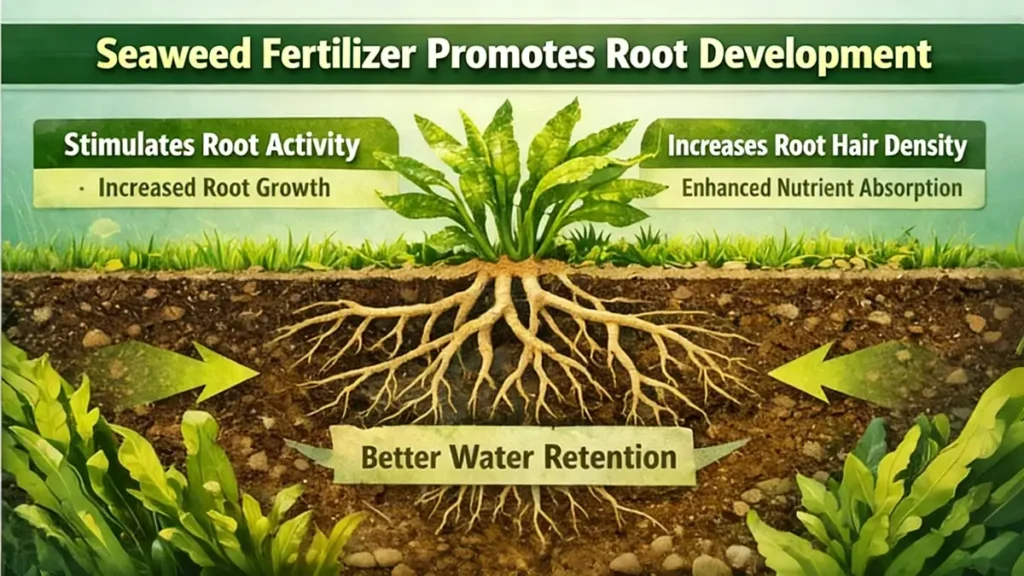
- Stimulating root meristem activity: Plant hormones in seaweed extracts promote cell division at root tips.
- Increasing fine root and root hair density: These microscopic structures expand the effective zone for nutrient absorption.
Improving soil moisture retention: Humic‑like substances in seaweed help soil retain moisture, encouraging deeper root penetration.
Together, these effects produce healthier, deeper, and more productive root systems, which are crucial under drought or nutrient‑limited conditions.
4. Seaweed Fertilizer and Enhanced Stress Resistance Mechanisms
Crop stress resistance refers to the plant’s ability to maintain growth and yield under sub‑optimal conditions. Seaweed fertilizer enhances this through:
🔹 Drought & Water Stress
Seaweed extracts can regulate stomatal behavior and increase soluble sugar accumulation, helping reduce water loss and maintain cellular hydration under drought stress.
🔹 Salt & Ionic Stress
By helping plants regulate internal Na⁺/K⁺ balance and maintaining membrane stability, seaweed biostimulants improve plant performance in saline soils.
🔹 Temperature Extremes
Seaweed bioactive compounds help trigger synthesis of protective proteins such as heat‑shock proteins, reducing cellular damage during temperature stress responses.
These actions together help crops maintain better physiological balance and metabolic activity under challenging environments.
5. Practical Seaweed Fertilizer Application Methods and Use Rates
Below are field‑ready seaweed extract application methods and recommended dosages that have been validated under commercial production:
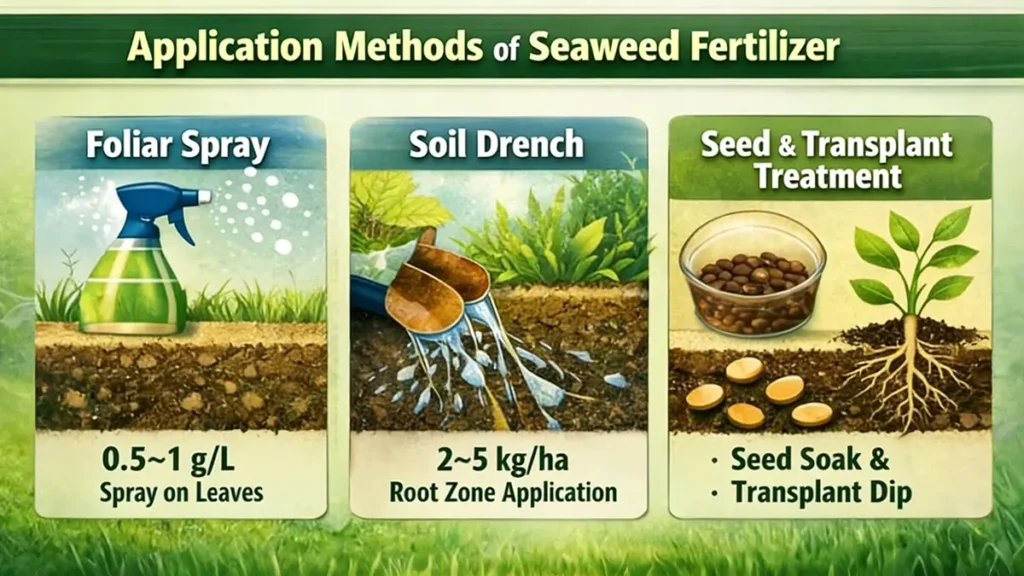
- Dilution: 0.5–1.0 g of seaweed extract per liter of water (0.05–0.1%).
- Timing: Apply at early vegetative stages, during flowering, and at fruit set for maximum growth stimulation.
Frequency: Every 10–14 days throughout the growing season.
👉 Spraying directly onto foliage can enhance nutrient absorption efficiency, often achieving >70% uptake within 24 hours, significantly higher than soil applications alone.
- Dilution: 1:800–1:1500 concentration with irrigation water.
- Rate: 2–5 kg per hectare per application; up to 8–12 kg/ha in high‑demand crops.
Frequency: Apply every 10–15 days during active root growth or under stress conditions.
This method directly improves root zone micro‑environment and maximizes seaweed fertilizer’s role in enhancing root development.
📍 5.3 Seed / Transplant Treatment
- Seed Soaking: Soak seeds in a 0.5–1.0% seaweed extract solution for 30–60 minutes prior to sowing to boost early vigor.
Transplant Dip: Dip seedling roots in diluted seaweed extract before transplanting to reduce shock and improve establishment.
6. Crop‑Specific Application Examples
| Crop Type | Method | Recommended Use Rate | Typical Frequency |
|---|---|---|---|
| Vegetables & Fruit Crops | Foliar Spray | 0.5–1.0 g/L | Every 10–14 days |
| Field Cereals & Grains | Soil Drench | 1:800–1:1500 | Every 10–15 days |
| Orchards & Vineyards | Combined Foliar + Drip | 300–900 g/ha + 2–5 kg/ha | Strategic seasonal timing |
| Nursery & Transplants | Seed / Root Soak | 0.5–1% solution | Once before planting |
These practical use rates help growers apply seaweed biostimulants effectively, providing both nutritional support and stress protection.
7. Enhanced Yield and Quality: What the Research Shows
Meta‑analyses of field trials indicate that seaweed fertilizer application can significantly increase crop yields and improve quality attributes including sugar content, soluble solids, and nutritional parameters such as vitamin C concentration—in addition to boosting stress resilience.
This makes seaweed extract‑based fertilization strategies an important component of sustainable crop production systems, particularly where environmental stressors are common.
Conclusion: Seaweed Fertilizer as a Cornerstone of Sustainable Crop Nutrition
Incorporating seaweed fertilizer into crop management enhances root development, stress resistance, and overall plant productivity—making it a cornerstone of advanced, sustainable agriculture. When used correctly, it complements traditional fertilizers, improves nutrient efficiency, and contributes to healthier, more resilient crops across diverse climatic and soil conditions.
As part of forward‑looking crop programs, Terafon Fertilizer continues to support growers with high‑quality seaweed extract solutions that advance both productivity and sustainability goals.
Terafon Fertilizer believes that combining biological stimulation with precise application strategies is key to modern farming success—helping farmers cultivate stronger roots, greater stress tolerance, and higher yields without compromising environmental health.
Get a Catalog & Best Price
Recommended Fertilizers
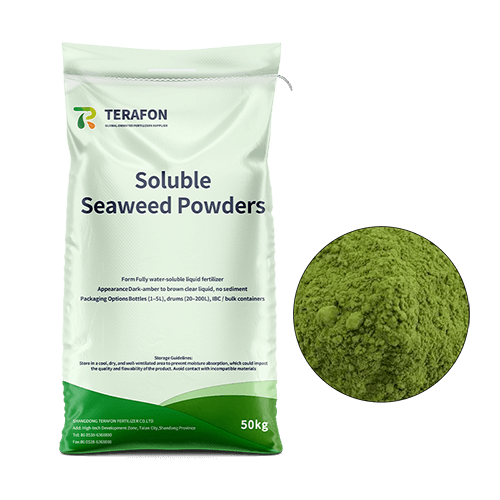
Soluble-Seaweed-Powders
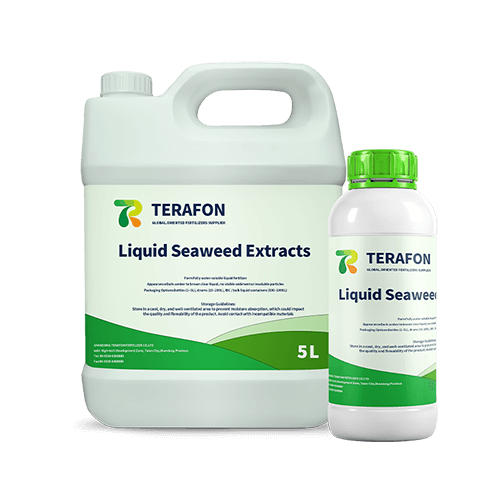
Liquid-Seaweed-Extracts
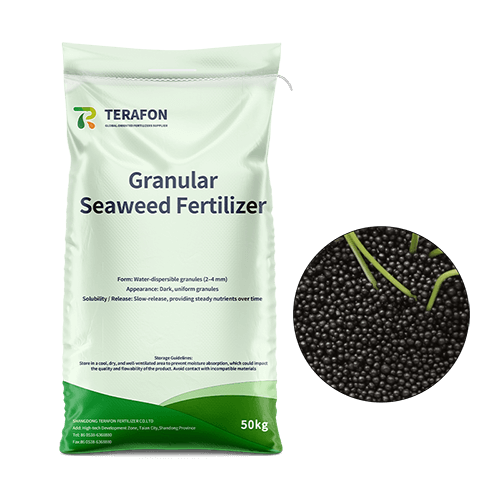
Granular-Seaweed-Fertilizer
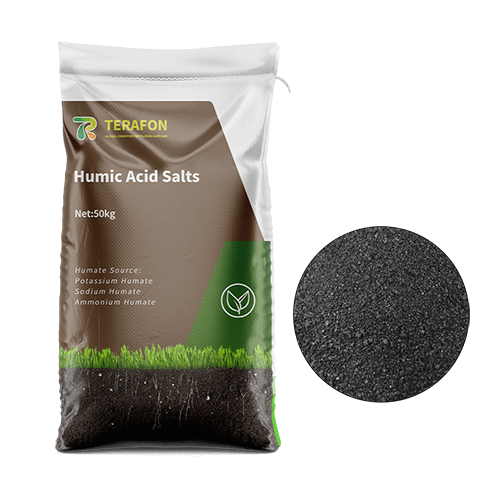
Ammonium Humate Fertilizer
Suitable Crops

Fruit Trees & Orchards

Berry & Vine Crops

Leafy & Fruiting Vegetables

Root & Bulb Vegetables
Choose the Right Seaweed Fertilizer for Your Crops
Select the most suitable seaweed fertilizer based on crop type, growth stage, and soil conditions to promote root development, enhance stress resistance, and improve yield and quality. Contact Terafon Fertilizer for expert guidance and customized seaweed fertilizer solutions.
