This comprehensive guide explores phosphorus elements, including their forms, functions, mechanisms of action, and best application strategies. It details how to identify, prevent, and correct phosphorus deficiency in plants, along with guidance on optimal application timing, modern management technologies, and precision fertilization techniques. Integrating soil testing, site-specific nutrient management, and advanced application tools, this guide aims to maximize crop yield and quality, improve phosphorus use efficiency, and minimize environmental impact, providing an authoritative reference for effective crop nutrition management.
1. What Are Phosphorus Elements and Their Role
The Importance of Phosphorus for Plant Growth
Phosphorus (P) is one of the essential macronutrients for plants, playing a critical role in energy transfer, photosynthesis, and root development. It is a key component of ATP (adenosine triphosphate), which drives biochemical reactions essential for plant growth and productivity. A deficiency in phosphorus can lead to poor root formation, stunted growth, delayed maturity, and low crop yield.
Key roles of phosphorus elements include:
- Energy transfer: Phosphorus forms ATP and ADP, essential for energy exchange during photosynthesis and respiration.
- Root and seed development: Encourages strong root systems and enhances seed germination and fruit quality.
- Maturity and yield: Promotes early flowering and ripening, improving overall crop productivity and quality.
2. Types of Phosphorus Elements
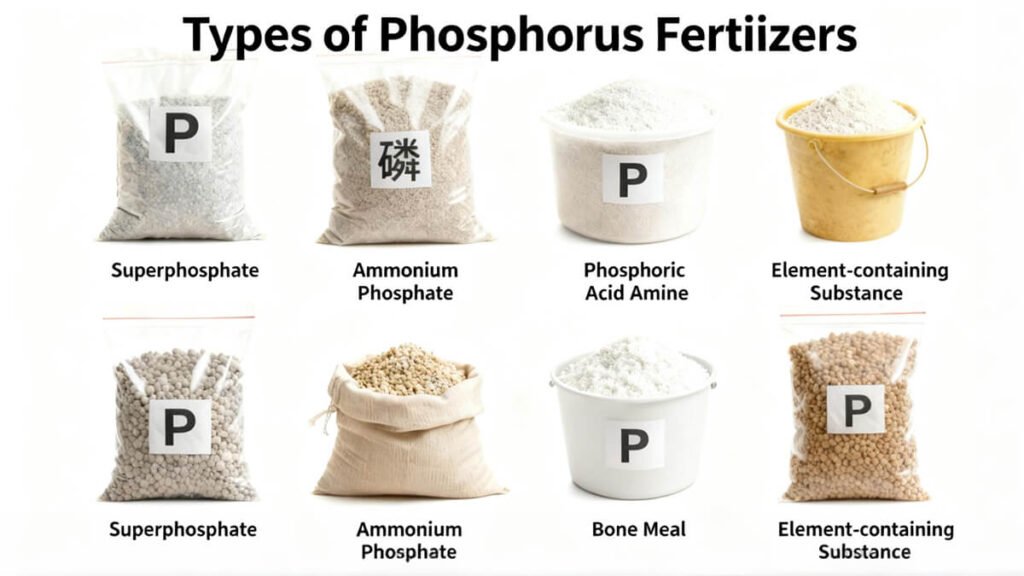
Phosphorus fertilizers come in various chemical forms, each offering distinct advantages depending on soil type, crop, and growth stage.
2.1 Water-Soluble Phosphorus Fertilizers
Examples: Monoammonium phosphate (MAP), Diammonium phosphate (DAP), Superphosphate
Characteristics: Phosphorus is available in water-soluble form, making it immediately accessible to plants.
Advantages: Rapid nutrient uptake; ideal for fast-growing crops.
Precautions: May easily react with calcium in alkaline soils, reducing availability.
Best for: Seedlings, early growth stages, and phosphorus-demanding crops like corn and wheat.
2.2 Citrate-Soluble Phosphorus Fertilizers
Examples: Basic slag, partially acidulated phosphate rock
Characteristics: Moderately soluble; release phosphorus gradually in acidic soils.
Advantages: Long-lasting phosphorus supply; improves soil structure.
Best for: Acidic soils and perennial crops.
2.3 Insoluble (Organic or Rock-Based) Phosphorus Fertilizers
Examples: Phosphate rock, bone meal, composted organic phosphate
Characteristics: Low solubility; depend on soil microbial activity for release.
Advantages: Eco-friendly and improves long-term soil fertility.
Best for: Organic farming systems and long-term soil enrichment.
3. How to Apply Phosphorus Elements
Application Forms
- Granular form: Common for base fertilization; provides steady phosphorus release.
Liquid form: Suitable for fertigation or foliar sprays for quick phosphorus uptake.
Application Methods:
- Band placement: Apply phosphorus near seed or root zones to enhance absorption.
- Broadcasting: Spread evenly before plowing or planting for uniform soil enrichment.
Fertigation: Combine with irrigation for precise nutrient distribution.
Best Practices:
Apply phosphorus before planting or at early growth stages for maximum efficiency.
Combine with nitrogen or potassium to balance nutrient ratios and improve uptake.
Use starter fertilizers in phosphorus-deficient soils for quick root stimulation.
💡 Tip: Employ controlled-release phosphorus fertilizers or enhanced-efficiency formulations to ensure continuous nutrient supply and minimize losses.
4. Signs of Phosphorus Deficiency
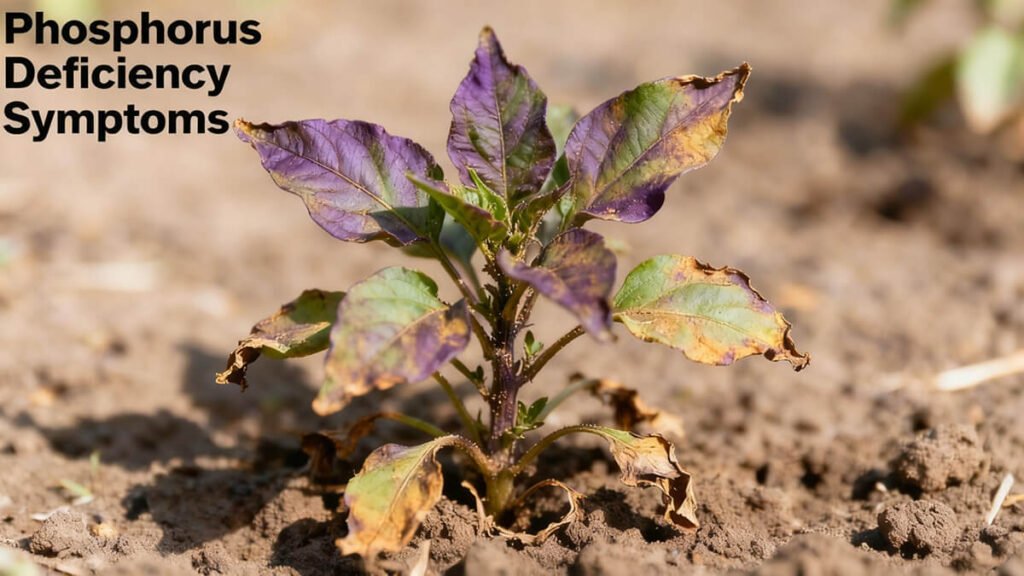
Phosphorus deficiency appears gradually and can severely affect plant development:
Dark green or purplish leaves: Especially on the undersides, due to accumulation of anthocyanins.
Stunted root and shoot growth: Weak root systems limit water and nutrient absorption.
Delayed maturity: Slow flowering and fruiting lead to yield reduction.
Poor seed formation: Seeds may be small or malformed.
Low tillering in cereals: Reduced side shoot formation in grains like wheat and rice.
🔍 Professional Tip: Regularly monitor leaf color, growth rate, and root development to identify phosphorus deficiency early.
5. Factors Causing Phosphorus Deficiency
Several environmental and soil-related factors contribute to phosphorus deficiency:
Cold or wet soils: Limit root activity and reduce phosphorus mobility.
High soil pH (alkaline): Phosphorus reacts with calcium and becomes unavailable.
Low organic matter: Reduces microbial activity needed for phosphorus release.
Soil compaction: Restricts root growth and phosphorus absorption.
Excess iron or aluminum: In acidic soils, phosphorus binds to these elements, reducing availability.
Imbalanced fertilization: Overuse of nitrogen or potassium can suppress phosphorus uptake.
6. How to Address Phosphorus Deficiency
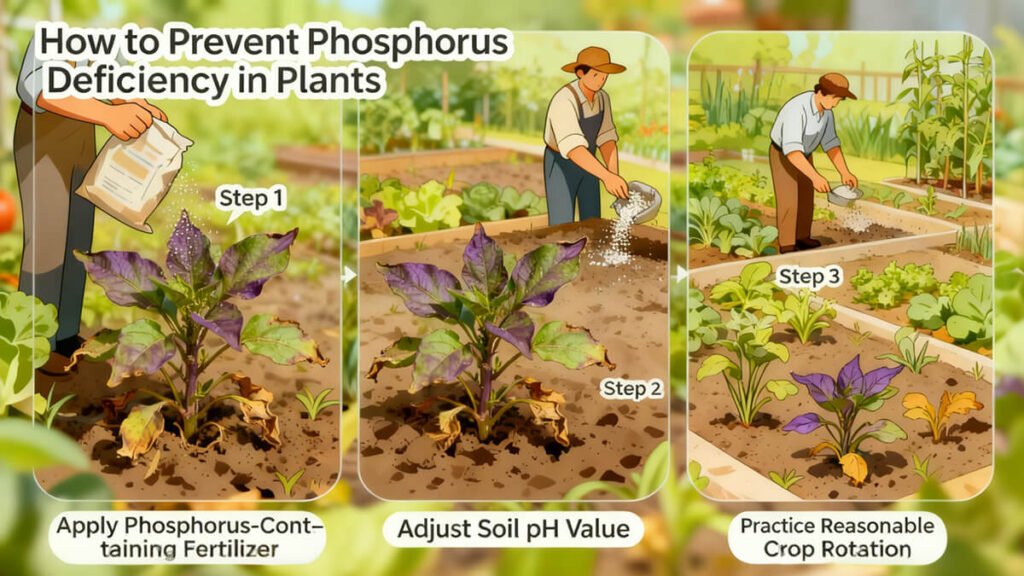
Organic Sources
Bone meal, compost, and manure provide slow-release phosphorus, improving soil structure and fertility.
Inorganic Sources
- DAP, MAP, and superphosphate supply quickly available phosphorus for rapid correction.
Strategies
Conduct soil testing to determine phosphorus status.
Apply starter phosphorus near seeds for early root development.
Combine organic and inorganic phosphorus sources for balanced nutrient supply and soil health.
💡 Tip: Using phosphate solubilizing bacteria (PSB) can naturally increase phosphorus availability in the soil.
7. Optimal Timing for Phosphorus Application
Timing is key for maximizing phosphorus uptake:
Base application: Apply before sowing or planting for effective root zone placement.
Early growth stage: Ensure phosphorus availability during root establishment.
Avoid waterlogged or cold soils: These conditions restrict phosphorus mobility.
📅 Advanced Tip: Match phosphorus application timing with crop growth stages and soil temperature trends for best results.
8. How to Determine When to Apply Phosphorus
Soil tests: Measure available phosphorus levels using Olsen or Bray test methods.
Plant tissue analysis: Check phosphorus concentration in leaves or stems to identify hidden deficiencies.
Crop models and local data: Use growth models and regional soil maps to plan phosphorus application.
Visual indicators: Look for purpling or slow growth as early signs of deficiency.
💡 Tip: Avoid over-application to prevent phosphorus runoff and environmental pollution.
9. How to Prevent Phosphorus Deficiency
Implement long-term phosphorus management strategies:
Enhance soil organic matter: Apply compost and green manure to improve phosphorus retention.
Follow the 4R principle: Right Source, Right Rate, Right Time, Right Place.
Rotate with legumes: Incorporate nitrogen-fixing crops to improve soil fertility balance.
Use mycorrhizal inoculants: Encourage symbiotic fungi to improve phosphorus uptake efficiency.
Monitor soil and crop conditions regularly to maintain nutrient balance and prevent future deficiencies.
10. Modern Technologies in Phosphorus Managementt
Technology-driven nutrient management increases precision and sustainability:
Nutrient management software: Optimize phosphorus rate and timing using real-time data.
Soil sensors: Detect phosphorus levels and help fine-tune fertilization schedules.
GPS-based application systems: Enable uniform distribution and site-specific management.
Remote sensing & drones: Monitor phosphorus stress and crop growth from above for large-scale efficiency.
Decision support systems (DSS): Integrate soil, weather, and crop data to optimize fertilizer planning.
💡 Pro Tip: Combining advanced technology with Terafon’s high-efficiency phosphorus fertilizers and regular soil testing ensures optimal yield, quality, and environmental sustainability.
Get a Catalog & Best Price
Table of Contents
- 1. What Are Phosphorus Elements and Their Role
- 2. Types of Phosphorus Elements
- 3. How to Apply Phosphorus Elements
- 4. Signs of Phosphorus Deficiency
- 5. Factors Causing Phosphorus Deficiency
- 6. How to Address Phosphorus Deficiency
- 7. Optimal Timing for Phosphorus Application
- 8. How to Determine When to Apply Phosphorus
- 9. How to Prevent Phosphorus Deficiency
- 10. Modern Technologies in Phosphorus Management
Recommended Fertilizers

High‑Phosphorus NPK Fertilizer
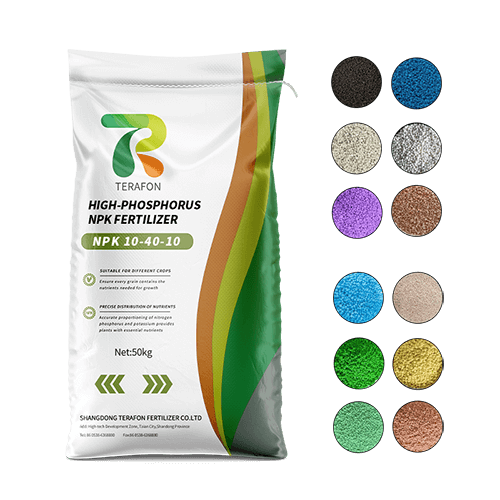
NPK-10-40-10 Fertilizer
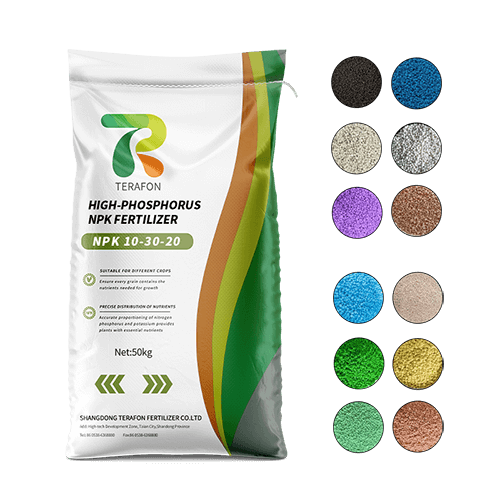
NPK-10-30-20 Fertilizer
NPK-12-36-12 Fertilizer
Suitable Crops
Cereal Crops

Fruit Trees & Orchards

Leafy & Fruiting Vegetables