


- Home » NPK Fertilizer + TE: Micronutrients Types...
NPK Fertilizer + TE: Micronutrients Types, Functions & Safe Levels
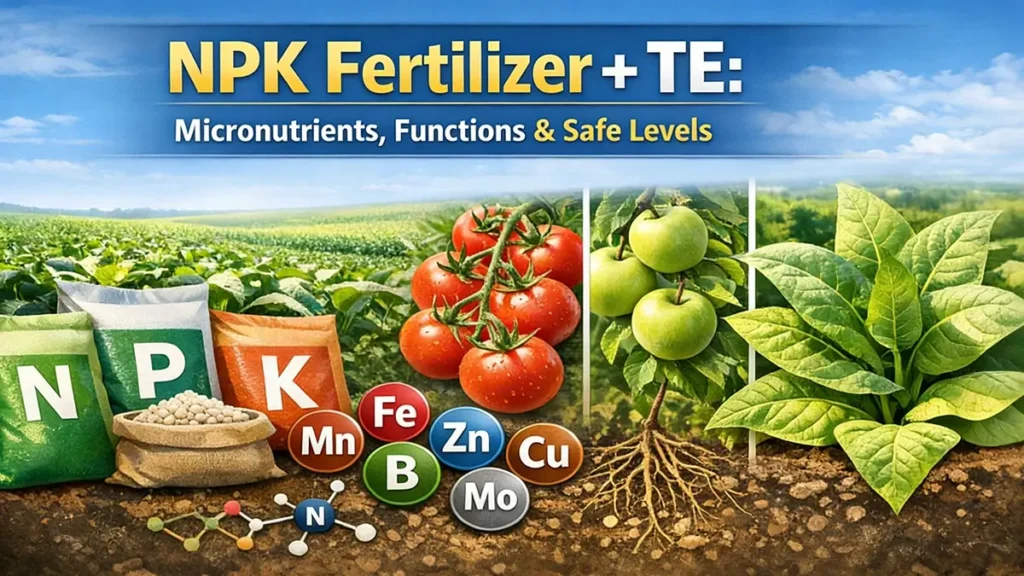
In modern agricultural systems, supplying nitrogen (N), phosphorus (P), and potassium (K) alone is often insufficient to achieve stable yield and consistent crop quality. Research increasingly shows that micronutrient deficiencies can limit fertilizer efficiency, even when macronutrient application rates are adequate.
To address this challenge, NPK fertilizers with trace elements (TE) are widely used to correct hidden nutrient deficiencies, improve nutrient uptake efficiency, and support balanced plant development throughout the growth cycle.
As fertilizer efficiency and precision nutrition gain importance worldwide, fertilizer developers such as Terafon Fertilizer continue to focus on balanced NPK formulations with trace elements to support sustainable crop production across different regions and cropping systems.
Table of Contents
- 1. Understanding NPK Fertilizer with Trace Elements
- 2. Common Micronutrients Added to NPK Fertilizers
- 3. How Much Micronutrients Can Be Added to NPK Fertilizer Safely?
- 4. Scientific Overview: Micronutrient Functions, Deficiency Symptoms, and Typical Levels
- 5. Crop-Specific Micronutrient Requirements
- 6. Application Methods and Nutrient Compatibility
- 7. Conclusion: Optimizing NPK + TE Formulations for Sustainable Yield
1. Understanding NPK Fertilizer with Trace Elements
NPK fertilizer + TE refers to compound or water-soluble fertilizers that combine essential macronutrients with carefully controlled micronutrients. These formulations are designed to provide complete plant nutrition while reducing nutrient antagonism and loss.
They are commonly applied in:
- Precision agriculture systems
- Intensive vegetable and fruit production
Crop-specific fertilization programs, including tobacco cultivation
Micronutrients are typically incorporated in chelated or stabilized forms to ensure compatibility and consistent nutrient availability.
2. Common Micronutrients Added to NPK Fertilizers
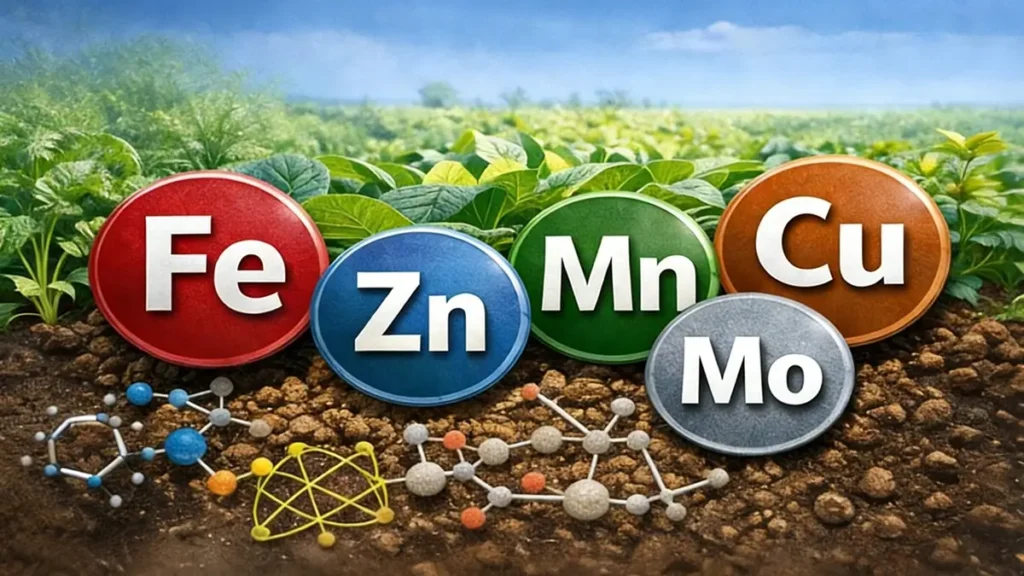
The most commonly included micronutrients in NPK + TE formulations are:
- Iron (Fe) – essential for chlorophyll synthesis
- Zinc (Zn) – supports enzyme activity and hormone regulation
- Manganese (Mn) – involved in photosynthesis and metabolic processes
- Copper (Cu) – contributes to lignin formation and redox reactions
- Boron (B) – critical for cell wall integrity and reproductive growth
Molybdenum (Mo) – plays a key role in nitrogen metabolism
These micronutrients are selected based on crop sensitivity, soil availability, and regional deficiency patterns.
3. How Much Micronutrients Can Be Added to NPK Fertilizer Safely?
A frequent technical question in fertilizer formulation is how much micronutrient can be safely added to NPK fertilizer without causing toxicity or nutrient imbalance.
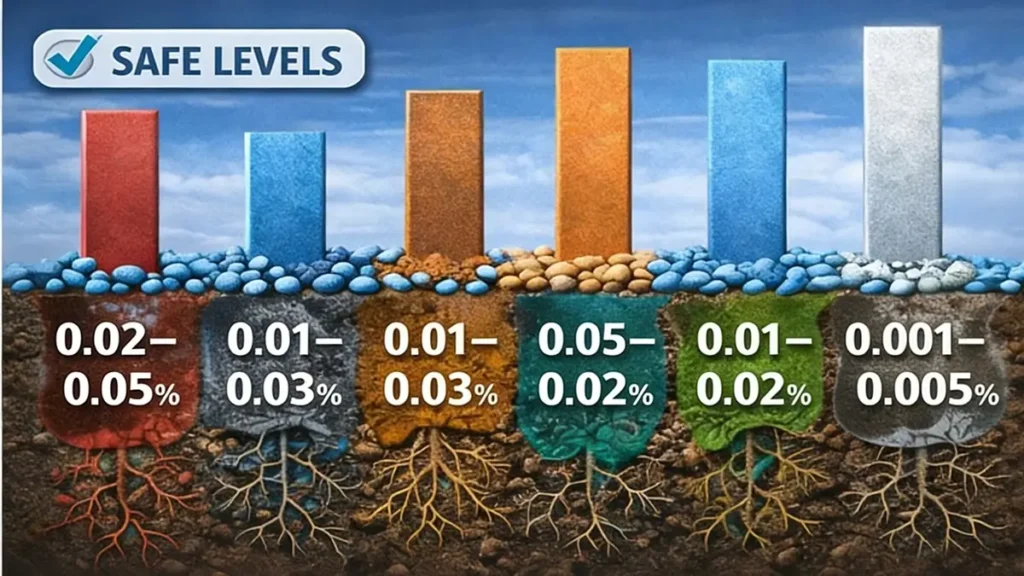
Typical industry practice indicates the following inclusion ranges:- Fe / Zn / Mn / Cu: 0.01–0.05%
- Boron (B): 0.01–0.02%
Molybdenum (Mo): 0.001–0.005%
These concentrations are sufficient to prevent deficiency while minimizing the risk of micronutrient accumulation in soil or plant tissues.
Excessive micronutrient application may interfere with nutrient uptake and reduce overall fertilizer efficiency, particularly in sensitive crops.
4. Scientific Overview: Micronutrient Functions, Deficiency Symptoms, and Typical Levels
| Micronutrient | Primary Function | Deficiency Symptoms | Typical Content in NPK + TE |
|---|---|---|---|
| Iron (Fe) | Chlorophyll synthesis | Interveinal chlorosis in young leaves | 0.02–0.05% |
| Zinc (Zn) | Enzyme activation, growth regulation | Stunted growth, small leaves | 0.01–0.03% |
| Manganese (Mn) | Photosynthetic enzyme activity | Speckled chlorosis | 0.01–0.03% |
| Copper (Cu) | Lignin formation, redox balance | Weak stems, wilting | 0.005–0.02% |
| Boron (B) | Cell wall development, flowering | Poor flowering, brittle tissues | 0.01–0.02% |
| Molybdenum (Mo) | Nitrogen metabolism | N-deficiency-like symptoms | 0.001–0.005% |
5. Crop-Specific Micronutrient Requirements
Vegetables
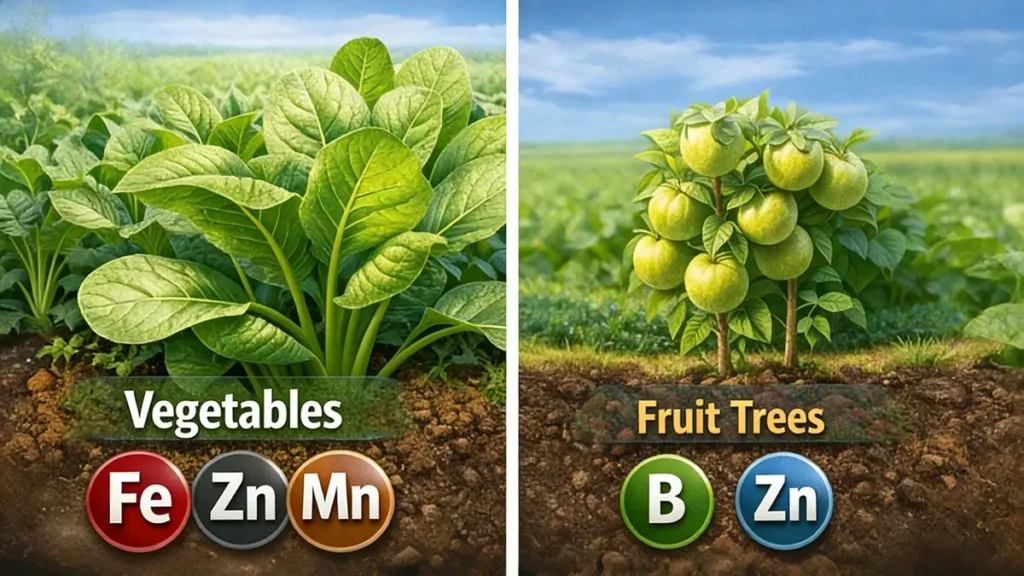
Fast-growing vegetable crops have high demand for iron, zinc, and manganese, making NPK fertilizers with trace elements particularly effective for preventing early-stage deficiencies.
Fruit Trees
Fruit trees are sensitive to boron and zinc availability, which directly influence flowering, fruit set, and quality. Long-term orchard management requires careful control of micronutrient application rates.
Tobacco
Tobacco cultivation demands precise micronutrient balance. Zinc and molybdenum support nitrogen metabolism and leaf expansion, while excess boron may negatively affect leaf chemical composition.
Mid-season field nutrition strategies adopted by manufacturers such as Terafon Fertilizer often emphasize micronutrient precision rather than increased application rates.
6. Application Methods and Nutrient Compatibility
- Soil application provides sustained micronutrient availability
- Fertigation systems improve nutrient distribution efficiency
Foliar application enables rapid correction of visible deficiencies
Chelated micronutrients (e.g., EDTA or DTPA forms) are recommended to improve compatibility and nutrient uptake efficiency in NPK fertilizer programs.
7. Conclusion: Optimizing NPK + TE Formulations for Sustainable Yield
Balanced NPK fertilizers with trace elements are essential tools in modern agriculture. By selecting appropriate micronutrients, controlling safe inclusion rates, and adjusting formulations to crop-specific requirements, growers can improve fertilizer efficiency while maintaining yield and quality.
From a technical and industry perspective, approaches promoted by companies such as Terafon Fertilizer highlight the importance of precision nutrient management over excessive fertilizer input, supporting long-term soil health and sustainable crop production.
Frequently Asked Questions (FAQs)
Common micronutrients are iron (Fe), zinc (Zn), manganese (Mn), copper (Cu), boron (B), and molybdenum (Mo). They support chlorophyll synthesis, enzyme activity, nitrogen metabolism, and reproductive development.
Even with sufficient NPK, crops can show “hidden hunger” if trace elements are lacking. Micronutrients enhance nutrient uptake, photosynthesis, enzyme function, and overall fertilizer efficiency.
Typical safe ranges are:
Fe, Zn, Mn, Cu: 0.01–0.05%
Boron: 0.01–0.02%
Molybdenum: 0.001–0.005%
These levels prevent deficiencies while avoiding toxicity or nutrient imbalance.
Yes. Micronutrient-enriched NPK fertilizers help plants absorb macronutrients more effectively, improving growth and yield stability.
Deficiency symptoms include:
Iron: interveinal chlorosis on young leaves
Zinc: small, distorted leaves, stunted growth
Boron: poor flowering, brittle tissues
Early detection allows timely correction with NPK + TE fertilizers.
No. Crop-specific needs vary:
Vegetables: higher demand for Fe and Zn
Fruit trees: careful balance of B and Zn for flowering and fruiting
Tobacco: precise Zn and Mo management to maintain leaf quality
Proper crop-specific NPK + TE formulations optimize yield and nutrient efficiency.
Recommended Fertilizers
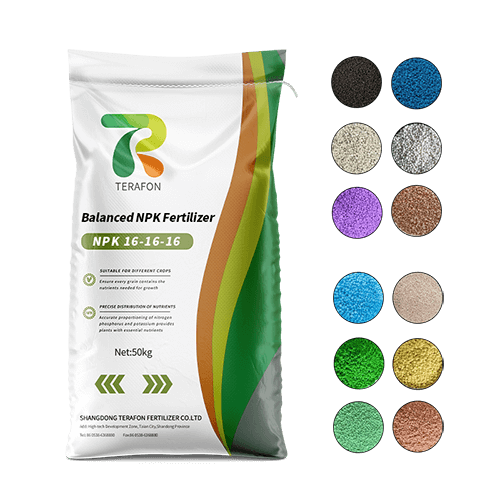
Balanced NPK Fertilizer
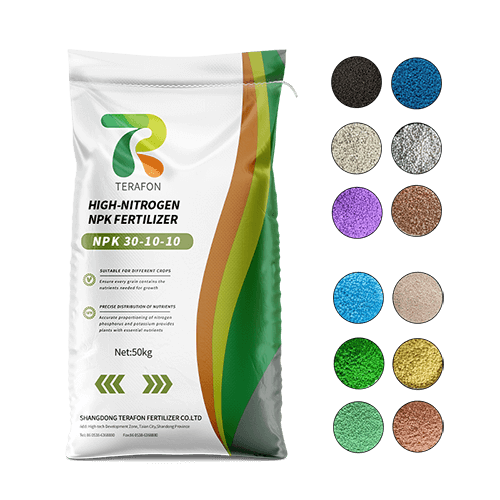
High-Nitrogen NPK Fertilizer
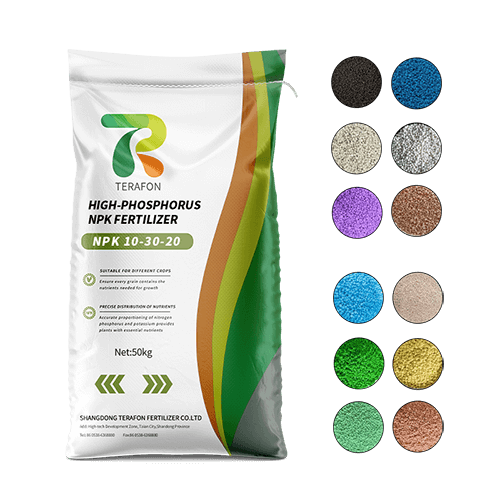
High‑Phosphorus NPK Fertilizer
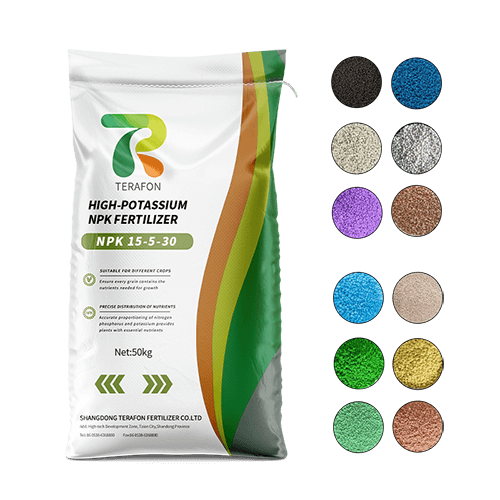
High‑Potassium NPK Fertilizer
Suitable Crops

Industrial & Bio-Processing Crop

Fruit Crops

Leafy & Fruiting Vegetables

Oil Crops
Choose NPK Fertilizer + TE with Confidence
Select NPK Fertilizer + TE based on crop needs and soil conditions to improve micronutrient balance and fertilizer efficiency. Terafon Fertilizer supports precision nutrition with well-designed trace element formulations.
