- Home » How to Choose Liquid vs Granular Seaweed Fertilizers
How to Choose Liquid vs Granular Seaweed Fertilizers

Seaweed fertilizers are widely used in sustainable agriculture to improve soil health, nutrient efficiency, and crop performance. This article compares liquid and granular seaweed fertilizers, highlighting their differences in nutrient release, application methods, and ideal use cases. Liquid Seaweed Fertilizer deliver fast results through foliar and fertigation applications, while Granular Seaweed Fertilizer provide long-term soil conditioning and stable nutrition. Understanding how to choose and combine both forms helps growers optimize crop yield and support environmentally responsible farming with Terafon Fertilizer.
Table of Contents
- 1. Introduction — What Is Seaweed Fertilizer?
- 2. Liquid vs Granular Seaweed Fertilizers: Key Differences
- 3. Liquid Seaweed Fertilizer Explained
- 4. Granular Seaweed Fertilizer Explained
- 5. Comparison: When to Choose Liquid vs Granular?
- 6. Practical Tips: How to Use Them in Different Cropping Systems
- 7. Conclusion: Making the Right Choice
- 8. FAQs (Frequently Asked Questions)
1. Introduction — What Is Seaweed Fertilizer?
Seaweed fertilizer is a natural organic biostimulant fertilizer derived from marine algae extracts. It is widely used in organic farming, sustainable agriculture, and modern crop nutrition programs. Rich in trace elements, amino acids, polysaccharides, and naturally occurring plant hormones such as cytokinins and gibberellins, seaweed fertilizer helps stimulate plant growth, improve stress tolerance, and enhance long-term soil health.
As a trusted supplier of advanced crop nutrition solutions, Terafon Fertilizer integrates seaweed-based fertilizers into comprehensive programs designed to improve nutrient efficiency and crop resilience.
Based on formulation and application method, seaweed fertilizers are commonly available in two main forms:
💧 Liquid Seaweed Fertilizer
🟤 Granular Seaweed Fertilizer
Each form differs significantly in nutrient release rate, application technique, duration of effectiveness, and cost efficiency. Understanding these differences is essential for selecting the most suitable seaweed fertilizer for specific crops and growing conditions.
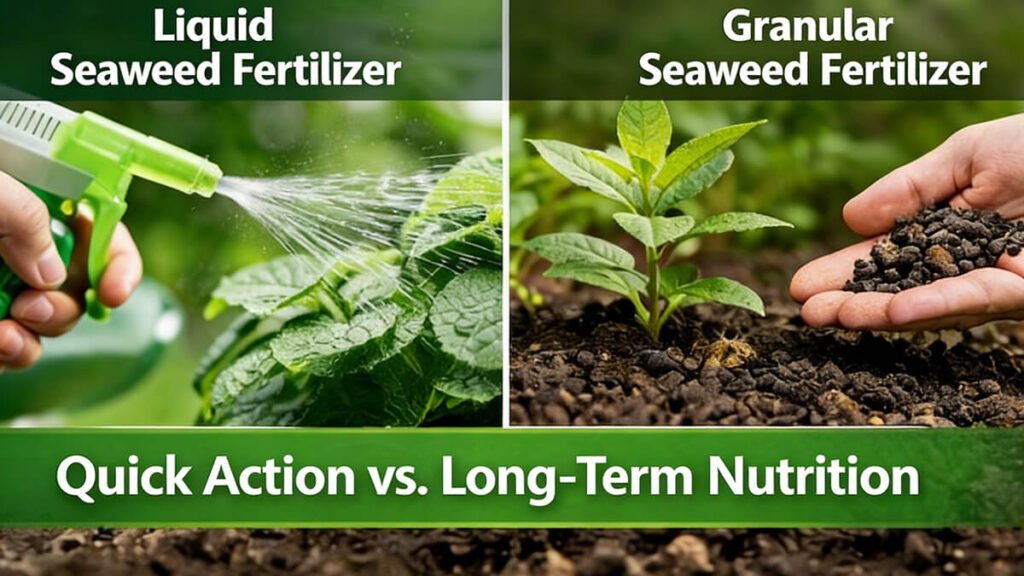
2. Liquid vs Granular Seaweed Fertilizers: Key Differences
| Comparison Aspect | Liquid Seaweed Fertilizer | Granular Seaweed Fertilizer |
|---|---|---|
| Nutrient Release Speed | Fast (hours to days) | Slow-release (days to weeks) |
| Primary Use | Rapid nutrient boost, foliar spray, fertigation | Base fertilization, long-term nutrition |
| Ease of Application | Requires dilution and spraying or irrigation | Direct soil application or incorporation |
| Cost Structure | Higher cost per application | Lower cost per unit of nutrient |
| Potential Risks | Over-application may cause leaf or root stress | Slower initial response |
3. Liquid Seaweed Fertilizer Explained
✅ Advantages
Because nutrients are already dissolved, liquid seaweed fertilizer can be absorbed by leaves and roots within hours, making it ideal for correcting nutrient deficiencies and stimulating growth during critical stages.
✔ Flexible Application Methods
Suitable for foliar spraying, drip irrigation, and root-zone application, especially in precision agriculture and greenhouse systems.
✔ Enhanced Stress Resistance
Regular application helps crops better tolerate drought, heat, salinity, and transplant shock, improving overall crop performance.
Liquid seaweed extracts support beneficial soil microorganisms and root development, contributing to improved nutrient uptake efficiency.
❌ Limitations
✖ Shorter Residual Effect
Due to rapid nutrient availability, repeated applications are often required to maintain consistent results.
✖ Careful Dilution Required
Improper concentration may cause mild phytotoxicity, especially in foliar applications.
For extensive field crops, liquid formulations may involve higher operational costs.
📌 Suitable Application Scenarios
🍅 Greenhouse vegetables, fruits, and high-value crops
📈 Precision farming systems with controlled nutrient management
💦 Drip irrigation and foliar nutrition programs

4. Granular Seaweed Fertilizer Explained
✅ Advantages
✔ Stable and Long-Lasting Nutrient Release
Granular seaweed fertilizer decomposes gradually in the soil, providing consistent nutrition and improving soil structure and organic matter content.
✔ Simple Application and Low Labor Requirement
Easy to apply as a base fertilizer, ideal for large-scale farming and orchard management.
✔ High Cost-Effectiveness
Well suited for long-term soil fertility improvement and reduced application frequency.
✔ Soil Health Enhancement
Supports microbial activity and improves water retention, contributing to sustainable crop production.
❌ Limitations
✖ Slower Visible Results
Not suitable for emergency nutrient correction or rapid growth stimulation.
✖ Not Applicable for Foliar Feeding
Granular products are designed for soil application only.
✖ Dependent on Soil Moisture
Adequate soil moisture is required to activate nutrient release.
📌 Suitable Application Scenarios
🌾 Field crops, orchards, and landscape gardening
🌱 Integrated soil improvement and organic fertilization programs
📉 Cropping systems requiring stable, long-term nutrition
5. Comparison: When to Choose Liquid vs Granular?
🟦 Choose Liquid Seaweed Fertilizer If:
- Rapid crop recovery or growth stimulation is required
- Foliar spraying or fertigation systems are used
- Crops are high-value and managed intensively
🟫 Choose Granular Seaweed Fertilizer If:
- The goal is long-term soil fertility improvement
- Farming scale is large and application frequency needs to be reduced
- A stable, sustainable nutrient foundation is required
6. Practical Tips: How to Use Them in Different Cropping Systems
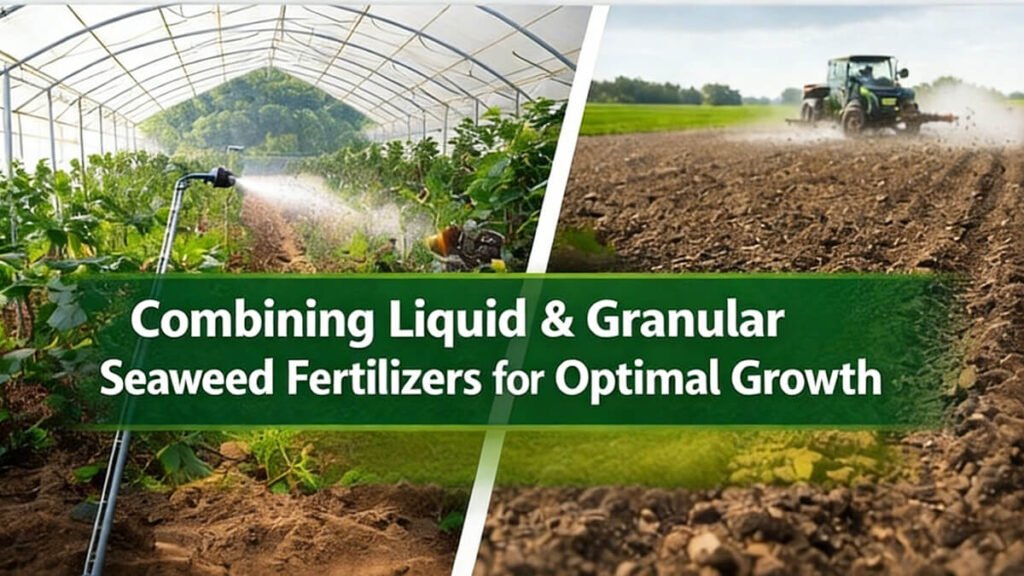
⭐ Strategy 1: Base + Top Dressing Combination
Apply granular seaweed fertilizer during soil preparation, followed by liquid seaweed fertilizer at key growth stages.
⭐ Strategy 2: Precision Management in Controlled Environments
In greenhouses or fertigation systems, liquid formulations allow rapid and precise nutrient adjustment.
Use granular products as the primary fertilizer in large fields, supplementing with liquid seaweed fertilizer during flowering or fruiting stages.
7. Conclusion: Making the Right Choice
| Farming Objective | Recommended Form |
|---|---|
| Fast crop response | 🟦 Liquid Seaweed Fertilizer |
| Long-term soil support | 🟫 Granular Seaweed Fertilizer |
| Large-scale & low-maintenance | 🟫 Granular Seaweed Fertilizer |
| Precision agriculture & containers | 🟦 Liquid Seaweed Fertilizer |
8. FAQs (Frequently Asked Questions)
Q1: Can seaweed fertilizer completely replace chemical fertilizers?
A: Seaweed fertilizers function primarily as biostimulants and soil conditioners and are best used alongside balanced NPK fertilization programs.
Q2: Is liquid seaweed fertilizer suitable for foliar application?
A: Yes. Liquid formulations are highly effective for foliar feeding and allow rapid nutrient uptake.
Q3: Are seaweed fertilizers environmentally friendly?
A: High-quality seaweed fertilizers are derived from natural sources, biodegradable, and supportive of soil and ecosystem health.
For growers seeking reliable, sustainable, and high-performance seaweed fertilizer solutions, Terafon Fertilizer provides tailored products designed to support modern agriculture from soil to harvest.
Recommended Fertilizers
Liquid-Seaweed-Extracts
View Solutions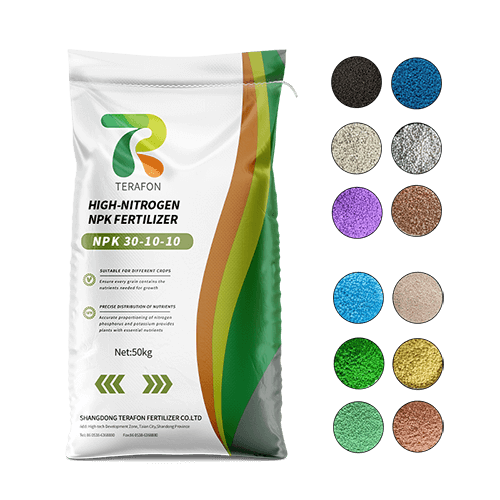
Macronutrient-Soluble-fertilizer
View Solutions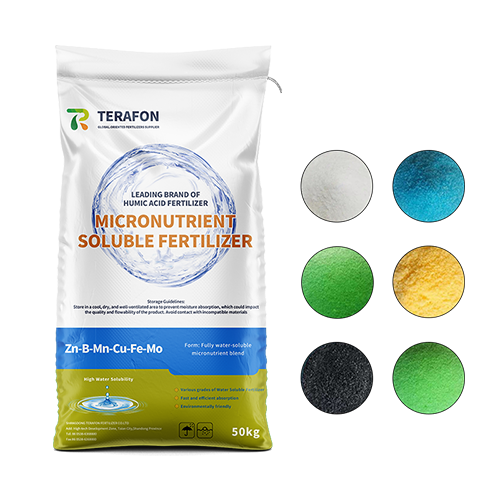
Micronutrient-Soluble-fertilizer
View Solutions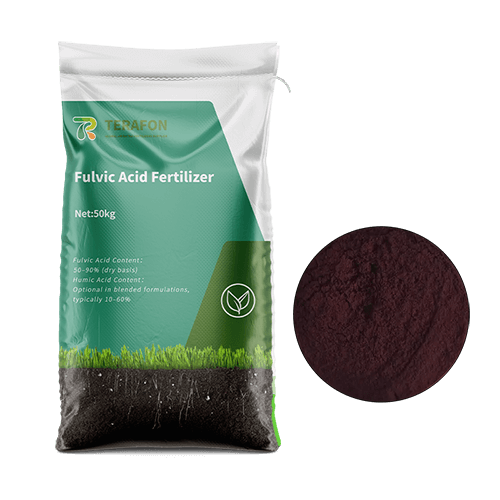
Functional-Soluble-fertilizer
View SolutionsSuitable Crops
Cereal Crops

Legume Crops

Root & Tuber Crops