


- Home » Liquid vs Granular Nitrogen Fertilizer....
Liquid vs Granular Nitrogen Fertilizer: Which Is Best?
Nitrogen is essential for plant growth, affecting chlorophyll synthesis, protein formation, and crop yield. Farmers face a key decision between liquid nitrogen fertilizer and granular nitrogen fertilizer. The choice impacts nitrogen use efficiency, crop performance, and environmental sustainability. Brands like Terafon Fertilizer offer tailored solutions that help optimize nutrient management for different crop systems.
Sponsored by Terafon Fertilizer – providing reliable nitrogen solutions for modern agriculture.
Table of Contents
- 1. What Is Liquid Nitrogen Fertilizer?
- 2. What Is Granular Nitrogen Fertilizer?
- 3. Liquid vs Granular Nitrogen Fertilizer: Side-by-Side Comparison
- 4. Field Application Methods and Performance
- 5. Cost, Storage, and Handling Considerations
- 6. Environmental Impacts and Sustainability
- 7. Choosing the Right Fertilizer for Your Crop System
- 8. Conclusion
1. What Is Liquid Nitrogen Fertilizer?
Liquid nitrogen fertilizers are fully water-soluble solutions, such as urea–ammonium nitrate (UAN). They provide rapid nutrient availability, making nitrogen accessible to plants within hours. Ideal for critical growth stages or fast nutrient correction, liquid fertilizers can be applied via fertigation, foliar spray, or soil drench. Their uniform distribution supports consistent nutrient uptake across fields.
2. What Is Granular Nitrogen Fertilizer?
Granular nitrogen fertilizers are solid forms—pellets or prills—that dissolve gradually in soil moisture. They deliver slow and sustained nitrogen release, supporting long-term crop growth. Types include conventional urea, ammonium nitrate, and slow-release polymer-coated formulations. Granular fertilizers are suitable for baseline nutrition, especially for large-scale operations where cost efficiency and storage stability are priorities.
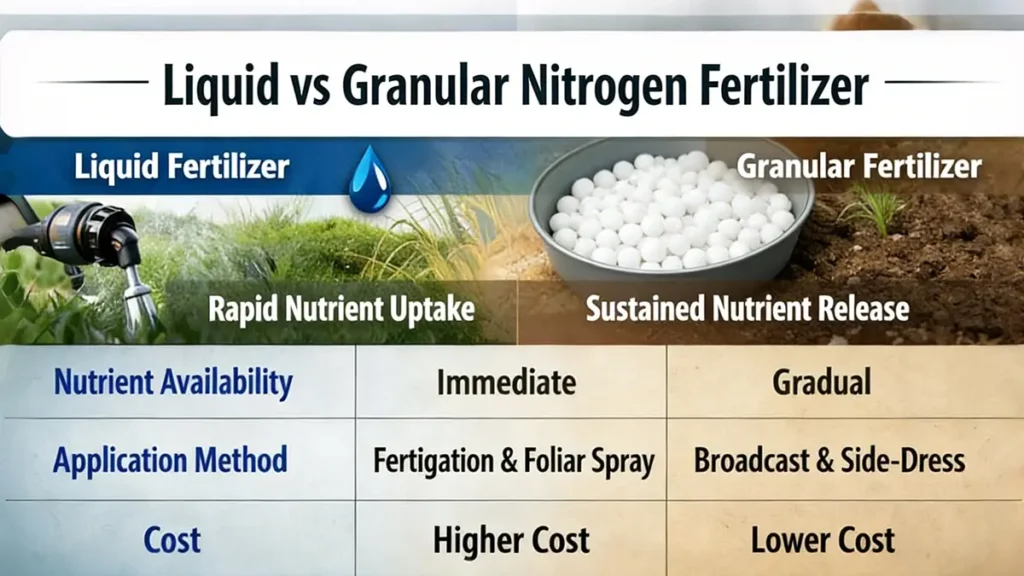
3. Liquid vs Granular Nitrogen Fertilizer: Side-by-Side Comparison
| Feature | Liquid Nitrogen Fertilizer | Granular Nitrogen Fertilizer |
|---|---|---|
| Form | Water-soluble solution | Solid pellets or prills |
| Nutrient Availability | Immediate, fast uptake | Gradual, sustained release |
| Release Pattern | Quick release, short-term | Slow release, long-term |
| Application Methods | Fertigation, foliar spray, soil drench | Broadcast, banding, side-dressing |
| Uniformity | Highly uniform distribution | Potential variability if spread unevenly |
| Flexibility & Precision | High, adjustable per growth stage | Low once applied |
| Cost | Higher per unit nutrient | Lower per unit nutrient |
| Storage | Requires controlled conditions | Stable, long shelf life |
| Environmental Risk | Potential leaching if misapplied | Reduced immediate leaching, but still possible |
4. Field Application Methods and Performance
Liquid Fertilizers:
- Applied via irrigation systems (fertigation), foliar sprays, or soil injection
- Offer targeted nutrient placement and integration with precision agriculture
Support fast nutrient uptake during key growth stages
- Applied with spreaders or row-banding
- Provide long-term nutrient supply with minimal application frequency
Dependent on soil moisture and microbial activity
Combining granular for baseline nutrition with liquid fertilizers for responsive crop feeding often improves both yield and nitrogen use efficiency. Brands like Terafon Fertilizer provide integrated solutions for such strategies.
5. Cost, Storage, and Handling Considerations
- Liquid Fertilizers: Higher upfront cost, specialized equipment, controlled storage
- Granular Fertilizers: Lower cost per nutrient unit, easier bulk storage, long shelf life
6. Environmental Impacts and Sustainability
- Liquid Fertilizers: Fast soil mobility can increase leaching risk if not managed properly
- Granular Fertilizers: Slower nutrient release reduces immediate leaching risk but requires proper incorporation
- Using both forms strategically can enhance sustainability by balancing immediate crop needs and long-term nutrient supply
7. Choosing the Right Fertilizer for Your Crop System
There is no one-size-fits-all solution. Decisions should consider:
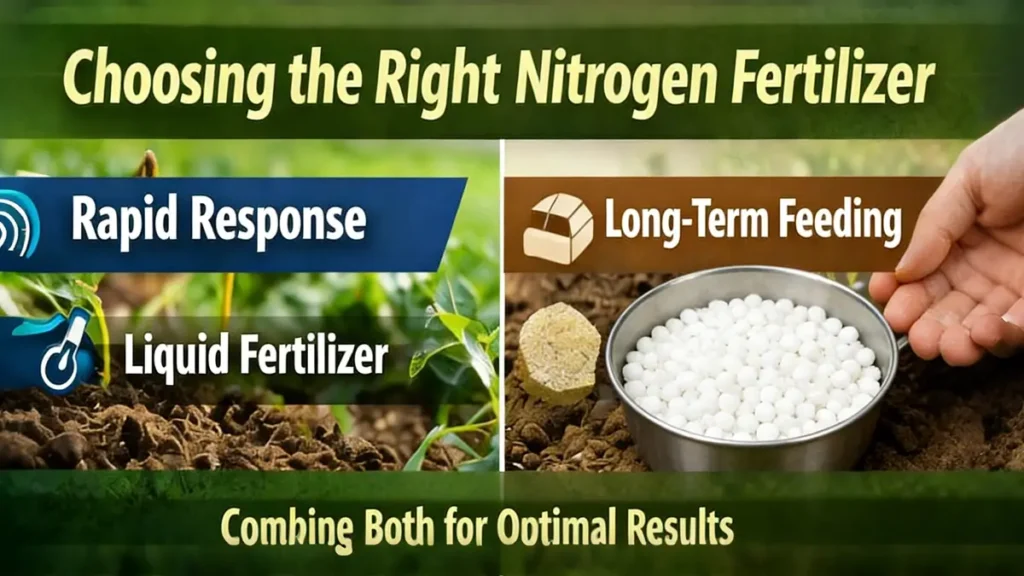
- Liquid nitrogen fertilizer: Best for fast nutrient uptake, precision fertilization, and rapid crop response
Granular nitrogen fertilizer: Best for sustained nitrogen release, cost-effective baseline nutrition, and large-scale fields
8. Conclusion
Both liquid and granular nitrogen fertilizers have distinct advantages:
- Liquids: Quick nutrient availability, precision application, ideal for responsive crop management
Granules: Sustained nutrient supply, cost-efficient for large fields
By understanding nutrient release patterns, application methods, and environmental risks, growers can implement nitrogen strategies that enhance productivity, efficiency, and sustainability, ensuring optimal results for diverse agricultural systems.
Discover reliable nitrogen solutions with Terafon Fertilizer, your partner in professional crop nutrition management.

Frequently Asked Questions (FAQs)
Liquid fertilizers are water‑soluble and provide immediate nutrient availability, while granular fertilizers release nitrogen slowly over time, supporting sustained crop nutrition.
Liquid nitrogen fertilizers provide rapid nutrient uptake, usually within 24–48 hours. Granular fertilizers release nutrients gradually, taking longer for plant absorption.
Liquid fertilizers are applied via fertigation, foliar spray, or soil drench, enabling precision and uniform distribution. Granular fertilizers are broadcast, banded, or side-dressed, relying on soil moisture for nutrient release.
Granular fertilizers provide slow and sustained nitrogen release, while liquids act quickly but may need frequent applications to maintain consistent nutrition.
Liquid fertilizers ensure uniform nutrient delivery, reducing hot spots. Granular fertilizers may create uneven nutrient zones if not spread evenly.
Liquid fertilizers can leach quickly in sandy soils or heavy rain, while granular fertilizers reduce immediate leaching risk. Proper management is essential for both types to minimize environmental impact.
Recommended Fertilizers
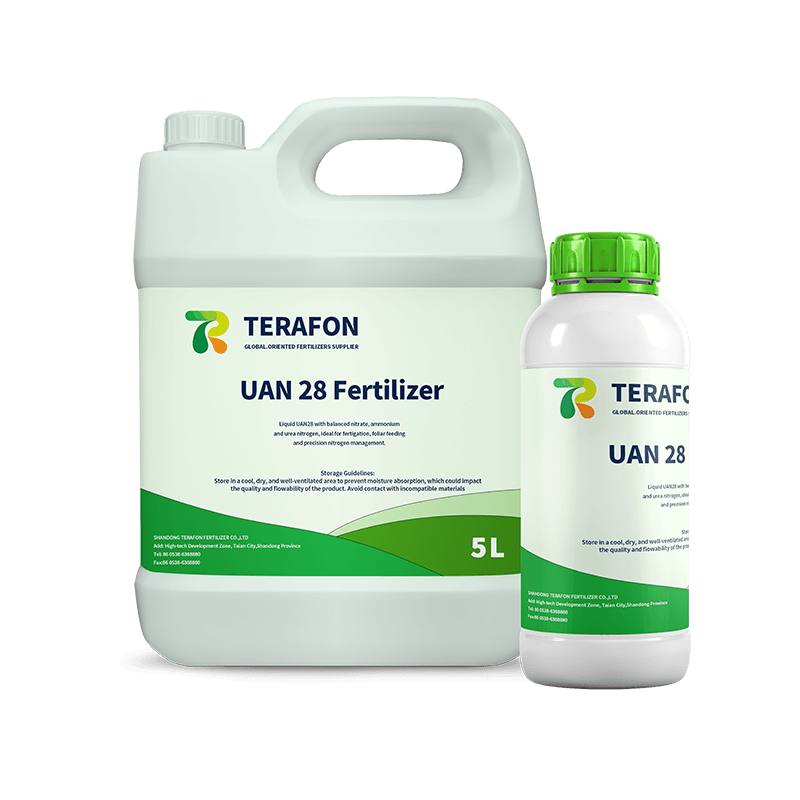
UAN 28 Fertilizer
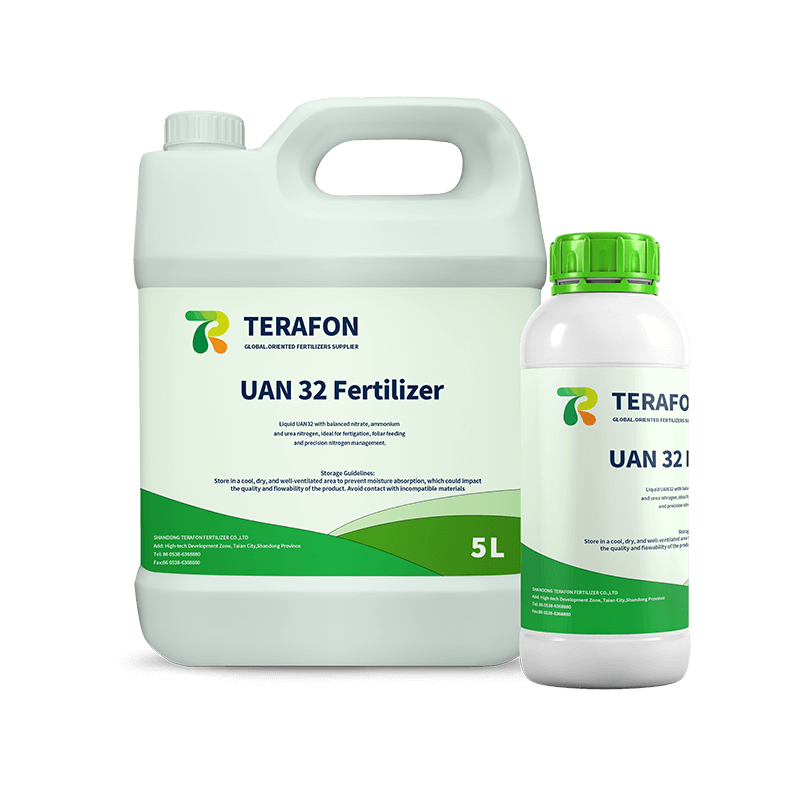
UAN 32 Fertilizer
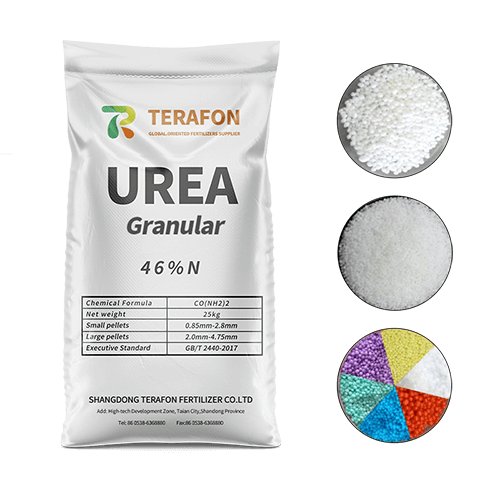
Urea-46%-Granular
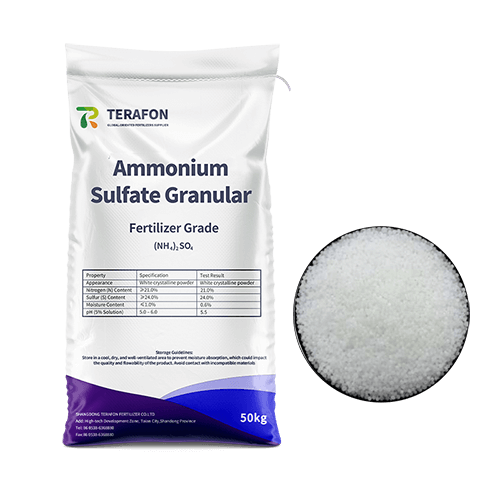
Ammonium-Sulfate-Granular
Suitable Crops
Fruit Trees & Orchards
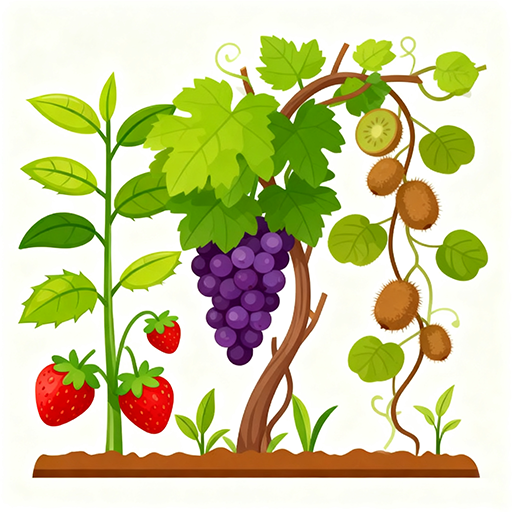
Berry & Vine Crops
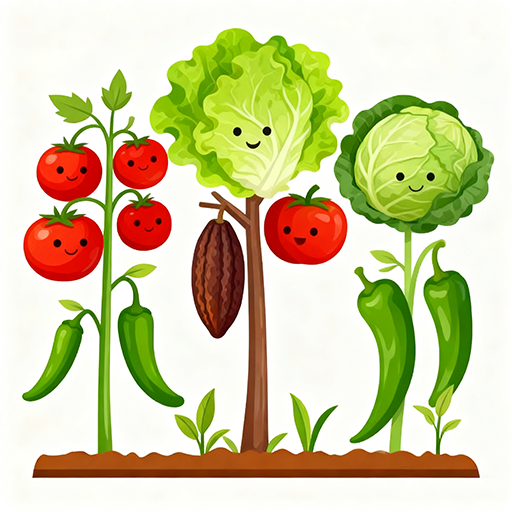
Leafy & Fruiting Vegetables
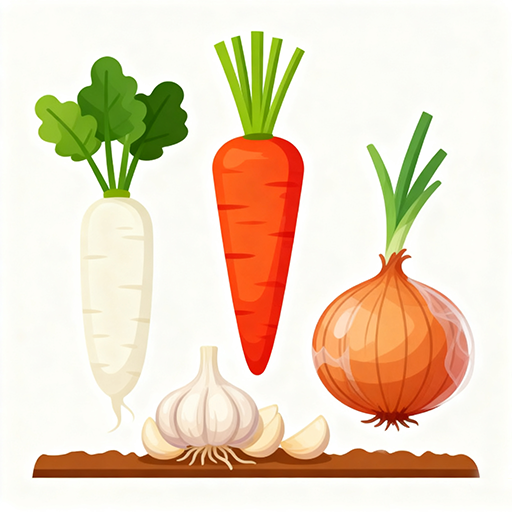
Root & Bulb Vegetables
Choose the Right Nitrogen Fertilizer with Confidence
Select liquid or granular nitrogen based on crop needs, soil conditions, and application method to ensure fast nutrient uptake, improved nitrogen efficiency, and stable crop growth. Contact Terafon Fertilizer for expert guidance.
