


- Home » Industrial Urea vs Feed Grade Urea...
Industrial Urea vs Feed Grade Urea: Key Differences & Applications
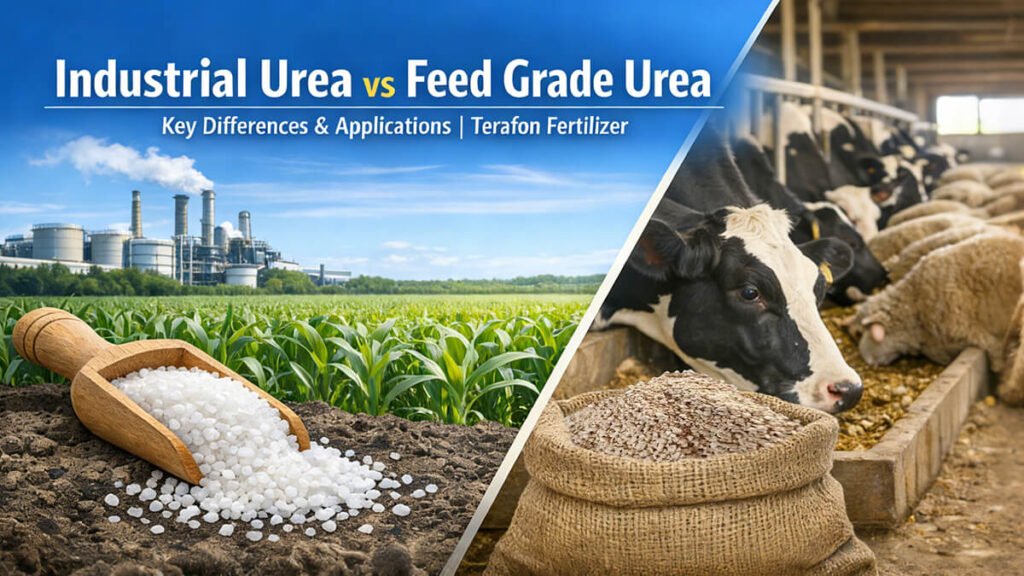
Terafon Fertilizer provides high-quality nitrogen solutions for both agriculture and livestock nutrition. This guide explains the differences between industrial urea and feed grade urea, helping producers select the appropriate nitrogen source for crops or ruminant feed.
Table of Contents
- 1. Overview of Urea and Basic Properties
- 2. What is Industrial / Fertilizer Urea?
- 3. What is Feed Grade Urea?
- 4. Key Differences Between Industrial and Feed Grade Urea
- 5. Safety and Regulatory Requirements
- 6. Quality Standards and Impurity Control
- 7. Application Scenarios and Use Cases
- 8. How to Choose the Right Urea Grade
- 9. Summary and Recommendations
1. Overview of Urea and Basic Properties
Urea (Chemical Name: Carbamide, CAS 57‑13‑6) is a white crystalline solid or granule, highly soluble in water, and an essential source of nitrogen. It is widely used globally as a nitrogen supplement in agriculture, industrial processes, and animal feed. While the chemical structure is identical across grades, purity, impurity control, and production standards determine its suitability for applications such as feed grade urea for ruminants, livestock nutrition, and industrial fertilization.
Terafon Fertilizer produces high-quality urea with strict quality control, ensuring consistent purity and reliable performance for both agricultural and feed applications.
2. What is Industrial / Fertilizer Urea?
Industrial or fertilizer-grade urea is primarily used as a nitrogen fertilizer to enhance crop growth and yield. It can also serve as a raw material in chemical manufacturing processes.
Primary Applications: Crop fertilization, industrial chemical processes, non-feed uses
Purity and Standards: Fertilizer-grade urea typically ≥99% purity, but impurity control is less strict than feed-grade urea. Additives or anti-caking agents may be present.
SEO Note: Industrial urea is not suitable for direct use in livestock feed or food applications.
3. What is Feed Grade Urea?
Feed grade urea is specially manufactured for animal nutrition, providing a high-purity nitrogen source for ruminant diets. It serves as a safe and effective non-protein nitrogen source in cattle, sheep, and goat feed, supporting optimal microbial protein synthesis in the rumen.
Primary Applications: Total Mixed Rations (TMR), feed premixes, mineral blocks
Target Animals: Ruminants such as cattle, sheep, and goats
Terafon Fertilizer ensures feed grade urea meets strict impurity limits and provides consistent performance for livestock nutrition programs.
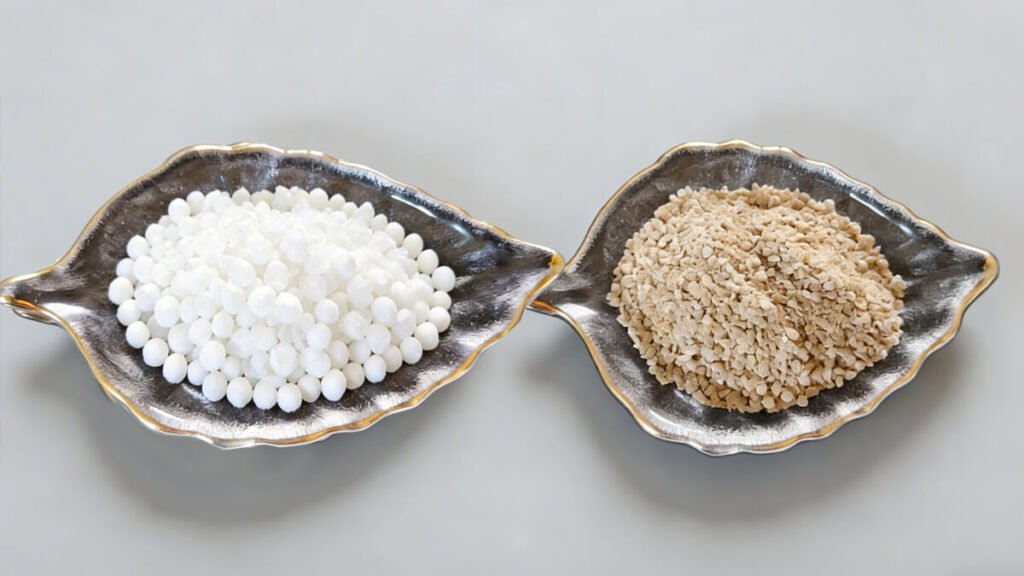
4. Key Differences Between Industrial and Feed Grade Urea
| Feature | Industrial / Fertilizer Urea | Feed Grade Urea |
|---|---|---|
| Primary Use | Crop fertilization, industrial raw material | Ruminant feed supplementation as non-protein nitrogen source |
| Purity Control | High purity (~99%), wider impurity tolerance | High purity (~99%), strict control on biuret and heavy metals |
| Impurity Limits | May include anti-caking agents | Minimal impurities, suitable for feed grade urea for ruminants |
| Safety Regulations | Fertilizer/industrial standards | Feed additive regulations, COA required |
| Processing Focus | Cost efficiency and fertilizer performance | Animal health, safety, digestibility, and mixing performance |
5. Safety and Regulatory Requirements
Industrial urea: Conforms to fertilizer and industrial chemical standards, not intended for animal consumption.
Feed grade urea: Must comply with livestock feed additive regulations, with batch traceability and COA documentation. It provides high-purity nitrogen for animal feed, ensuring safe and effective use in ruminant diets.
Ruminant animals can efficiently utilize urea as a nitrogen source, while non-ruminants (pigs, poultry) may suffer toxicity if fed high levels.
6. Quality Standards and Impurity Control
Industrial urea: Focused on nitrogen content, solubility, and cost efficiency; biuret and heavy metal limits are less stringent.
-
Feed grade urea:
- Biuret content ≤1%
- Low heavy metals and other impurities
- Controlled moisture and particle uniformity
COA provided for every batch, often following ISO, HACCP, or GMP+ feed safety systems
Terafon Fertilizer maintains these standards to deliver safe, high-quality feed grade urea for livestock nutrition.
7. Application Scenarios and Use Cases
🧑🌾 Industrial Urea
- Provides nitrogen for crops and soil fertilization
Used as a raw material in chemical manufacturing
🐄 Feed Grade Urea
- Serves as a non-protein nitrogen source in cattle, sheep, and goat feed
- Optimizes microbial protein synthesis and nutrient utilization in ruminant diets
Safe for inclusion in TMR, premixes, or mineral blocks to improve feed efficiency and reduce costs
Note: Many livestock nutrition programs rely on Terafon Fertilizer’s feed grade urea to ensure reliable animal performance and high feed conversion efficiency.
8. How to Choose the Right Urea Grade
Selecting the correct urea grade depends on your application:
✔ Agricultural or industrial use → Industrial/fertilizer urea
✔ Animal feed supplementation (especially ruminants) → Feed grade urea, following recommended inclusion rates and COA verification
Working with reputable suppliers such as Terafon Fertilizer ensures quality, compliance, and consistent performance for both industrial and feed applications.
9. Summary and Recommendations
Although industrial urea and feed grade urea share the chemical formula CO(NH₂)₂, they differ significantly in application, impurity control, production standards, and safety regulations.
Industrial urea: Used mainly as fertilizer or industrial raw material
Feed grade urea: Acts as a high-purity nitrogen source for ruminant nutrition, supporting efficient feed utilization and microbial protein synthesis in cattle, sheep, and goats
Proper grade selection and handling are essential for safety, performance, and regulatory compliance. Terafon Fertilizer provides both industrial and feed grade urea solutions with consistent quality, full documentation, and reliable global supply.
Frequently Asked Questions (FAQs)
Industrial urea is mainly used for fertilizers and industrial applications, with broader impurity tolerance. Feed grade urea is produced under stricter quality control, featuring low biuret and minimal impurities, making it safe for use as a non-protein nitrogen source in ruminant feed.
Although chemically similar, feed grade urea is specifically certified for animal nutrition. For crop fertilization, agricultural or fertilizer-grade urea is recommended due to cost efficiency and formulation suitability.
Feed grade urea must meet livestock feed safety requirements. Controlled biuret levels and low heavy-metal content help protect rumen microbial activity and ensure stable nitrogen utilization in cattle and other ruminants.
In ruminants, feed grade urea supplies non-protein nitrogen (NPN), which rumen microbes convert into microbial protein. This supports fiber digestion, improves feed efficiency, and reduces reliance on traditional protein sources.
Feed grade urea is suitable for ruminant animals, including cattle, sheep, and goats. It should not be used for poultry, pigs, horses, or other monogastric animals.
Urea should be added gradually and used in balanced rations with sufficient fermentable carbohydrates. Proper dosage is essential to avoid ammonia toxicity and ensure safe nitrogen metabolism.
Industrial urea may contain additives or impurities intended for fertilizer or chemical use. Without feed-grade certification, it does not meet animal nutrition safety standards.
Feed grade urea is clearly labeled for animal nutrition and supported by documentation such as COA, defined biuret limits, and compliance with feed additive standards.
Recommended Fertilizers
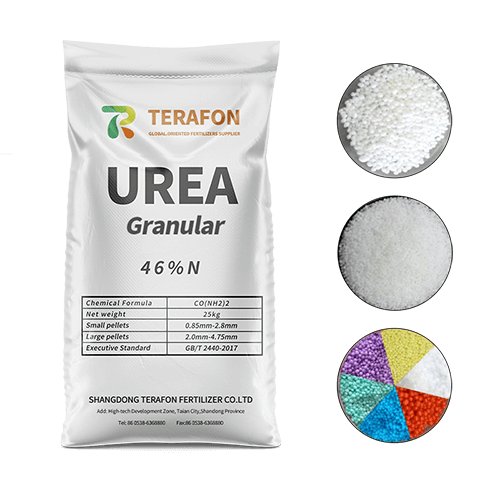
Urea-46%-Granular
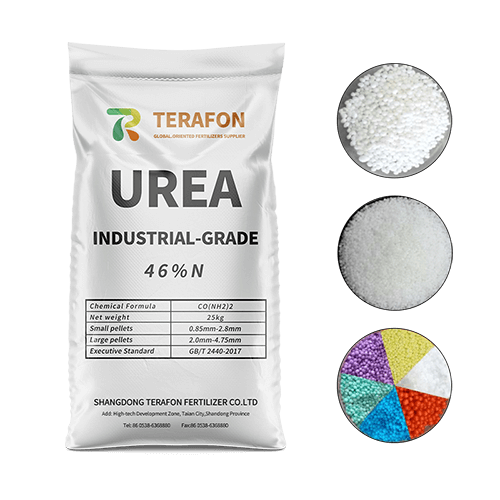
Industrial-Urea
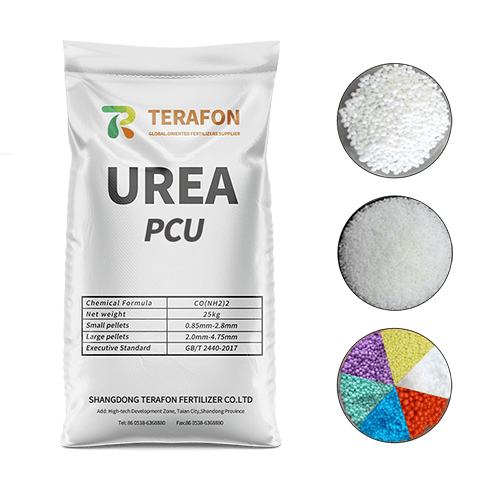
Polymer-Coated Urea (PCU)

Automotive-Grade-UreaI-(SCR)
Suitable Crops

Industrial & Bio-Processing Crop

Fruit Crops

Leafy & Fruiting Vegetables

Oil Crops
Choose Industrial Urea vs Feed Grade Urea with Confidence
Select the appropriate urea grade based on application purpose and regulatory requirements. Industrial urea is designed for fertilizer and industrial use, while feed grade urea provides a safe, high-purity non-protein nitrogen source for ruminant nutrition. Terafon Fertilizer delivers consistent quality urea solutions with strict quality control and reliable documentation.
