


- Home » Humic Acid vs Fulvic Acid: Benefits...
Humic Acid vs Fulvic Acid: Benefits & Agricultural Value
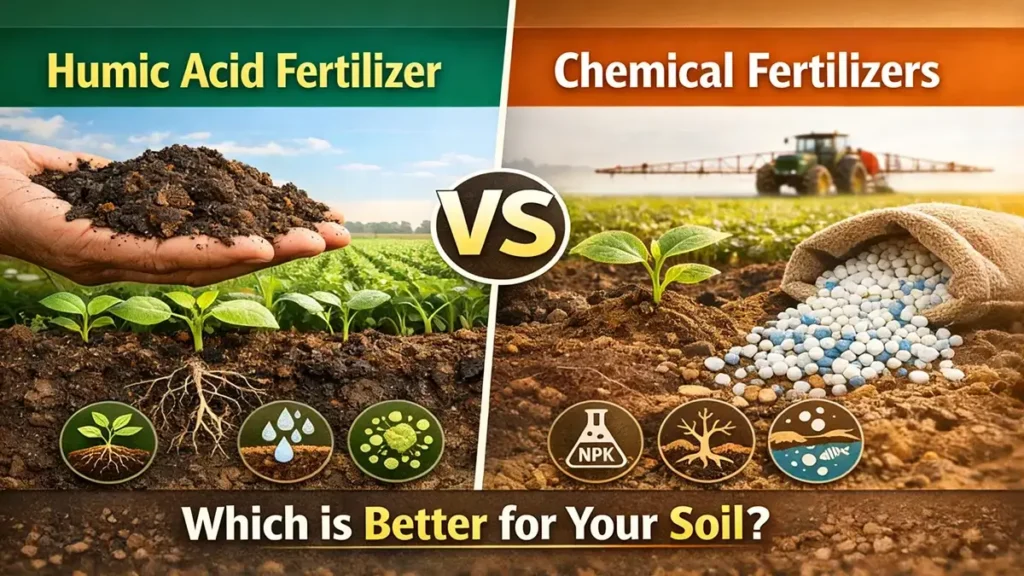
Sustainable and high-efficiency crop production relies on optimized soil management and nutrient utilization. Humic acid and fulvic acid are key organic compounds widely recognized for their ability to improve soil structure, enhance fertilizer efficiency, and promote plant growth. Leading agricultural solution providers, such as Terafon Fertilizer, emphasize the strategic role of humic and fulvic acids in improving soil fertility, boosting crop yield, and supporting sustainable farming practices. Understanding the differences between humic acid and fulvic acid is critical for farmers, agronomists, and greenhouse managers seeking to maximize nutrient efficiency and crop performance.
Table of Contents
- 1️⃣ Defining Humic Acid and Fulvic Acid
- 2️⃣ Chemical Properties and Biological Activity Comparison
- 3️⃣ Mechanisms of Action in Agriculture
- 4️⃣ Practical Applications in Crop Production
- 5️⃣ Best Practices for Agricultural Use
- 6️⃣ Common Misconceptions and Cautions
- 7️⃣ Conclusion: Integrated Strategies for Sustainable Agriculture
1️⃣ Defining Humic Acid and Fulvic Acid
🌱 Humic Acid (HA)
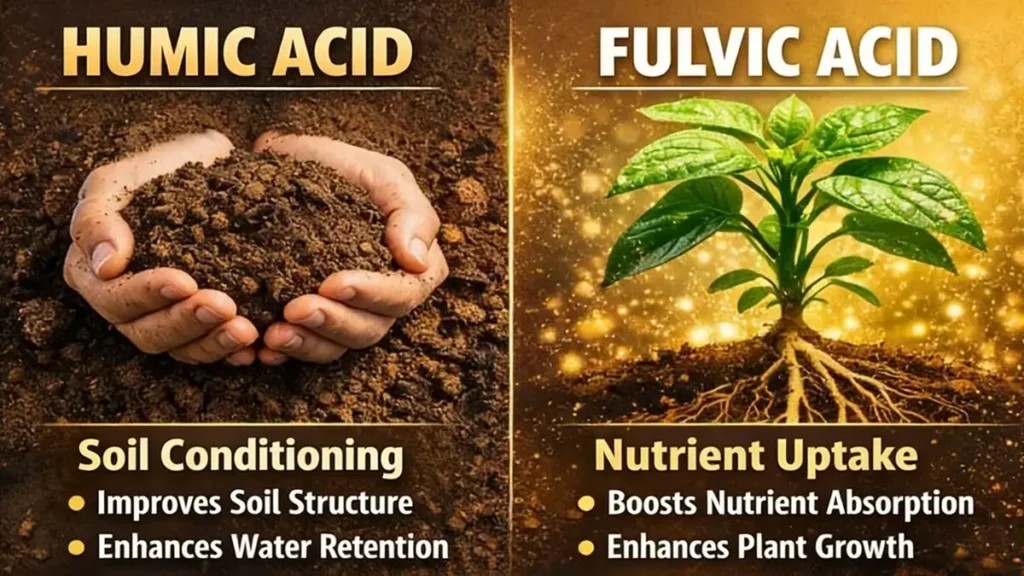
Humic acid is a high-molecular-weight organic compound derived from the microbial decomposition of plant and animal residues. It is typically dark brown to black in color and exhibits moderate solubility in alkaline conditions. In agriculture, humic acid is valued for its ability to enhance soil structure, increase water-holding capacity, and improve cation exchange capacity (CEC), making it a cornerstone of long-term soil fertility management.
🌾 Fulvic Acid (FA)
Fulvic acid is a low-molecular-weight fraction of humic substances with high solubility in water across all pH levels. Its light yellow to brown color reflects its chemical characteristics, which include a higher number of reactive functional groups such as carboxyl and hydroxyl groups. These features allow fulvic acid to act as a natural chelating agent, enhancing micronutrient availability and rapid uptake by plants. Fulvic acid is particularly effective for leaf absorption and root nutrient transport, accelerating plant metabolism and promoting stress resilience.
2️⃣ Chemical Properties and Biological Activity Comparison
| Feature | Humic Acid | Fulvic Acid |
|---|---|---|
| Molecular Weight | Large, stable | Small, highly bioactive |
| Solubility | Alkaline water | All pH conditions |
| Color | Dark brown/black | Yellow to light brown |
| Biological Activity | Moderate, long-lasting | High, fast-acting |
| Key Function | Soil structure and nutrient retention | Nutrient transport and plant metabolism |
The smaller molecular size of fulvic acid allows it to penetrate plant cells efficiently, while humic acid provides long-term soil structure improvement and nutrient retention. Both compounds are complementary and essential in sustainable soil management programs.
3️⃣ Mechanisms of Action in Agriculture
Humic acid primarily improves soil physical and chemical properties:
- Enhances soil aggregation, improving aeration, water retention, and root development.
- Increases cation exchange capacity (CEC), reducing nutrient leaching and improving fertilizer efficiency.
Supports beneficial microbial activity, accelerating organic matter decomposition and nutrient cycling.
By incorporating humic acid into Terafon Fertilizer formulations, farmers can achieve long-lasting improvements in soil fertility and crop productivity.
Fulvic acid enhances plant nutrient absorption and physiological functions:
- Chelates micronutrients such as iron, zinc, manganese, and copper for efficient root uptake.
- Facilitates nutrient transport across cell membranes, promoting rapid growth and metabolic activity.
Improves stress tolerance, enabling plants to withstand drought, salinity, and temperature extremes.

4️⃣ Practical Applications in Crop Production
- Humic acid acts as a long-term soil conditioner, improving structure and increasing nutrient retention.
Fulvic acid accelerates nutrient delivery, enhancing fertilizer efficiency and reducing wastage.
Studies confirm that combining humic and fulvic acids improves microbial biomass, nutrient availability, and overall soil productivity. Products like Terafon Fertilizer leverage this synergy to provide high-efficiency soil amendment solutions.
- Supports stronger root growth and biomass accumulation.
- Increases leaf vigor, photosynthetic efficiency, and nutrient assimilation.
Enhances crop resilience under adverse environmental conditions, including drought and salinity stress.
5️⃣ Best Practices for Agricultural Use
- Staged application strategy: Apply humic acid during soil preparation for long-term fertility, and apply fulvic acid during key growth stages for rapid nutrient delivery.
- Combined use with fertilizers: Blending humic and fulvic acids with organic or synthetic fertilizers enhances nutrient uptake and reduces fertilizer input.
Precision dosing: Base application rates on soil tests and crop requirements to optimize performance and cost efficiency.
Products that combine humic and fulvic acids, such as those in Terafon Fertilizer blends, provide both immediate and long-term agronomic benefits.
6️⃣ Common Misconceptions and Cautions
More is not always better: Excessive application does not guarantee higher yields and can disrupt nutrient balance.
Product quality matters: Extraction methods, purity, and composition significantly impact effectiveness.
Different roles: Humic acid is ideal for soil conditioning; fulvic acid is best for rapid nutrient mobilization.
7️⃣ Conclusion: Integrated Strategies for Sustainable Agriculture
Humic acid and fulvic acid are complementary organic compounds essential for modern, high-efficiency farming. When applied strategically:
Humic acid improves soil structure, fertility, and long-term crop performance.
Fulvic acid promotes nutrient absorption, metabolism, and stress resistance.
Brands like Terafon Fertilizer offer scientifically formulated products that combine humic and fulvic acids to enhance soil health, crop yield, and nutrient use efficiency, supporting sustainable and profitable agriculture.

Frequently Asked Questions (FAQ)
Humic acid increases soil cation exchange capacity (CEC), reducing nutrient leaching and improving retention of nitrogen, potassium, and other essential nutrients. Fulvic acid acts as a natural chelator, enhancing the availability and mobility of micronutrients. Together, they maximize fertilizer efficiency, lower waste, and support sustainable and cost-effective crop management.
Humic acid is best applied to soil during soil preparation or as a base amendment to enhance structure and fertility. Fulvic acid can be applied via foliar sprays or root drench during key growth stages to rapidly deliver nutrients. Combining both in a coordinated application plan ensures improved soil health, faster nutrient uptake, and optimal crop performance.
Yes. Fulvic acid improves stress tolerance by facilitating nutrient absorption and enhancing metabolic activity. Humic acid indirectly supports stress resilience by improving soil structure, water retention, and microbial activity. Together, they help crops withstand drought, salinity, temperature extremes, and other environmental stresses.
Absolutely. Using humic and fulvic acids together provides a synergistic effect: humic acid improves soil health and nutrient retention, while fulvic acid ensures rapid nutrient availability and absorption by plants. Blended products, like Terafon Fertilizer, leverage this synergy for higher yields and healthier crops.
Their effectiveness depends on soil type, pH, crop requirements, and product quality. Over-application does not increase benefits and may disrupt nutrient balance. High-quality, scientifically formulated products are essential for predictable results. Soil testing and tailored application rates are recommended to maximize effectiveness.
Related Articles
Recommended Fertilizers
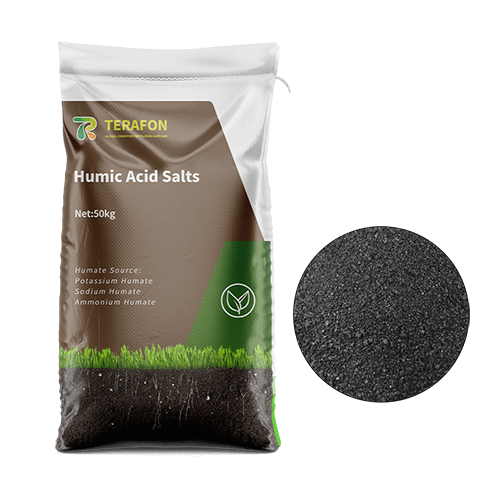
Potassium Humate Fertilizer
Ammonium Humate Fertilizer
Potassium Humate Fertilizer
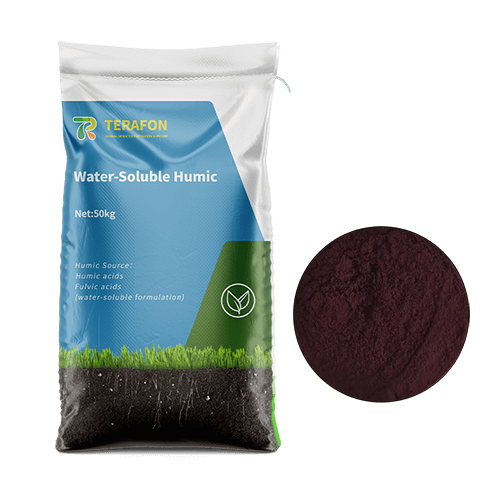
Water-Soluble Humic
Suitable Crops

Industrial & Bio-Processing Crop

Fruit Trees & Orchards

Leafy & Fruiting Vegetables

Root & Bulb Vegetables
Humic Acid vs Fulvic Acid: Agricultural Benefits Comparison
Humic acid improves soil structure, water retention, and long-term fertility, while fulvic acid enhances nutrient absorption, chelation, and plant metabolism. Terafon Fertilizer offers scientifically formulated products that combine both for sustainable and high-efficiency crop production.
