


- Home » Humic Acid Fertilizer vs Chemical Fertilizers...
Humic Acid Fertilizer vs Chemical Fertilizers for Soil Health
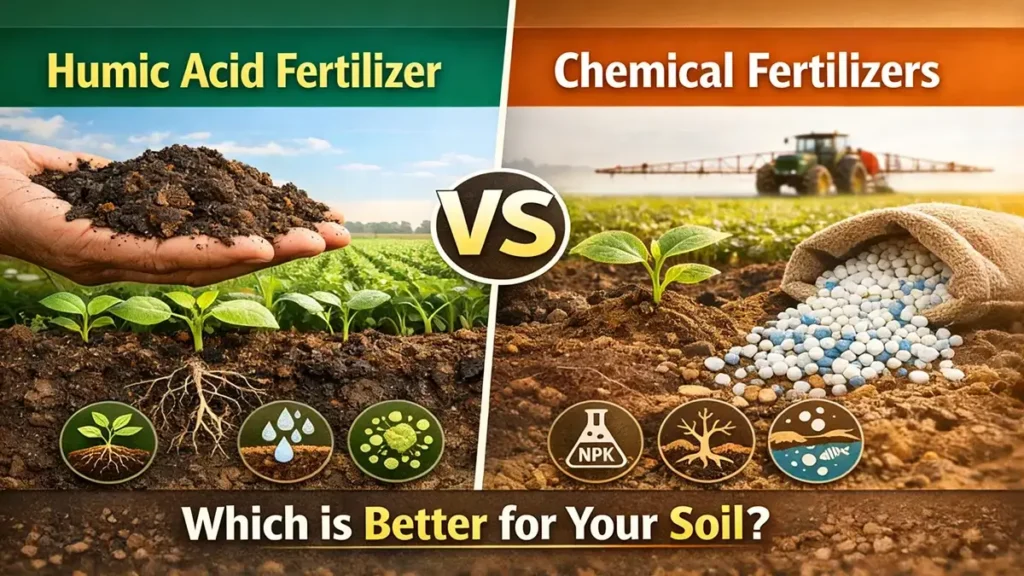
With increasing concerns about soil degradation, declining fertilizer efficiency, and environmental sustainability, farmers and agronomists are rethinking traditional fertilization strategies. Questions such as “Is humic acid fertilizer better for soil health?” and “Can chemical fertilizers damage soil in the long term?” are becoming more common.
As sustainable agriculture and fertilizer efficiency gain importance, comparing humic acid fertilizers vs. conventional chemical fertilizers helps growers make informed decisions based on soil conditions, crop needs, and long-term productivity goals.
Many fertilizer manufacturers, including Terafon Fertilizer, have expanded their portfolios to include both conventional nutrients and humic-based solutions, reflecting this shift toward balanced and soil-focused fertilization.
Table of Contents
- 1️⃣ What Is Humic Acid Fertilizer and How Does It Improve Soil Structure?
- 2️⃣ What Are Conventional Chemical Fertilizers? Definition and Agricultural Role
- 3️⃣ Key Advantages of Humic Acid Fertilizers in Modern Agriculture
- 4️⃣ Strengths and Limitations of Conventional Chemical Fertilizers
- 5️⃣ Choosing the Right Fertilizer Based on Soil Type
- 6️⃣ Fertilizer Selection for Different Crops
- 7️⃣ Best Practices for Combining Humic Acid Fertilizers with Chemical Fertilizers
- 8️⃣ Conclusion: How to Choose the Best Fertilizer for Your Soil
1️⃣ What Is Humic Acid Fertilizer and How Does It Improve Soil Structure?
Humic acid fertilizer refers to fertilizers containing humic substances, such as humic acid and fulvic acid, typically derived from leonardite, lignite, or other natural organic materials. Unlike standard nutrient fertilizers, humic acid fertilizers focus on soil improvement rather than direct nutrient supply alone.
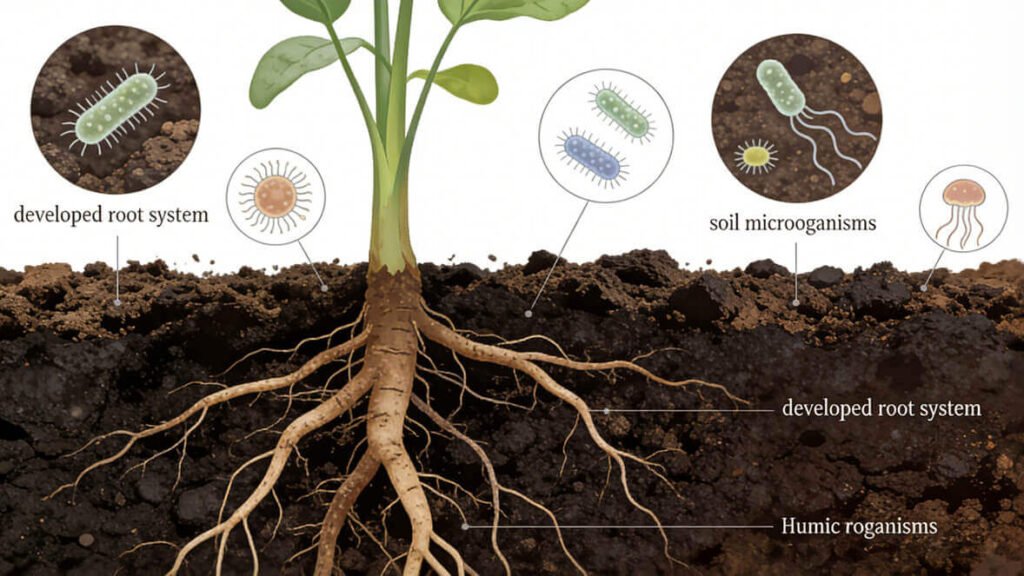
Humic acid enhances soil structure by promoting stable soil aggregates, improving water retention, aeration, and nutrient-holding capacity. This makes humic acid fertilizers particularly effective for compacted soils, degraded farmland, saline soils, and low-organic-matter soils.
This is why search terms like “benefits of humic acid fertilizer for soil” and “humic acid fertilizer for poor soil” continue to gain popularity among growers worldwide.
2️⃣ What Are Conventional Chemical Fertilizers? Definition and Agricultural Role
Conventional chemical fertilizers, also known as inorganic fertilizers, include products such as urea, ammonium nitrate, diammonium phosphate (DAP), and potassium sulfate. Their primary function is to supply crops with readily available nitrogen, phosphorus, and potassium (NPK).
Chemical fertilizers are widely used in modern agriculture because of their high nutrient concentration, fast crop response, and ease of application, especially in large-scale farming systems. However, they contain little to no organic matter and do not directly improve soil structure.
3️⃣ Key Advantages of Humic Acid Fertilizers in Modern Agriculture
Humic acid plays a critical role in building soil organic matter and enhancing aggregation. Over time, this leads to better soil porosity, root penetration, and moisture retention.
When combined with nitrogen, phosphorus, or potassium fertilizers, humic acid can reduce nutrient fixation and leaching. This improves nutrient availability and fertilizer efficiency, a major reason why humic acid is commonly added to compound fertilizers and water-soluble fertilizers.
Humic substances promote root development and stimulate beneficial soil microorganisms, supporting nutrient cycling and long-term soil fertility.
Many modern fertilizer solutions developed by companies such as Terafon Fertilizer integrate humic acid with mineral nutrients to balance immediate crop nutrition and long-term soil health.
4️⃣ Strengths and Limitations of Conventional Chemical Fertilizers
Chemical fertilizers remain essential due to their rapid nutrient supply and predictable results, especially during critical crop growth stages. They are highly effective for short-term yield improvement.
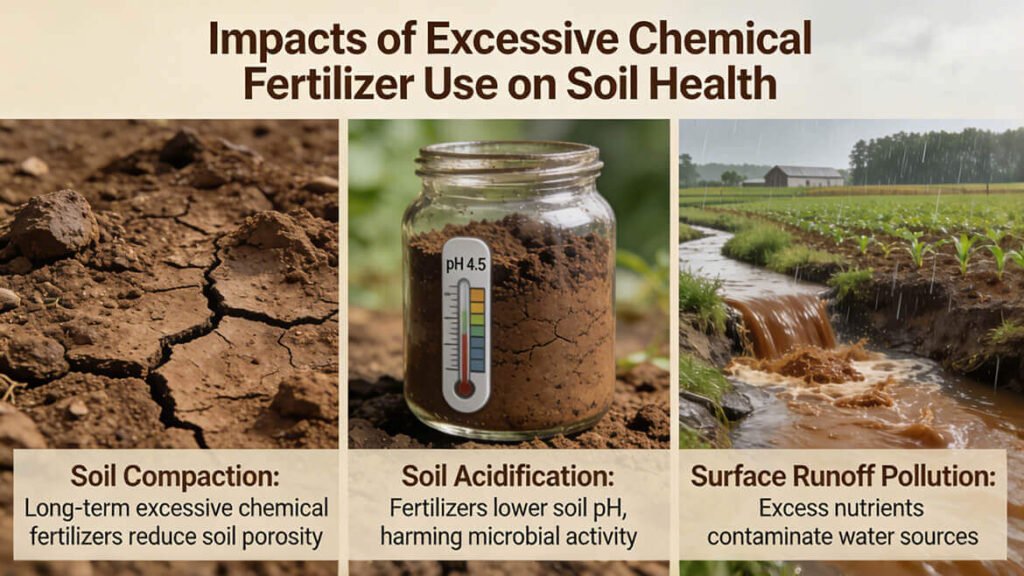
However, excessive or unbalanced use may lead to soil acidification, nutrient imbalance, reduced microbial activity, and environmental pollution. These risks have driven the global push for fertilizer reduction and efficiency improvement strategies.
5️⃣ Choosing the Right Fertilizer Based on Soil Type
Degraded or nutrient-poor soils: Humic acid fertilizers help rebuild soil structure and organic matter, with chemical fertilizers applied as supplements
Moderately fertile soils: A balanced approach using chemical fertilizers supported by humic acid products is recommended
Saline or acidic soils: Humic acid fertilizers offer buffering effects and improved nutrient availability under stress conditions
6️⃣ Fertilizer Selection for Different Crops
For staple crops such as rice, wheat, and maize, combining humic acid fertilizers with NPK fertilizers supports stable yields while maintaining soil fertility.
For vegetables, fruits, and cash crops, humic acid fertilizers are often used to enhance root growth, nutrient uptake, produce quality, and market value—especially in greenhouse and intensive farming systems.
7️⃣ Best Practices for Combining Humic Acid Fertilizers with Chemical Fertilizers
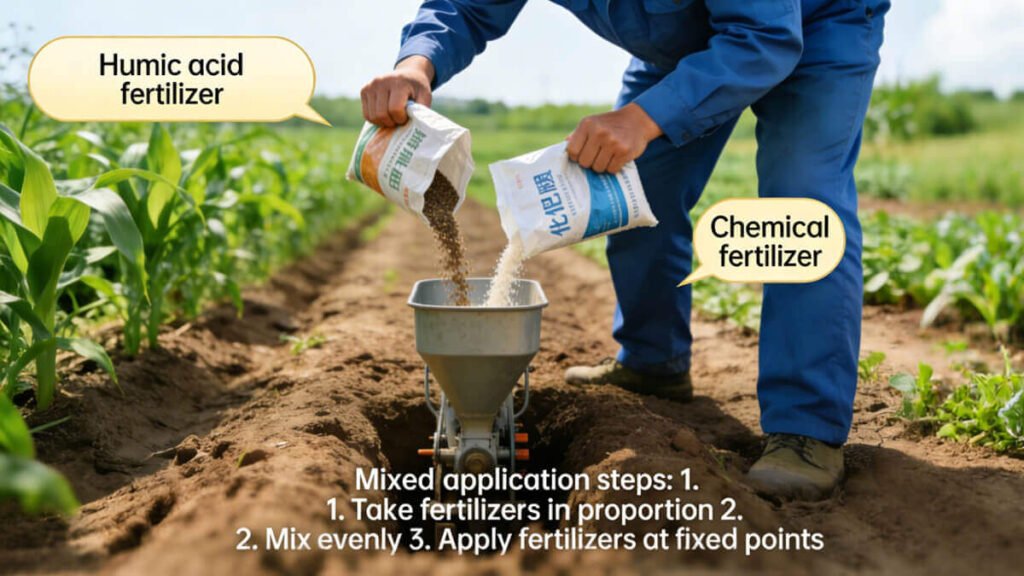
Rather than choosing one over the other, the most effective fertilization strategy is often a combined application of humic acid fertilizers and conventional chemical fertilizers. This approach ensures immediate nutrient availability while improving soil structure and nutrient efficiency over time.
This integrated fertilization concept is widely adopted across the industry and is reflected in the product development strategies of global suppliers like Terafon Fertilizer.
8️⃣ Conclusion: How to Choose the Best Fertilizer for Your Soil
Humic acid fertilizers and chemical fertilizers are complementary rather than competitive. The optimal choice depends on soil condition, crop type, and long-term management goals.
- Short-term yield focus: Chemical fertilizers provide fast results
- Long-term soil improvement: Humic acid fertilizers offer clear advantages
Best overall strategy: Combine both for sustainable and efficient crop production
Frequently Asked Questions (FAQ)
In most commercial farming systems, humic acid fertilizers are best used as functional enhancers rather than complete replacements for mineral fertilizers.
Consistent and proper use can improve soil organic matter, soil structure, microbial activity, and overall fertilizer efficiency.
Application frequency depends on crop type, soil condition, and product form. Liquid humic acid fertilizers are commonly applied every 2–3 weeks during active growth, while granular or slow-release humic acid fertilizers may be applied once per season. Soil testing and crop response should guide final application schedules.
Humic acid fertilizer is generally safe and beneficial when used correctly. However, excessive or unbalanced application without soil monitoring may affect soil nutrient dynamics. To maintain optimal soil health, humic acid should be applied as part of an integrated nutrient management program.
Humic acid fertilizer is compatible with most NPK fertilizers and micronutrient products and often improves nutrient availability. However, direct mixing with high-calcium or highly acidic fertilizers may reduce effectiveness. Always check product compatibility or perform a small-scale mixing test before application.
Related Articles
Recommended Fertilizers
Potassium Humate Fertilizer
Ammonium Humate Fertilizer
Potassium Humate Fertilizer
Water-Soluble Humic
Suitable Crops

Industrial & Bio-Processing Crop

Fruit Trees & Orchards

Leafy & Fruiting Vegetables
Root & Bulb Vegetables
Humic Acid Fertilizer vs Chemical Fertilizers: Soil Health Comparison
Humic acid fertilizer enhances soil structure, nutrient uptake, and long-term fertility, while chemical fertilizers provide fast-acting nutrients for crop growth. Terafon Fertilizer delivers reliable solutions for sustainable and efficient farming.
