


- Home » How to Apply Humic Acid Fertilizer Correctly...
How to Apply Humic Acid Fertilizer Correctly: A Complete Guide

Humic acid fertilizer plays a crucial role in modern sustainable agriculture by improving soil structure, enhancing nutrient availability, and stimulating root development. However, understanding how to apply humic acid fertilizer correctly, including the best application timing, proper methods, and accurate dosage rates, is essential for maximizing its agronomic benefits.
As a provider of advanced soil nutrition solutions, Terafon Fertilizer supports scientifically based fertilizer practices that enhance nutrient efficiency while maintaining soil health. This guide explains the practical and technical aspects of humic acid application to help growers achieve consistent and measurable results.
Table of Contents
- 1️⃣ What Is Humic Acid Fertilizer and How It Works
- 2️⃣ Best Time to Apply Humic Acid Fertilizer
- 3️⃣ Humic Acid Fertilizer Application Methods
- 4️⃣ Recommended Application Rates and Frequency
- 5️⃣ Crop-Specific Humic Acid Application Strategies
- 6️⃣ Using Humic Acid with Chemical Fertilizers
- 7️⃣ Common Mistakes to Avoid
- 8️⃣ Conclusion
1️⃣ What Is Humic Acid Fertilizer and How It Works
Humic acid is a natural organic compound derived from decomposed plant matter. It is widely used in agriculture for its ability to:
- Improve soil aggregation and structure
- Increase water retention capacity
- Enhance cation exchange capacity (CEC)
- Chelate micronutrients for better availability
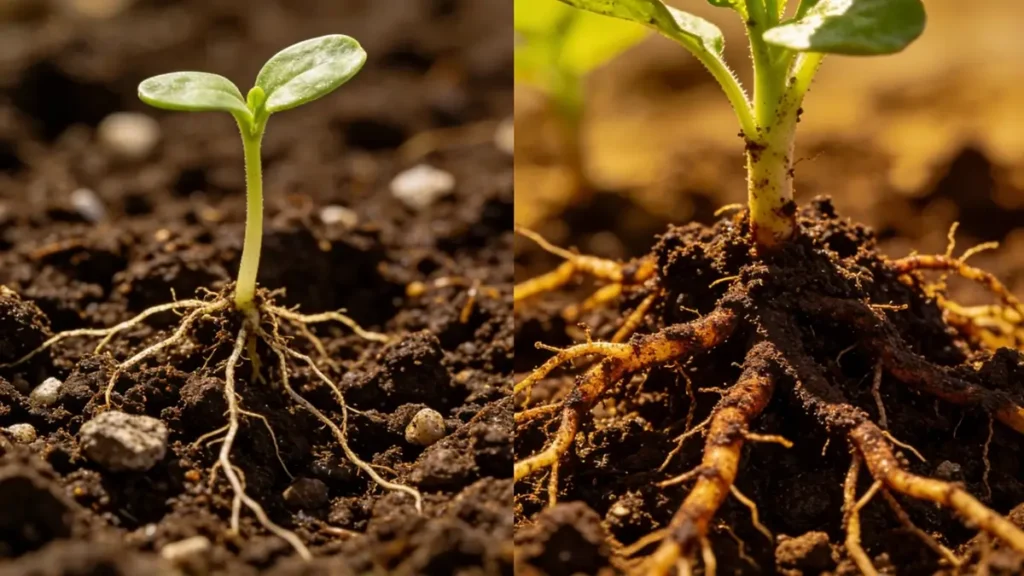
- Stimulate root growth and microbial activity
Buffer soil pH fluctuations
The soil improvement effects of humic acid fertilizer are especially valuable in sandy soils, compacted soils, saline-alkaline land, and greenhouse continuous cropping systems.
Unlike conventional fertilizers that directly supply nutrients, humic acid functions as a soil conditioner and nutrient efficiency enhancer, improving overall nutrient uptake performance.

2️⃣ Best Time to Apply Humic Acid Fertilizer
Selecting the best time to apply humic acid fertilizer significantly influences crop response and nutrient efficiency.
Applying humic acid during land preparation allows it to integrate into the soil profile, improving structure before root establishment. This stage is ideal for long-term soil improvement programs.
Application during seedling or transplant stages promotes rapid root expansion. This phase is critical for enhancing early nutrient uptake and root vigor.
During rapid vegetative growth, flowering, and fruit set, humic acid can support improved nutrient translocation and stress tolerance.
Under drought, heat stress, salinity, or transplant shock, humic acid application helps plants better tolerate adverse environmental conditions.
3️⃣ Humic Acid Fertilizer Application Methods
Choosing the correct humic acid fertilizer application method ensures optimal efficiency.
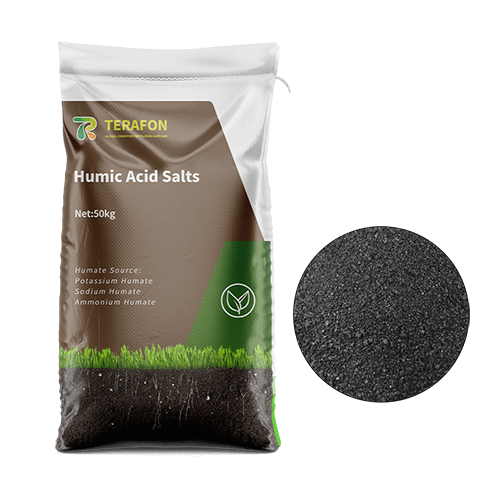
Granular or powder humic acid products can be evenly spread and incorporated into the top 10–20 cm of soil. This method is commonly used for:
- Field crops
- Orchards
- Long-term soil rehabilitation programs
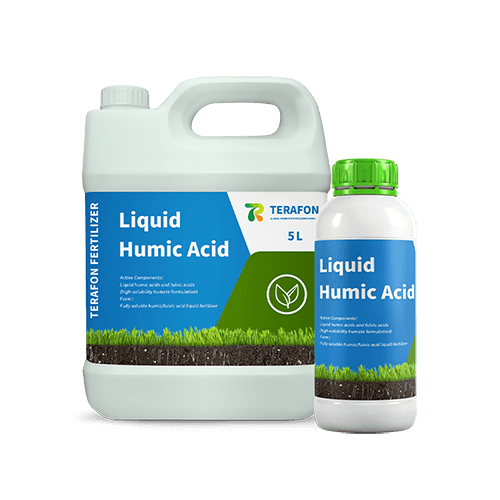
Humic acid drip irrigation technology is widely adopted in greenhouse and precision agriculture systems. Liquid humic acid is delivered directly to the root zone, offering:
- Uniform nutrient distribution
- Higher fertilizer use efficiency
Reduced nutrient loss
Diluted liquid humic acid can be applied directly around the root zone during key growth stages to improve nutrient absorption capacity.
Proper humic acid foliar spray concentration is essential. Application is typically recommended during cooler periods (early morning or late afternoon) to avoid evaporation loss. Foliar spraying is particularly effective when crops require rapid nutrient support.
Low-concentration humic acid soaking solutions can improve germination rates, enhance seedling uniformity, and stimulate early root growth.
4️⃣ Recommended Application Rates and Frequency
The correct humic acid application rate depends on soil organic matter content, crop type, and product formulation.
- Adjust rates based on soil testing results
- Higher rates may be required for degraded or low-organic-matter soils
- Follow product dilution guidelines
- Apply every 2–4 weeks during active growth periods
- Use label-recommended dilution ratios
- Apply 2–3 times during key growth stages
Performing soil analysis before application helps determine optimal dosage and avoids unnecessary overuse.
5️⃣ Crop-Specific Humic Acid Application Strategies
- Base application before planting
- Supplemental application during early vegetative growth
- Combine with nitrogen fertilizers to improve nitrogen use efficiency
- Early-stage drip irrigation
- Foliar spray during flowering and fruiting
- Split applications for high-yield crops
- Root-zone application during bud break
- Fertigation during fruit expansion
- Post-harvest soil improvement application
6️⃣ Using Humic Acid with Chemical Fertilizers
Using humic acid in combination with chemical fertilizers can:
- Improve nitrogen, phosphorus, and potassium utilization
- Reduce nutrient leaching
- Enhance micronutrient chelation
- Support sustainable fertilizer management programs
7️⃣ Common Mistakes to Avoid
- Over-application expecting immediate yield increases
- Ignoring soil test results
- Applying foliar sprays under high temperature conditions
Mixing incompatible products without testing
Proper management ensures consistent and measurable soil health improvements.
8️⃣ Conclusion
Applying humic acid fertilizer correctly requires understanding the best application timing, appropriate methods, and accurate dosage standards. When integrated into a structured nutrient management plan, humic acid significantly improves soil structure, enhances root development, and increases fertilizer efficiency.
Professional nutrient management solutions offered by companies such as Terafon Fertilizer support growers in implementing scientifically balanced fertilization strategies while maintaining soil sustainability.
By combining soil testing, precision irrigation systems, and staged nutrient application, humic acid fertilizer becomes a powerful tool in achieving higher productivity and long-term agricultural resilience.Frequently Asked Questions (FAQ)
Application frequency depends on crop type, soil condition, and product formulation.
Liquid humic acid fertilizer: Apply every 2–3 weeks during active growth.
Granular or powder humic acid: Apply every 30–45 days or at key stages such as pre-planting, flowering, or fruit set.
Regular soil testing helps determine the optimal humic acid fertilizer application schedule for improved nutrient efficiency and soil health.
Yes. Humic acid fertilizer is commonly used with NPK fertilizers, nitrogen fertilizers, micronutrients, and organic amendments to enhance nutrient availability and improve fertilizer use efficiency.
However, always:
Conduct a compatibility test before tank mixing
Avoid mixing with strong acidic or highly alkaline products without verification
Proper combination improves nutrient chelation, soil nutrient retention, and overall crop performance.
Yes. As a soil conditioner, long-term application supports sustainable soil health and improved nutrient cycling.
Yes. Its chelation properties enhance nutrient availability and uptake efficiency.
Related Articles
Recommended Fertilizers
Humic-Acid-Fertilizer
Water-Soluble-Humic
Liquid-Humic-Acid
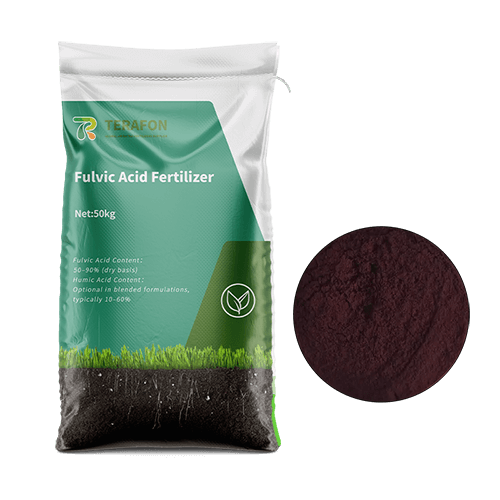
Fulvic-Acid-Fertilizer
Suitable Crops

Industrial & Bio-Processing Crop

Fruit Trees & Orchards

Leafy & Fruiting Vegetables

Root & Bulb Vegetables
How to Apply Humic Acid Fertilizer: Best Practices for Soil Health
Apply humic acid fertilizer through soil drenching, fertigation, or foliar spray to improve nutrient uptake, enhance root development, and boost soil fertility. Terafon Fertilizer provides high-quality humic solutions for efficient and sustainable crop production.
