


- Home » How Long Does PCU Urea Release Nitrogen...
How Long Does PCU Urea Release Nitrogen? Explained
Understanding Polymer Coated Urea Release Duration, Mechanism, and Field Performance
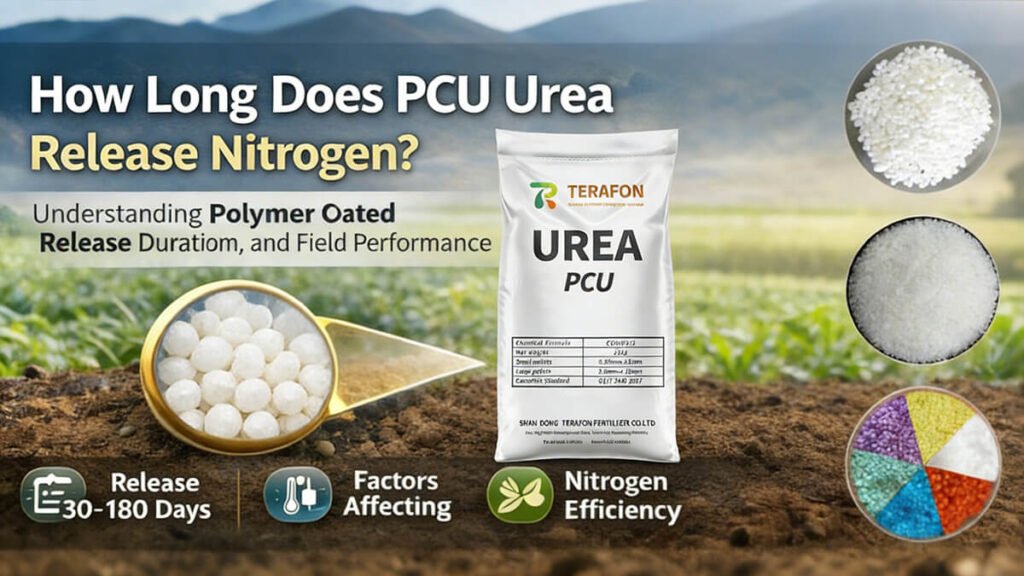
Polymer Coated Urea (PCU) is a controlled-release nitrogen fertilizer that provides a steady nitrogen supply over an extended period. Through its polymer coating, PCU gradually releases nitrogen in response to soil temperature and moisture, typically lasting 30 to 180 days, with some formulations designed for even longer release cycles.
Compared to conventional urea, PCU urea improves nitrogen use efficiency by reducing losses from volatilization and leaching. It supports more uniform crop growth, fewer fertilizer applications, and better environmental performance. PCU fertilizers are widely used in field crops, horticulture, turf, and orchards, where consistent nitrogen availability is critical. Terafon Fertilizer offers PCU solutions tailored to different crops and growing conditions to help achieve efficient and sustainable crop nutrition.
Table of Contents
1. Introduction
Efficient nitrogen management remains a cornerstone of modern crop production. Improper nitrogen timing often leads to nutrient loss, uneven crop growth, and unnecessary environmental impact. As a result, controlled-release nitrogen fertilizers, particularly polymer coated urea (PCU), have become increasingly important in precision agriculture systems.
A frequently asked and highly searched question is: how long does PCU urea release nitrogen? The answer depends on multiple agronomic and environmental factors. Understanding these variables allows growers, agronomists, and fertilizer distributors to design nutrient programs that better align nitrogen availability with crop uptake curves.
Companies such as Terafon Fertilizer continue to invest in polymer coating technologies that offer predictable nitrogen release behavior across diverse growing conditions.
2. What Is Polymer Coated Urea (PCU)?
Polymer coated urea (PCU) is a controlled-release nitrogen fertilizer produced by coating urea granules with a semi-permeable polymer membrane. This coating regulates the rate at which water enters the granule and nitrogen exits into the soil solution.
Unlike conventional urea fertilizer—which dissolves rapidly and is vulnerable to volatilization and leaching—PCU urea provides a gradual and sustained nitrogen supply. This makes it suitable for crops that require consistent nitrogen availability, including cereals, turfgrass, vegetables, orchards, and horticultural crops.
3. How PCU Urea Releases Nitrogen
3.1 Controlled Release Mechanism of PCU Urea
Nitrogen release from polymer coated urea occurs through a diffusion-based mechanism. After application, soil moisture penetrates the polymer coating and dissolves the urea core. Dissolved nitrogen then diffuses outward through microscopic pores in the coating.
This process is primarily controlled by temperature and moisture, rather than microbial activity, which makes PCU urea release behavior more predictable than many other slow-release fertilizers.
3.2 Typical Nitrogen Release Duration of PCU Urea
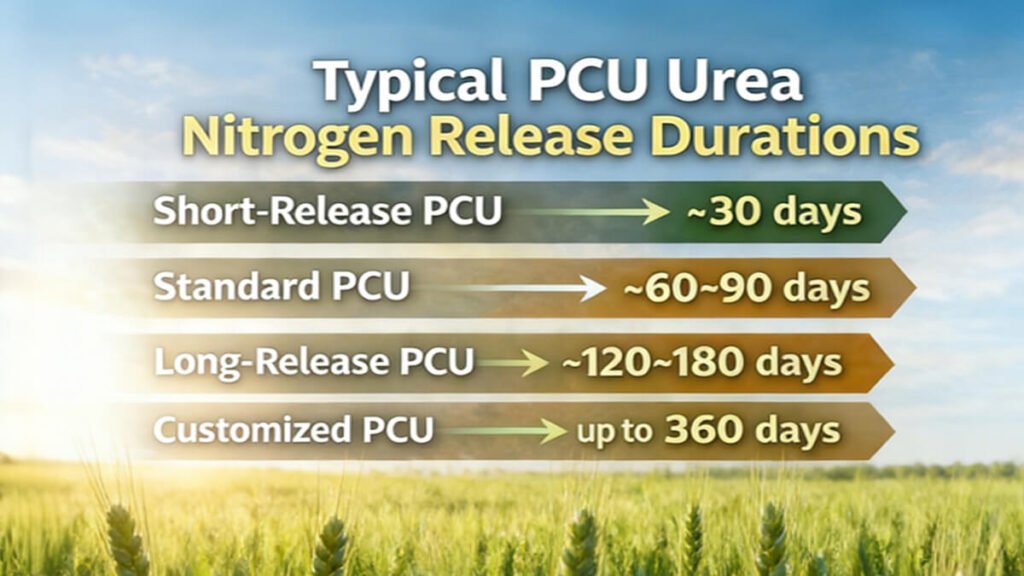
So, how long does PCU urea release nitrogen in real-world conditions? While performance varies by formulation, most PCU products fall within these general ranges:
- Short-release PCU: ~30 days
- Standard PCU: ~60–90 days
- Long-release PCU: ~120–180 days
Customized PCU formulations: up to 360 days, depending on polymer coating thickness
This flexibility allows fertilizer producers, including Terafon Fertilizer, to offer PCU grades tailored to different crop cycles, climates, and soil conditions.
3.3 Key Factors Affecting PCU Nitrogen Release Rate
Several variables influence nitrogen release from polymer coated urea:
Soil Temperature: Higher temperatures increase polymer permeability and accelerate nitrogen diffusion, while cooler soils extend release duration.
Soil Moisture: Sufficient moisture is required for nitrogen release. In dry soils, nutrient release may be delayed until rainfall or irrigation occurs.
Coating Thickness and Quality: Thicker or multi-layer polymer coatings provide longer release periods and more stable nitrogen delivery.
Soil Conditions: Although PCU release is mainly physical, soil structure and moisture-holding capacity still influence nutrient movement and availability.
4. Agronomic Benefits of Extended Nitrogen Release
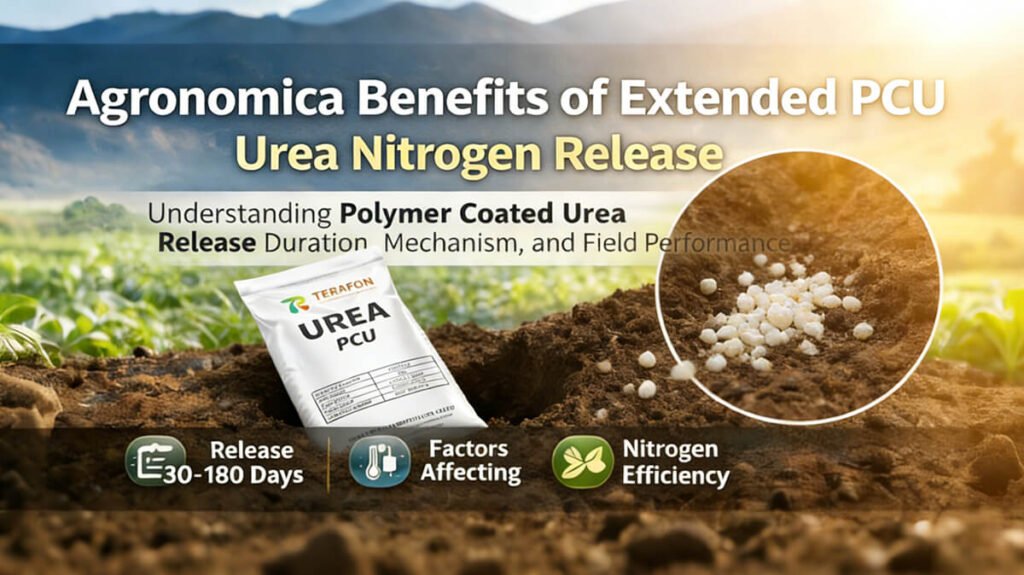
The controlled nitrogen release profile of PCU urea offers multiple agronomic advantages:
- Improved nitrogen use efficiency, reducing losses from volatilization and leaching
- Stable nutrient availability, supporting uniform crop growth
- Reduced application frequency, lowering labor and operational costs
Environmental protection, minimizing nitrate runoff and groundwater contamination
These benefits explain why controlled-release nitrogen products are increasingly adopted in sustainable nutrient management programs promoted by forward-looking fertilizer suppliers such as Terafon Fertilizer.
5. Best Practices for Applying PCU Urea in the Field
- Select a PCU product with a release duration aligned to the crop’s nitrogen demand curve
- Apply PCU urea as a base or pre-plant fertilizer for long-term nitrogen supply
- Consider local climate conditions, especially soil temperature and irrigation practices
Integrate PCU urea into a balanced fertilization strategy supported by soil testing
Proper product selection and application timing are essential for achieving consistent results.
6. Conclusion
In summary, PCU urea typically releases nitrogen over a period ranging from 30 days to more than 6 months, depending on polymer coating technology and environmental conditions. By delivering nitrogen gradually and predictably, polymer coated urea helps synchronize nutrient availability with crop demand, improves nitrogen efficiency, and supports long-term soil and environmental health.
For growers seeking reliable controlled-release nitrogen solutions, Terafon Fertilizer offers PCU technologies designed to meet the evolving needs of modern agriculture.
7. Frequently Asked Questions (FAQ)
How long does PCU urea release nitrogen in warm climates?
In warmer soils, nitrogen release generally occurs faster, typically within the lower end of the specified release range.
Is PCU urea more efficient than conventional urea fertilizer?
Yes. PCU urea reduces nitrogen losses and improves nutrient use efficiency by providing controlled nitrogen release.
Can PCU urea replace multiple nitrogen applications?
In many cropping systems, PCU urea can significantly reduce the need for split nitrogen applications.
Which crops benefit most from PCU urea?
PCU urea is suitable for cereals, vegetables, turf, orchards, and crops requiring consistent nitrogen supply.
Get a Catalog & Best Price
Recommended Fertilizers
Polymer-Coated Urea (PCU)
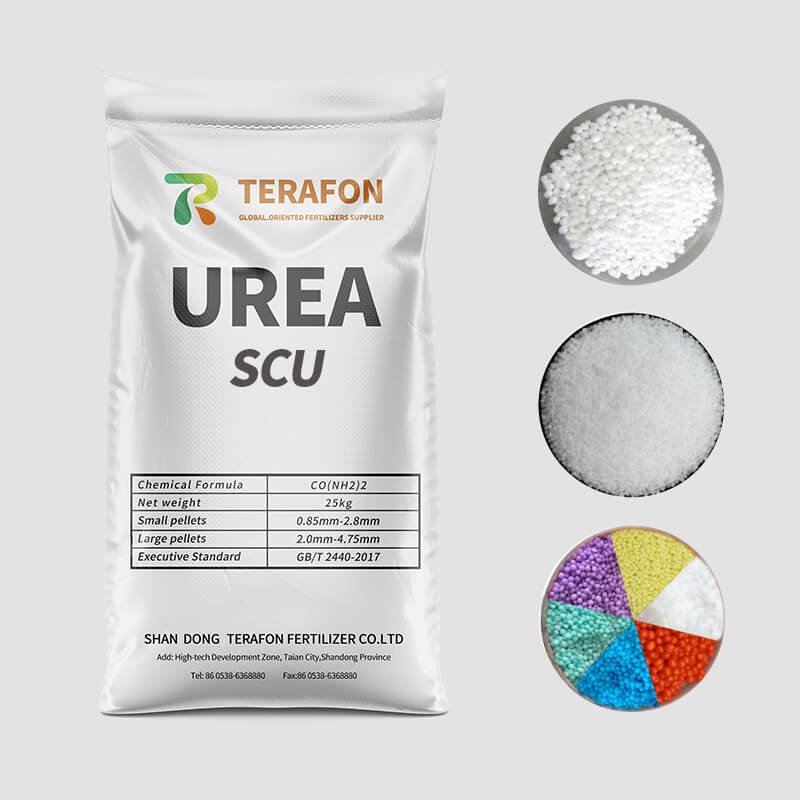
Sulfur-Coated Urea (SCU)
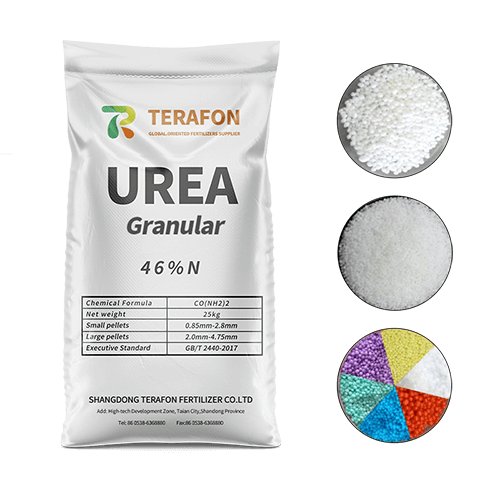
Urea-46%-Granular

Automotive-Grade-UreaI-(SCR)
Suitable Crops

Cereal Crops

Legume Crops

Root & Tuber Food Crops

Fiber Crops
Choose the Right PCU Urea Fertilizer for Your Crops
Select the appropriate polymer coated urea (PCU) fertilizer based on crop type, growth stage, and local soil conditions to ensure controlled nitrogen release, improve nutrient efficiency, and maximize yield. Contact Terafon Fertilizer for professional guidance and tailored PCU solutions.
