- Home » How to Choose the Best Water Soluble Fertilizer...
How to Choose the Best Water Soluble Fertilizer for Fruit Trees
A Professional, Stage-Based Nutrition Guide for Modern Orchards
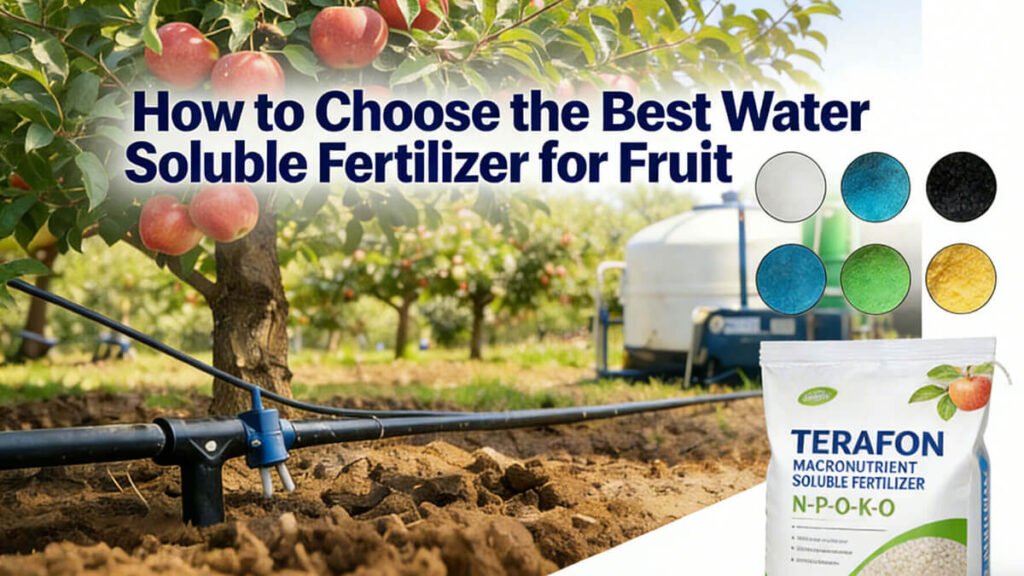
Choosing the best water soluble fertilizer for fruit trees is no longer simply a matter of selecting a high NPK number. Modern orchard management requires a growth-stage-specific fertilizer strategy that aligns nutrient availability with tree physiology. High-quality water soluble fertilizers, such as those recommended in professional nutrient programs from Terafon Fertilizer, allow growers to deliver precise nutrition through fertigation or drip irrigation, improving nutrient uptake efficiency, fruit quality, and long-term tree health.
This guide explains how to select the right water soluble fertilizer for fruit trees based on nutrient composition, solubility standards, application methods, and seasonal growth stages—helping orchard managers make informed, sustainable, and productivity-focused decisions.
Table of Contents
- 1. Why Water Soluble Fertilizers Are Essential for Fruit Trees
- 2. What Defines a High-Quality Water Soluble Fertilizer
- 3. Core Nutrient Requirements of Fruit Trees
- 4. How to Match Water Soluble Fertilizers to Fruit Tree Growth Stages
- 5. Recommended NPK Ratios for Fruit Trees
- 6. Application Methods for Maximum Nutrient Efficiency
- 7. Common Fertilization Mistakes in Fruit Orchards
- 8. Conclusion: Building a Sustainable Fruit Tree Nutrition Program
1. Why Water Soluble Fertilizers Are Essential for Fruit Trees
Fruit trees have long growth cycles and highly variable nutrient demands throughout the season. Compared with traditional granular fertilizers, water soluble fertilizers dissolve completely in water, allowing nutrients to be absorbed immediately by roots or leaves.
Using water soluble fertilizer for fruit trees provides several advantages:
- Faster nutrient uptake during critical growth periods
- Precise control through fertigation and drip irrigation systems
- Reduced nutrient loss from leaching or fixation
Improved consistency in fruit size, color, and sugar accumulation
These benefits make water soluble fertilizers a key component of modern orchard nutrition programs.
2. What Defines a High-Quality Water Soluble Fertilizer
2.1 Complete Solubility and High Purity
A professional water soluble NPK fertilizer for fruit trees must dissolve 100% in water without leaving insoluble residues. Poor solubility can clog irrigation systems, reduce uniform nutrient distribution, and compromise fertigation efficiency.
High-purity raw materials are especially important in orchards using drip or micro-sprinkler irrigation.
2.2 Balanced Macronutrients and Chelated Micronutrients
Beyond nitrogen, phosphorus, and potassium, fruit trees require secondary and trace elements to support metabolic activity and fruit development. High-performance formulations often include:
- Calcium for cell wall strength and fruit firmness
- Magnesium for chlorophyll formation
- Chelated iron, zinc, boron, and manganese for stable uptake under varying soil pH conditions
Chelated micronutrients are particularly valuable when applying water soluble fertilizer through irrigation systems.
3. Core Nutrient Requirements of Fruit Trees
Understanding nutrient function is essential when choosing the best fertilizer for fruit trees.
- Nitrogen (N) supports leaf growth and canopy expansion, especially in early stages
- Phosphorus (P) promotes root development, flowering, and fruit set
Potassium (K) plays a critical role in fruit enlargement, sugar transport, color development, and stress tolerance
The correct nutrient balance ensures vegetative growth does not compete with fruit production.
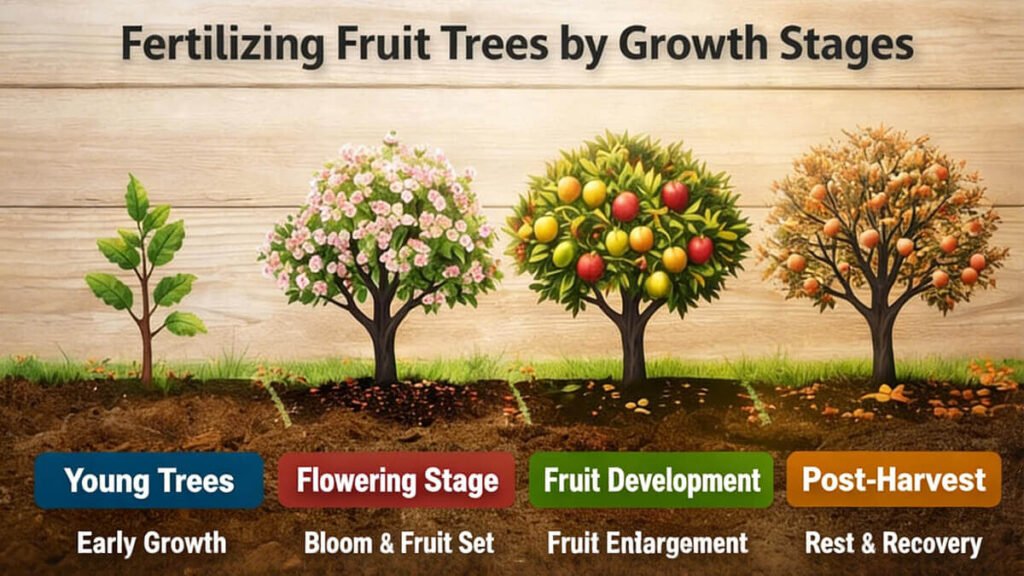
4. How to Match Water Soluble Fertilizers to Fruit Tree Growth Stages
4.1 Establishment and Early Vegetative Growth
During early growth, young fruit trees require sufficient nitrogen to develop a strong canopy and root system. Balanced or nitrogen-forward water soluble fertilizers help establish healthy tree structure.
4.2 Flowering and Fruit Set Stage
At flowering, excessive nitrogen can reduce fruit set. Fertilizer programs should emphasize phosphorus while maintaining moderate nitrogen levels to support reproductive development.
4.3 Fruit Enlargement and Quality Development
As fruit begins to enlarge, potassium demand increases significantly. Potassium-rich water soluble fertilizers support carbohydrate transport, fruit firmness, and sugar accumulation—key factors for market quality.
4.4 Post-Harvest Recovery
After harvest, fruit trees need nutrients to restore energy reserves and support bud differentiation for the next season. Balanced nutrition at this stage improves long-term orchard productivity.
5. Recommended NPK Ratios for Fruit Trees
Based on common orchard nutrition practices, the following water soluble fertilizer ratios for fruit trees are widely used as reference points:
- Young trees / early growth: 19-19-19 or 20-20-20
- Flowering and fruit set: 10-30-10
- Fruit enlargement: 10-20-30
Post-harvest recovery: 20-10-10 with added calcium and magnesium
Final fertilizer selection should always be adjusted according to soil tests, tree age, and crop type.
6. Application Methods for Maximum Nutrient Efficiency
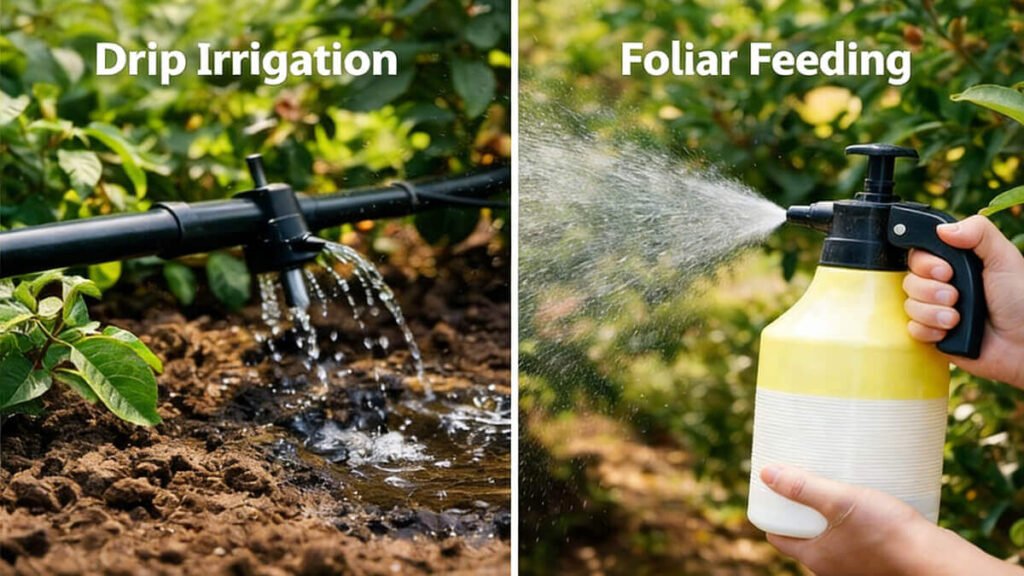
Water soluble fertilizers are most effective when applied using precision techniques.
6.1 Fertigation and Drip Irrigation
Fertigation allows nutrients to be delivered directly to the root zone in small, frequent doses, improving nutrient use efficiency and reducing waste. This method is especially suitable for high-density orchards.
6.2 Foliar Application
Foliar feeding is commonly used to correct micronutrient deficiencies quickly, particularly during flowering or early fruit development. Proper dilution and timing are essential to avoid leaf damage.
7. Common Fertilization Mistakes in Fruit Orchards
Even high-quality fertilizers can underperform if misused. Common issues include:
- Applying excessive nitrogen during flowering
- Ignoring micronutrient deficiencies
- Using one fertilizer formula for the entire season
Over-concentrating water soluble fertilizer solutions
A data-driven, stage-specific approach consistently delivers better results than aggressive feeding.
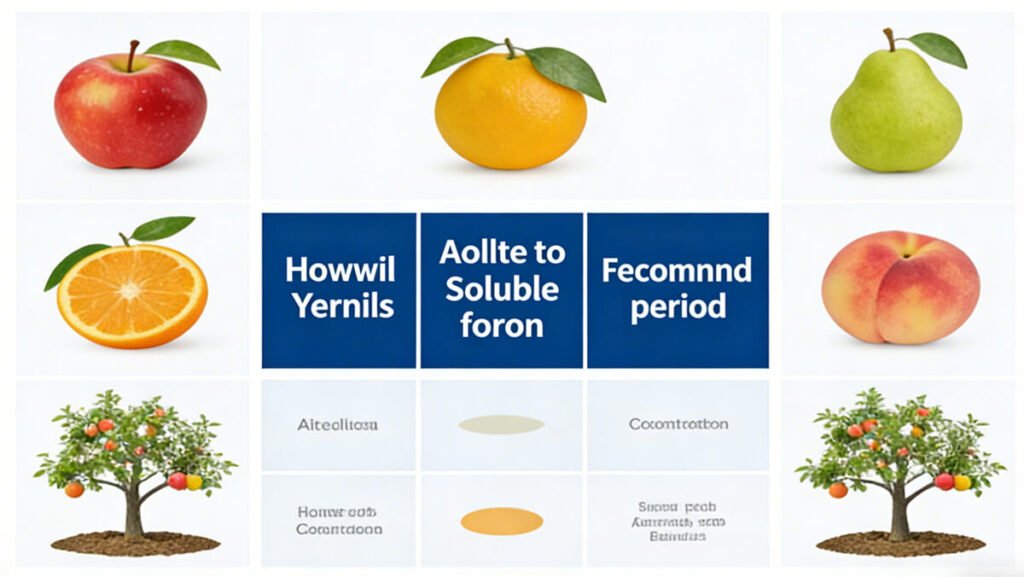
8. Conclusion: Building a Sustainable Fruit Tree Nutrition Program
Choosing the best water soluble fertilizer for fruit trees is a strategic decision based on nutrient science rather than short-term yield goals. By focusing on complete solubility, balanced macro- and micronutrients, and growth-stage-specific formulations—principles widely reflected in professional nutrient systems such as Terafon Fertilizer—growers can achieve higher fruit quality, stable yields, and long-term orchard sustainability.
A well-structured water soluble fertilizer program supports not only the current season’s performance but also the future productivity of the orchard.
Get a Catalog & Best Price
Recommended Fertilizers
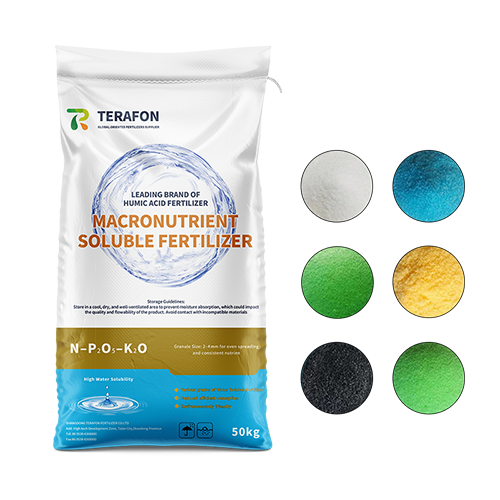
Macronutrient Soluble Fertilizer
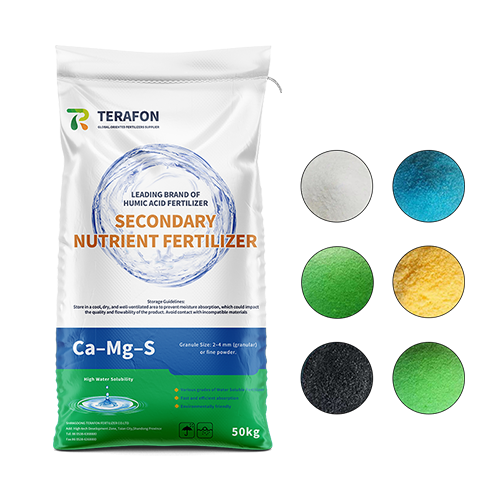
Secondary Nutrient Fertilizer
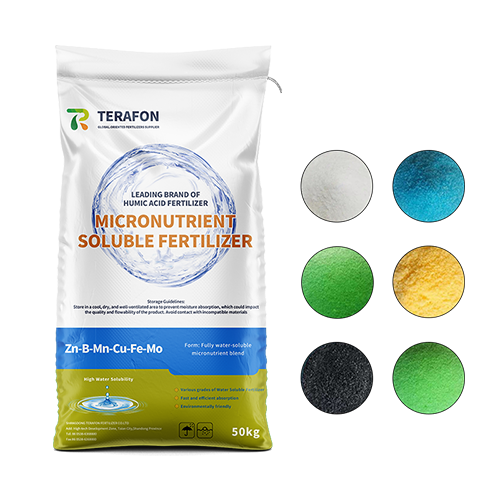
Micronutrient Soluble Fertilizers
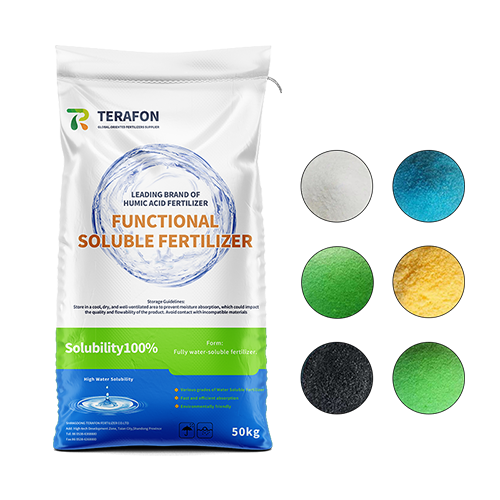
Functional Soluble Fertilizer
Suitable Crops
Fruit Trees & Orchards
Berry & Vine Crops
Leafy & Fruiting Vegetables