


- Home » Ammonium Sulfate vs Ammonium Chloride...
Ammonium Sulfate vs Ammonium Chloride: Fertilizer Comparison Guide
Ammonium sulfate and ammonium chloride are two widely used ammonium-based fertilizers that play a crucial role in modern agriculture and industrial applications. While both serve as essential nitrogen sources for crops, their accompanying elements—sulfur in ammonium sulfate and chlorine in ammonium chloride—significantly affect soil pH, crop growth, and environmental safety.
For growers seeking reliable, high-quality nitrogen fertilizers, products like Terafon Fertilizer provide consistent performance and can help maximize crop yields while maintaining soil health. Understanding the differences between ammonium sulfate and ammonium chloride is essential for agronomists, fertilizer buyers, and industrial users.Table of Contents
- 1. Chemical Properties and Physical Characteristics
- 2. Production Methods and Industrial Sources
- 3. Agricultural Applications
- 4. Industrial and Laboratory Applications
- 5. Detailed Comparison of Ammonium Sulfate and Ammonium Chloride
- 6. Environmental Impact and Safe Handling
- 7. Practical Selection Strategies and Application Recommendations
- 8. Conclusion and Recommendations
1. Chemical Properties and Physical Characteristics
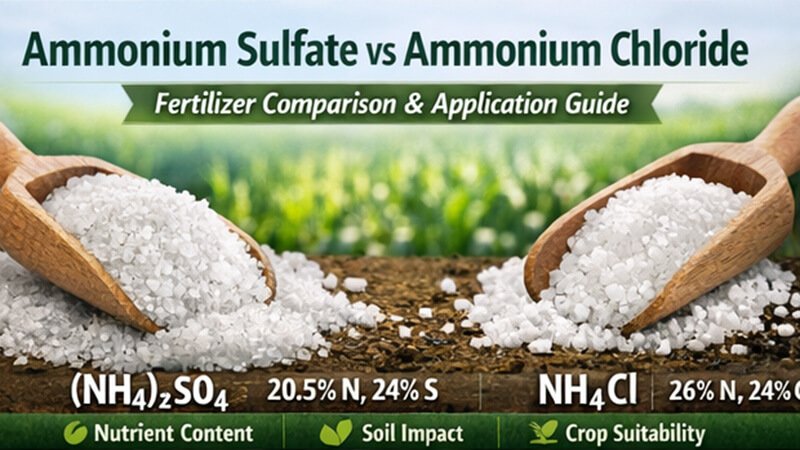
Ammonium Sulfate (NH₄)₂SO₄
- Nitrogen content: ~20.5%
- Sulfur content: ~24%
- Appearance: White crystalline or granular solid
- Solubility: Highly soluble in water, providing a stable nitrogen and sulfur supply
- Soil effect: Slightly acidifying; suitable for neutral to alkaline soils
Crop suitability: Compatible with most crops, including rice, corn, and wheat
Ammonium Chloride (NH₄Cl)
- Nitrogen content: ~26%
- Chlorine content: ~24%
- Appearance: White or light yellow crystals, hygroscopic
- Solubility: High water solubility; releases nitrogen quickly
- Soil effect: Acidifies the soil; not suitable for chlorine-sensitive crops such as potatoes or tobacco
Crop suitability: Best used in chlorine-deficient soils or short-term high nitrogen applications
Key Performance Comparison
| Property | Ammonium Sulfate | Ammonium Chloride |
|---|---|---|
| Nitrogen content | 20.5% | 26% |
| Secondary element | Sulfur (S) | Chlorine (Cl) |
| Water solubility | High | High |
| Soil pH impact | Slightly acidic | Strongly acidic |
| Crop compatibility | Most crops | Limited for Cl-sensitive crops |
| Fertilizer release | Medium-term | Short-term, fast-release |
2. Production Methods and Industrial Sources
Ammonium sulfate is primarily produced by reacting ammonia with sulfuric acid or recovered from chemical by-products such as caprolactam manufacturing. Ammonium chloride is generally synthesized by reacting ammonia with hydrochloric acid or obtained as a by-product from the chlor-alkali industry.
Understanding these production methods can help growers and procurement managers evaluate fertilizer quality, nutrient consistency, and cost-effectiveness.
3. Agricultural Applications
Nitrogen Source and Soil Improvement
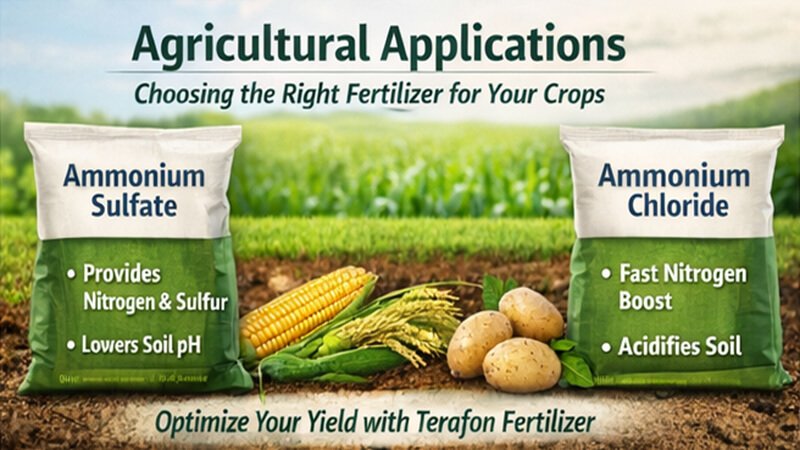
Ammonium sulfate provides both nitrogen and sulfur, improving crop nutrition while slightly lowering soil alkalinity. It is ideal for most crops, especially those sensitive to chlorine. Ammonium chloride provides fast-release nitrogen and supplements chlorine in deficient soils but may harm sensitive crops if not carefully applied.
Crop-Specific Application Strategies
For crops requiring long-term nitrogen supply, ammonium sulfate is preferable due to its sustained nutrient release. Ammonium chloride is suitable for short-term high-nitrogen applications or chlorine-deficient soils, but proper management is necessary to minimize soil acidification and potential crop stress.
Midway through the growing season, integrating high-quality fertilizers such as Terafon Fertilizer can enhance nutrient efficiency, ensure steady crop growth, and support sustainable soil management practices.
4. Industrial and Laboratory Applications
Ammonium Sulfate: Used in flue gas desulfurization, textile finishing, food additives, and laboratory protein precipitation.
Ammonium Chloride: Employed in welding fluxes, buffer solutions, pharmaceutical products, and chemical analysis reagents.
Selecting the appropriate ammonium salt for industrial purposes can optimize process efficiency and product quality.
5. Detailed Comparison of Ammonium Sulfate and Ammonium Chloride
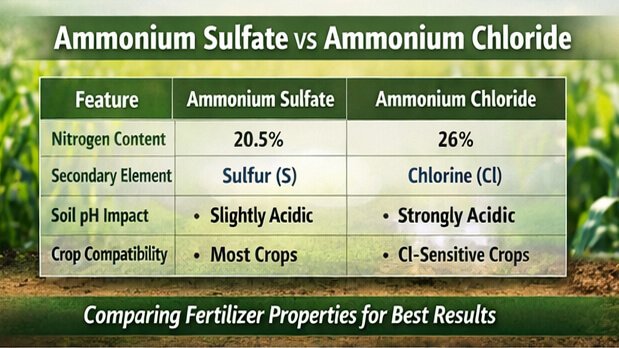
| Feature | Ammonium Sulfate | Ammonium Chloride |
|---|---|---|
| Nitrogen content | 20.5% | 26% |
| Secondary nutrient | Sulfur | Chlorine |
| Soil acidification | Low | High |
| Crop safety | Safe for most | Risk for Cl-sensitive crops |
| Fertilizer cost | Moderate | Lower |
| Nutrient release | Medium-term | Short-term, rapid |
6. Environmental Impact and Safe Handling
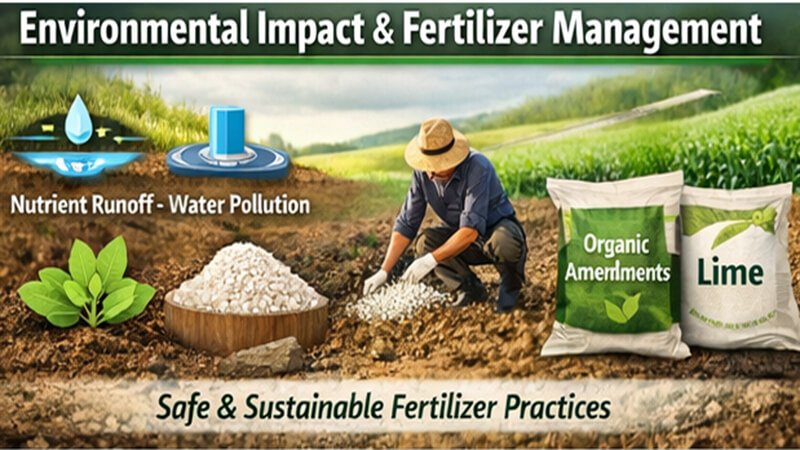
Improper application of either ammonium sulfate or ammonium chloride can lead to nitrogen leaching, water eutrophication, and soil acidification. Ammonium sulfate should be applied within recommended rates and may be combined with lime or organic fertilizers to buffer soil pH. Ammonium chloride requires careful dosing in sensitive ecosystems to avoid chlorine toxicity. Both fertilizers should be stored away from moisture and strong oxidizers following chemical safety standards.
7. Practical Selection Strategies and Application Recommendations
- Soil testing: Determine pH, nitrogen, sulfur, and chlorine levels.
- Crop compatibility: Match fertilizer to crop nitrogen demand and chlorine sensitivity.
- Controlled application: Use split applications for efficient nutrient uptake.
Sustainability: Combine with organic amendments or slow-release fertilizers to minimize environmental impact.
By choosing reliable fertilizers like Terafon Fertilizer, farmers can implement effective nitrogen management strategies, optimize yields, and maintain soil health.
8. Conclusion and Recommendations
Ammonium sulfate is suitable for most crops, providing nitrogen and sulfur while maintaining soil stability, especially in neutral to alkaline soils. Ammonium chloride is ideal for short-term high nitrogen applications or chlorine-deficient soils but should be carefully applied to avoid acidification and crop stress.
For sustainable and high-yield crop production, selecting the right ammonium fertilizer based on soil properties, crop requirements, and environmental considerations is essential. Incorporating high-quality products such as Terafon Fertilizer ensures both effective nutrient supply and responsible soil management.
Recommended Fertilizers
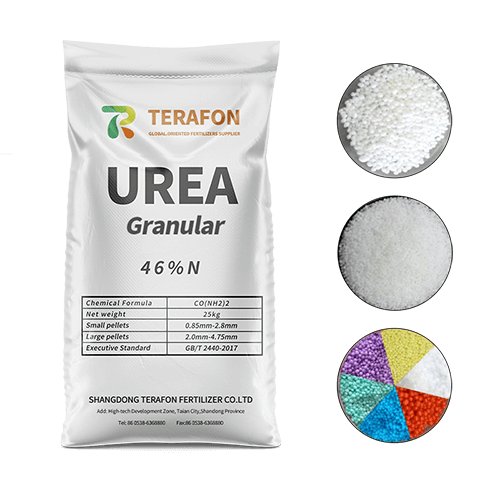
Urea Fertilizer
View Solutions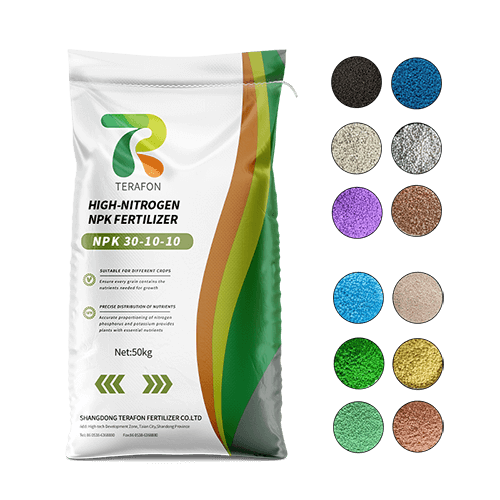
NPK Fertilizer
View Solutions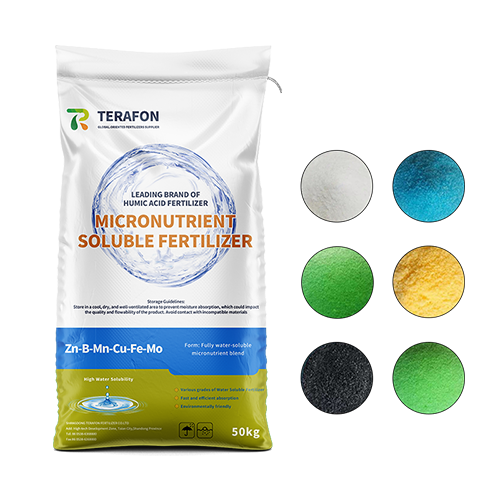
Water Soluble Fertilizer
View Solutions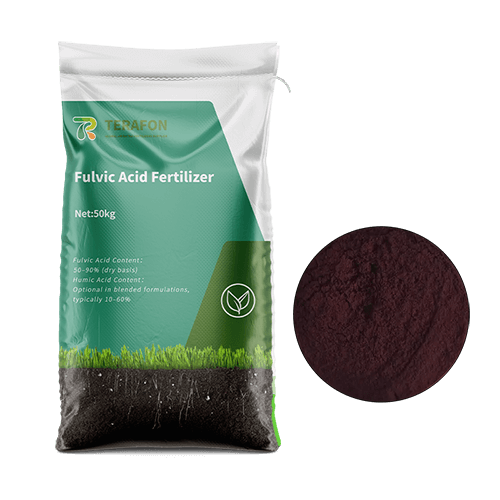
Fulvic-Acid-Fertilizer
View SolutionsSuitable Crops
Cereal Crops

Legume Crops

Root & Tuber Crops
Fruit Crops
Ammonium Sulfate & Ammonium Chloride for Efficient Crop Nutrition
Explore the benefits of ammonium sulfate and ammonium chloride fertilizers, designed to supply essential nitrogen while improving soil health. Contact our agronomy team for expert guidance and customized fertilizer solutions with Terafon Fertilizer to enhance crop growth and maximize yield.
