


- Home » Best Practices for Using Soluble NPK Fertilizer...
Best Practices for Using Soluble NPK Fertilizer in Hydroponics & Drip
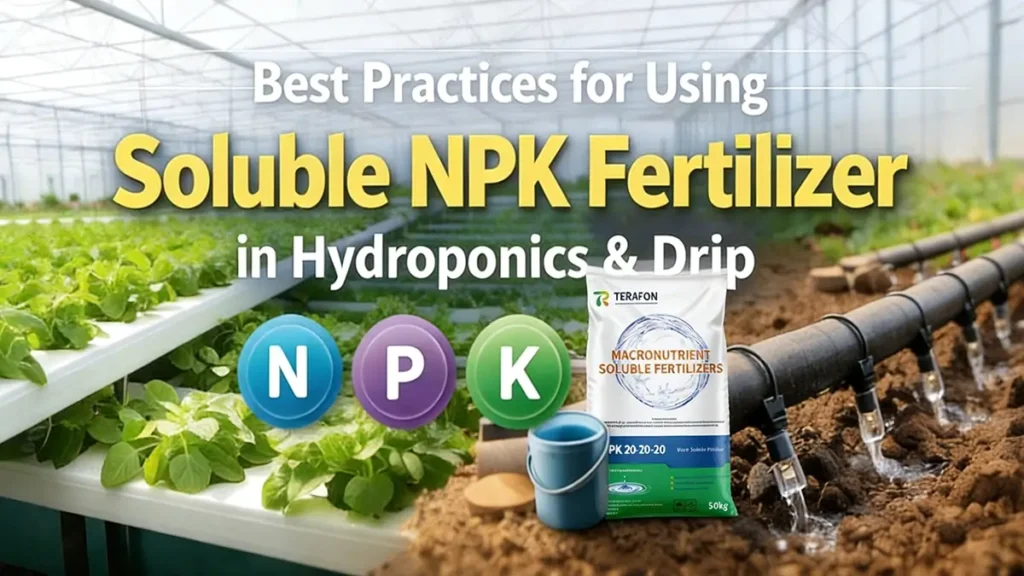
Water-soluble NPK fertilizer is a cornerstone of modern precision agriculture, especially in hydroponic crop production and drip irrigation fertigation systems. Fully soluble formulations allow rapid nutrient delivery, accurate N-P-K ratio adjustment, and improved nutrient use efficiency compared with traditional granular fertilizers.
As a manufacturer focused on advanced plant nutrition solutions, Terafon Fertilizer supplies high-quality water-soluble NPK formulations designed for hydroponics, fertigation, and high-efficiency crop production systems.
This comprehensive guide explains how to optimize water-soluble NPK fertilizer for hydroponics and drip irrigation, improve EC and pH stability, and maximize crop yield and nutrient uptake efficiency.
Table of Contents
- 1️⃣ What Is Water-Soluble NPK Fertilizer?
- 2️⃣ Advantages in Hydroponics and Fertigation Systems
- 3️⃣ Best Practices for Hydroponic Nutrient Solution Management
- 4️⃣ Using Water-Soluble NPK in Drip Irrigation
- 5️⃣ pH and EC Control for Maximum Nutrient Uptake
- 6️⃣ Common Challenges and Practical Solutions
- 7️⃣ Final Recommendations for Precision Fertilization
1️⃣ What Is Water-Soluble NPK Fertilizer?
Water-soluble NPK fertilizer refers to fully dissolvable compound fertilizers formulated for fertigation systems, hydroponic nutrient solutions, and foliar feeding applications. Popular formulations such as 20-20-20, 10-10-30, and 10-40-10 allow growers to adjust nutrient ratios according to vegetative, flowering, or fruiting stages.
Unlike conventional granular fertilizers, water-soluble NPK dissolves completely in irrigation water, reducing sediment formation and improving compatibility with drip irrigation systems and hydroponic reservoirs.
2️⃣ Advantages in Hydroponics and Fertigation Systems
Fully soluble nitrogen, phosphorus, and potassium are immediately available for root uptake, making water-soluble NPK fertilizer ideal for hydroponic vegetables and high-value horticultural crops.
Growers can adjust nutrient programs based on crop growth stage, ensuring balanced nutrition during vegetative growth, flowering, and fruit development.
Water-soluble fertilizers reduce leaching and uneven nutrient distribution, particularly in drip irrigation systems.
High-purity soluble formulations minimize emitter clogging and enhance fertigation reliability when combined with proper filtration.
In intensive greenhouse and controlled-environment agriculture, many growers rely on scientifically formulated products such as those offered by Terafon Fertilizer, where solubility, micronutrient balance, and stability are critical for consistent hydroponic nutrient solution performance.
3️⃣ Best Practices for Hydroponic Nutrient Solution Management
Hydroponic systems require careful monitoring of nutrient concentration, water quality, and solution balance.
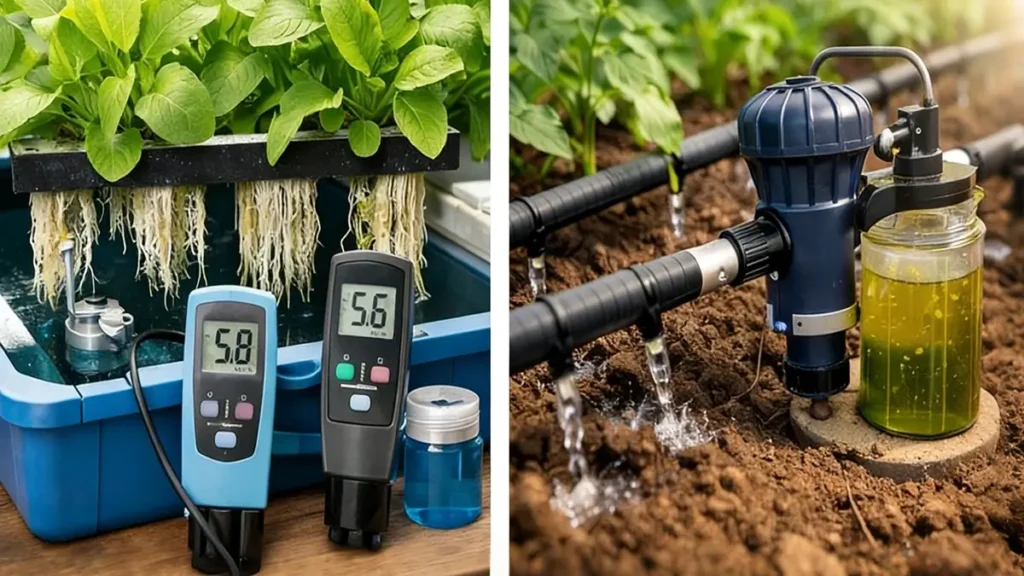
Before preparing a hydroponic nutrient solution, analyze irrigation water for bicarbonates, calcium, magnesium, and salinity levels. High alkalinity can affect phosphorus availability and pH stability.
Maintaining this pH range ensures optimal macro- and micronutrient solubility while preventing nutrient lockout.
EC management in hydroponics is essential for preventing salt stress and nutrient burn. Adjust EC according to crop type and growth stage to maintain balanced nutrient concentration.
In recirculating hydroponic systems, replace or rebalance nutrient solutions regularly to prevent salt accumulation and nutrient imbalance.
4️⃣ Using Water-Soluble NPK in Drip Irrigation
Drip irrigation fertigation delivers nutrients directly to the root zone, improving nitrogen efficiency and minimizing nutrient loss.
Ensure complete dissolution before injection and use high-quality filtration to prevent drip emitter clogging.
The “little and often” fertigation approach stabilizes root-zone nutrient levels and improves nutrient uptake efficiency.
High temperatures increase evapotranspiration and salt concentration in the soil. Regular soil EC monitoring is recommended.
Use nitrogen-rich formulations during vegetative growth and potassium-dominant ratios during fruit filling to enhance yield and crop quality.
For growers seeking consistent fertigation performance in open-field and greenhouse systems, manufacturers such as Terafon Fertilizer provide customizable water-soluble NPK formulations tailored to crop-specific nutrient programs.
5️⃣ pH and EC Control for Maximum Nutrient Uptake
Precise fertigation management depends on stable nutrient solution parameters:
- Monitor pH daily in hydroponic systems
- Adjust nutrient concentration gradually
- Prevent sudden EC fluctuations
Flush systems periodically to avoid salt buildup
Proper EC and pH control directly influences nutrient absorption efficiency and plant metabolic activity.
6️⃣ Common Challenges and Practical Solutions
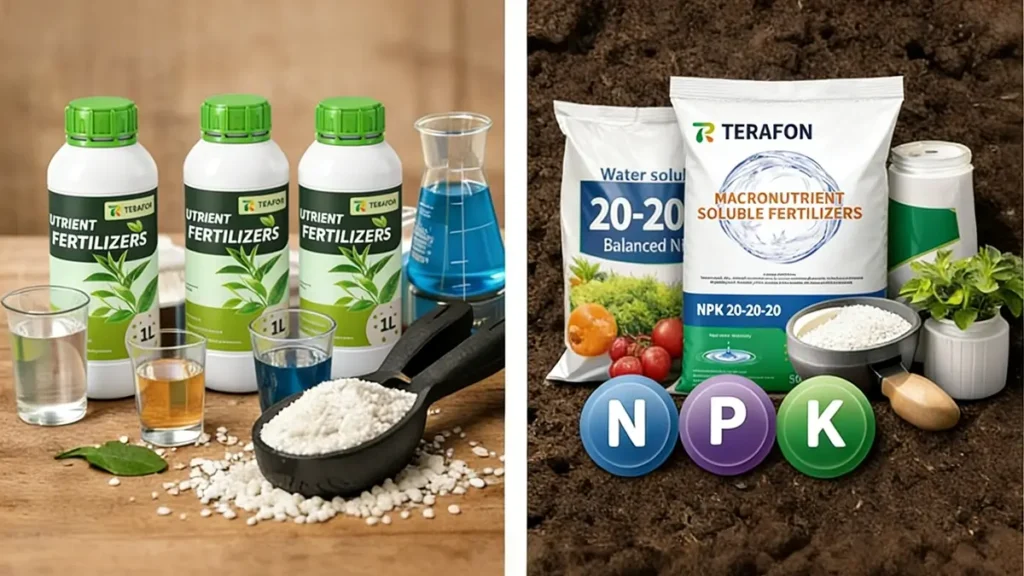
Use high-purity water-soluble fertilizers and maintain filtration systems.
Reduce fertilizer concentration if EC exceeds recommended levels.
Conduct periodic leaf tissue and soil analysis to refine fertigation programs.
7️⃣ Final Recommendations for Precision Fertilization
Water-soluble NPK fertilizer is essential for hydroponics and drip irrigation crop management. When integrated with accurate fertigation scheduling, proper EC monitoring, and growth-stage-specific nutrient ratios, growers can significantly enhance nutrient use efficiency, improve crop yield, and reduce fertilizer waste.
High-quality soluble formulations, such as those developed by Terafon Fertilizer, support modern sustainable agriculture by combining precision nutrition with advanced irrigation compatibility.
By implementing these best practices, producers can achieve stable crop performance, optimized nutrient delivery, and long-term soil and system health in both hydroponic vegetable production and drip-irrigated field crops.
Frequently Asked Questions (FAQ)
Balanced formulations like 20‑20‑20 + TE support general growth, high phosphorus ratios (e.g., 10‑52‑10) promote early development, and high potassium formulas (e.g., 15‑5‑30) are ideal for fruiting. Adjust ratios based on crop stage and plant needs.
Yes. Even fully soluble fertilizers may form fine particles. Use proper filtration and ensure complete dissolution before injection to prevent emitter blockage and maintain consistent nutrient delivery.
Maintain pH between 5.5–6.5 for most crops and adjust EC according to growth stage. Regular monitoring ensures optimal nutrient uptake and avoids salt stress or nutrient deficiency.
Absolutely. These fertilizers dissolve completely in water, allowing precise nutrient control for hydroponic systems, drip irrigation, and greenhouse crops.
Typical problems include emitter clogging, nutrient burn from high EC, and imbalance in nutrient ratios. Solutions include proper filtration, correct concentration, and routine pH/EC monitoring to maintain optimal crop nutrition.
Related Articles
Recommended Fertilizers
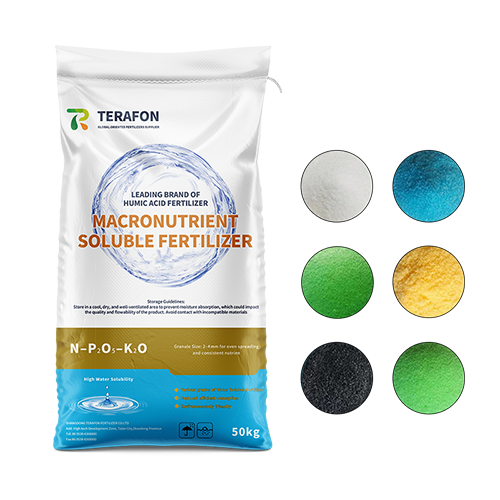
Macronutrient Soluble fertilizer
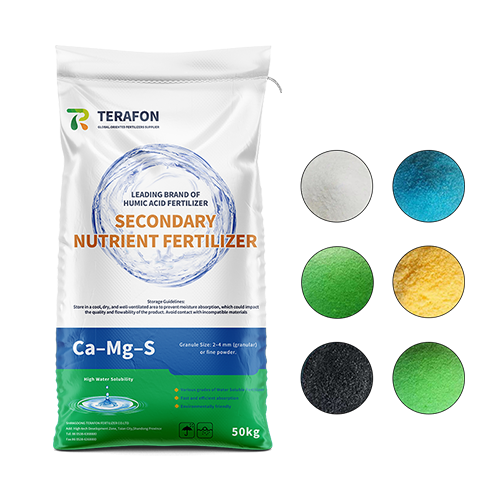
Secondary-nutrient-fertilizer
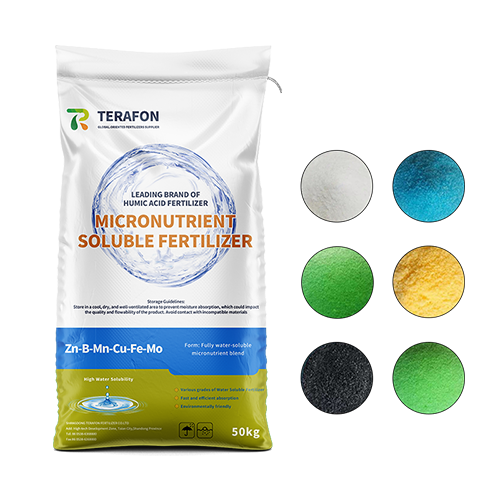
Micronutrient-Soluble-fertilizer
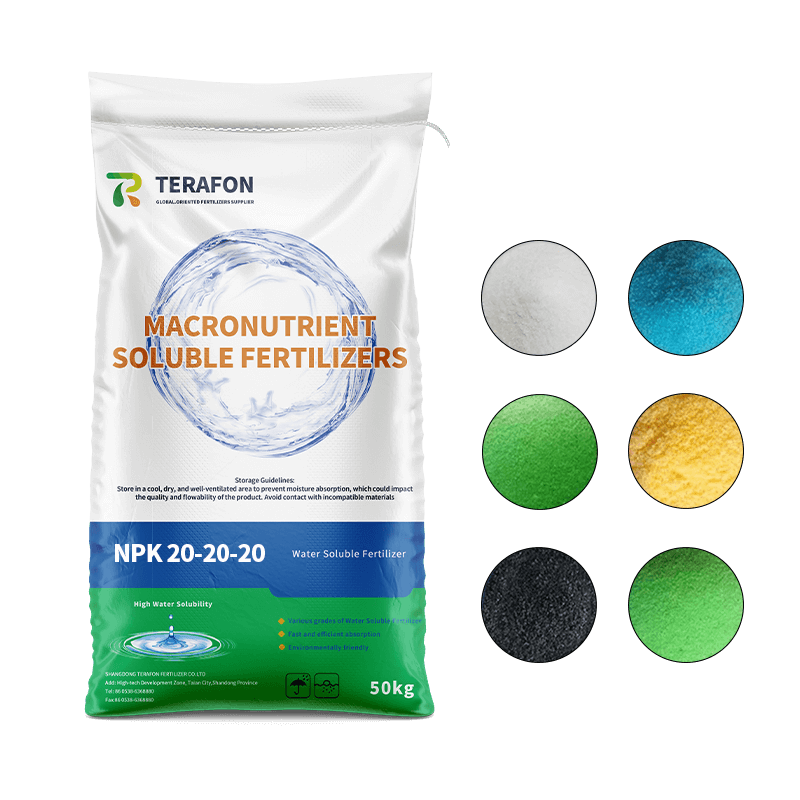
NPK 20-20-20 Soluble Fertilizer
Suitable Crops
Fruit Trees

Berry & Vine Crops
Leafy & Fruiting Vegetables

Root & Bulb Vegetables
Water-Soluble NPK Fertilizers: Efficient Crop Nutrition
Apply water-soluble NPK fertilizers via drip irrigation, fertigation, or hydroponics to boost nutrient uptake, root growth, and crop yield. Terafon Fertilizer provides high-quality solutions for sustainable, efficient crop nutrition.
