


- Home » Organic Amino Acid Fertilizer: Powder vs...
Organic Amino Acid Fertilizer: Powder vs Liquid Explained
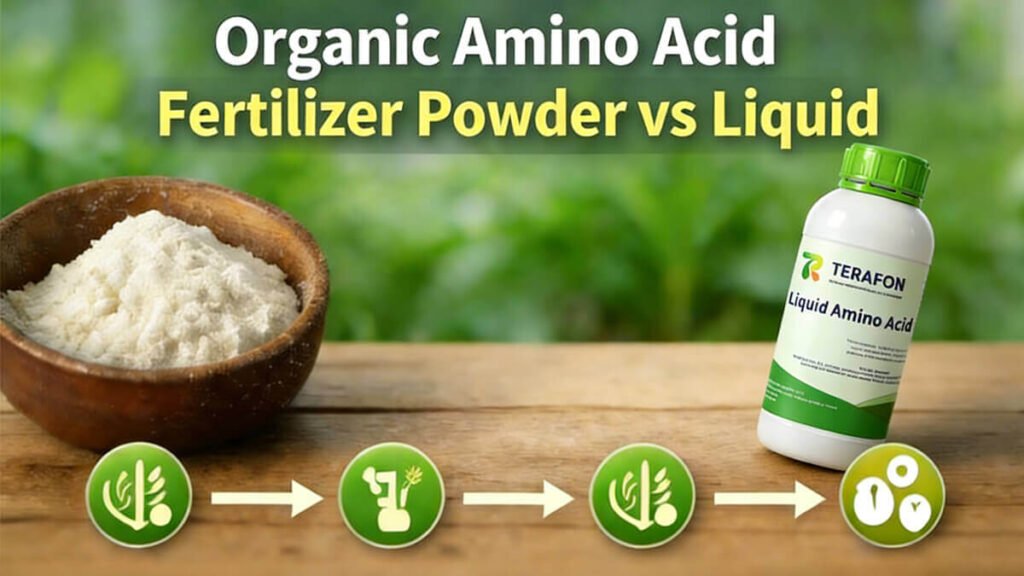
In modern sustainable agriculture and precision crop nutrition programs, organic amino acid fertilizers have become an increasingly important input for improving nutrient efficiency, enhancing stress tolerance, and supporting healthy plant development.
Leading manufacturers such as Terafon Fertilizer continue to invest in advanced protein hydrolysis and formulation technologies, helping growers integrate amino acid fertilizers into balanced and efficient fertilization strategies.
Currently, the market mainly offers two product forms: amino acid fertilizer powder and Liquid amino acid fertilizer. While both deliver similar biological benefits, they differ significantly in nutrient concentration, application methods, absorption speed, and cost efficiency. Understanding these differences is essential for making informed agronomic decisions.
1. What Is Organic Amino Acid Fertilizer?
Organic amino acid fertilizer is produced through enzymatic or controlled hydrolysis of plant-based or microbial proteins. The process releases free amino acids and small peptides, which can be directly absorbed and utilized by plants without additional metabolic conversion.
Unlike conventional mineral fertilizers, amino acid fertilizers function not only as nutrient sources but also as biostimulants, supporting enzyme activity, protein synthesis, and hormone regulation. This dual role makes them particularly valuable for improving fertilizer use efficiency and promoting stable crop growth under diverse environmental conditions.
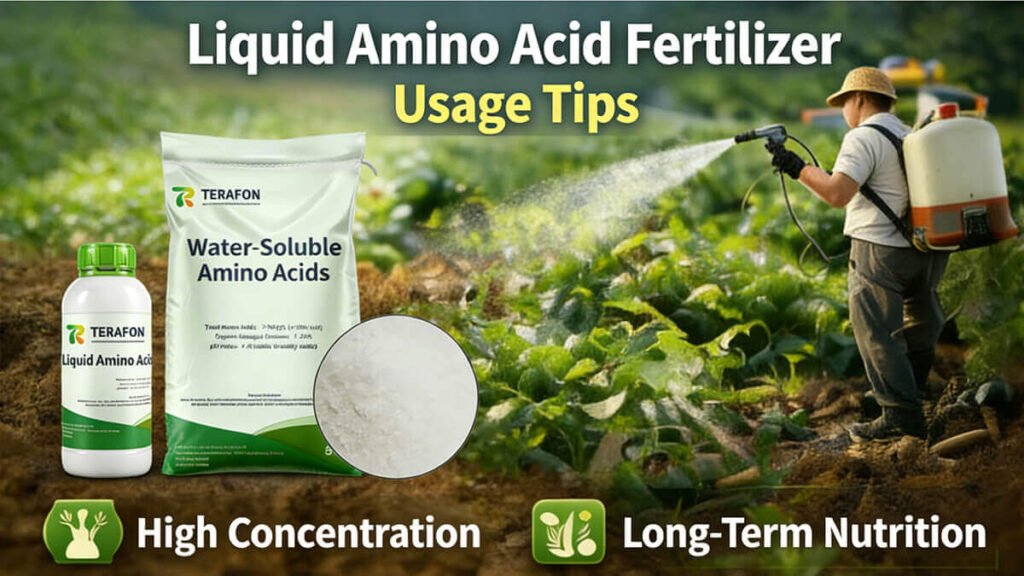
2. Characteristics and Applications of Organic Amino Acid Fertilizer Powder
Key Characteristics
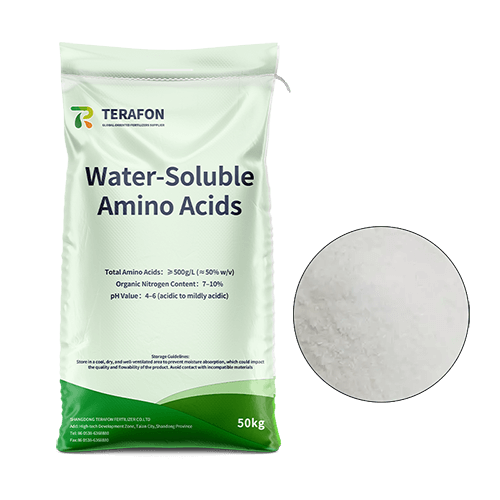
- High amino acid concentration: Powder formulations typically contain a higher percentage of total amino acids, making them suitable for intensive nutrition programs.
- Flexible formulation compatibility: Easily blended with water-soluble NPK fertilizers, micronutrients, and trace elements.
Superior storage and transport stability: Long shelf life and lower logistics costs compared to liquid products.
Common Application Scenarios
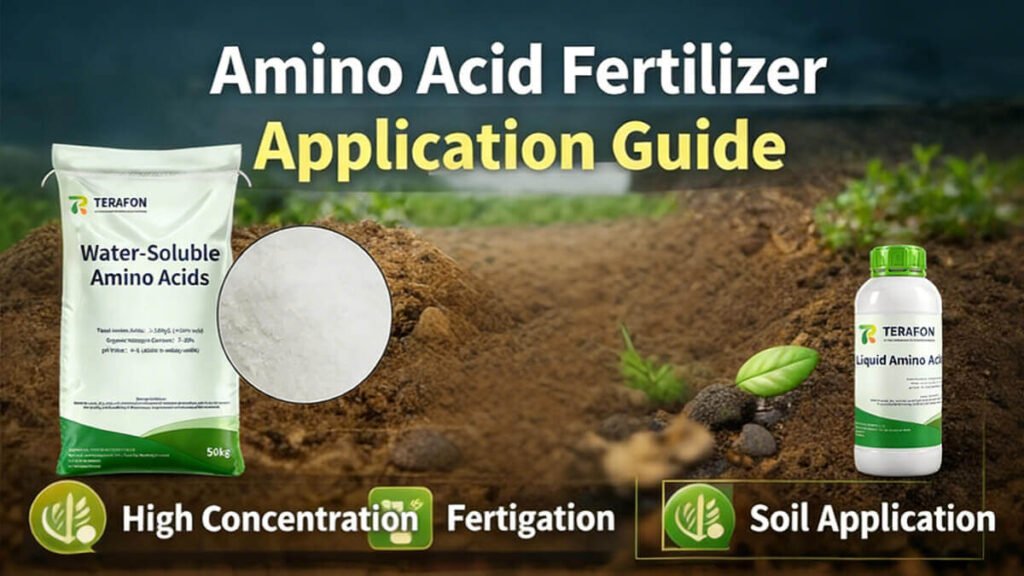
Organic amino acid powder fertilizers are commonly applied through soil drenching, fertigation, drip irrigation systems, and basal fertilization, especially for field crops, orchards, and long-season cultivation.
3. Characteristics and Applications of Organic Amino Acid Liquid Fertilizer
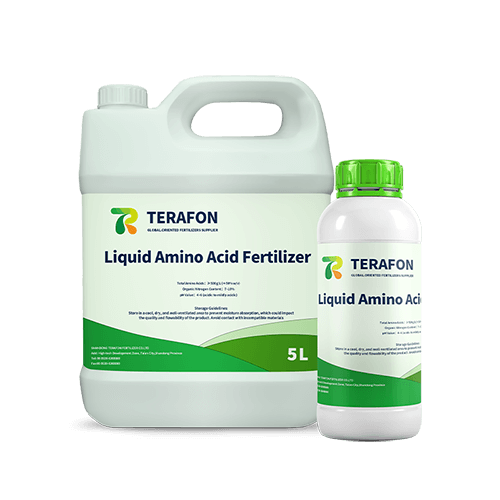
Liquid amino acid fertilizers are valued for their convenience, rapid absorption, and precision application capabilities.
Key Characteristics
- Fast nutrient uptake: Dissolved amino acids can be absorbed quickly through leaves or roots.
- Multiple application methods: Suitable for foliar spraying, fertigation, and root-zone application.
- Effective stress mitigation: Helps crops recover rapidly from drought, heat stress, salinity, or transplant shock.
Common Application Scenarios
Liquid amino acid fertilizers are ideal for foliar feeding, greenhouse crops, fruit enlargement stages, and stress-recovery treatments, where immediate physiological response is required.
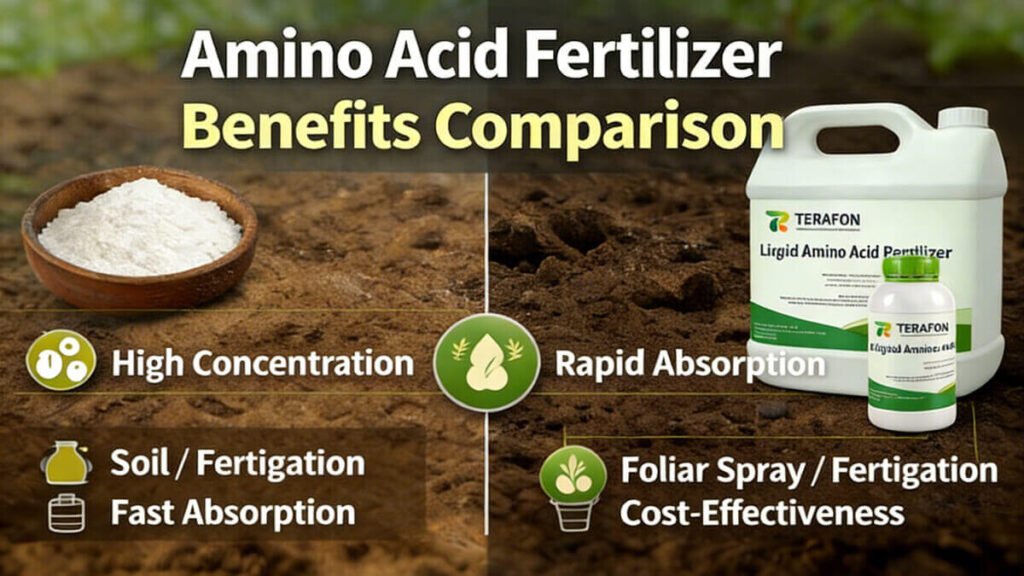
4. Systematic Comparison: Powder vs. Liquid Amino Acid Fertilizers
Nutrient Content and Concentration
Application Flexibility and Crop Adaptability
Absorption Speed and Agronomic Response
Storage, Transportation, and Cost Efficiency
From a logistical perspective, powder products are more economical to store and transport. However, for high-value crops and intensive production systems, liquid amino acid fertilizers often deliver superior return on investment through improved crop uniformity and quality.
5. Selection Recommendations for Different Crops and Growing Conditions
Choosing the appropriate form of amino acid fertilizer should be based on several factors:
- Crop type and growth stage
- Need for rapid nutrient supplementation
- Available application equipment (sprayers, drip irrigation systems)
Cost control and management objectives
6. Conclusion
Choosing the appropriate form of amino acid fertilizer should be based on several factors:
- Crop type and growth stage
- Need for rapid nutrient supplementation
- Available application equipment (sprayers, drip irrigation systems)
Cost control and management objectives
In practice, many growers combine powder and liquid amino acid fertilizers to achieve both long-term nutritional support and short-term physiological enhancement, a strategy increasingly recommended by professional agronomists and suppliers such as Terafon Fertilizer.
7. Frequently Asked Questions (FAQ)
Q1: Which amino acid fertilizer is more suitable for foliar application?
Liquid amino acid fertilizers are generally preferred for foliar spraying due to faster absorption and ease of dilution.
Q2: Can amino acid fertilizer powder be used in drip irrigation systems?
Yes, provided it is fully dissolved and properly filtered to prevent emitter blockage.
Q3: Are organic amino acid fertilizers compatible with organic farming systems?
Many plant-based or fermentation-derived amino acid fertilizers align with organic agriculture principles, subject to certification requirements.
Yes, combining both forms can optimize nutrient efficiency by supporting immediate crop needs while maintaining long-term soil fertility.
Table of Contents
- 1. What Is Organic Amino Acid Fertilizer?
- 2. Characteristics and Applications of Organic Amino Acid Fertilizer Powder
- 3. Characteristics and Applications of Organic Amino Acid Liquid Fertilizer
- 4. Systematic Comparison: Powder vs. Liquid Amino Acid Fertilizers
- 5. Selection Recommendations for Different Crops and Growing Conditions
- 6. Conclusion
- 7. Frequently Asked Questions (FAQ)
Trending News
Recommended Fertilizers
Water-Soluble-Amino-Acids
Liquid-Amino-Acid-Fertilizer
Liquid-Seaweed-Extracts
Granular-Seaweed-Fertilizer
Suitable Crops
Cereal Crops
Legume Crops
Root & Tuber Crops
Fruit Crops
Choose the Right Amino Acid Fertilizer for Your Crops
Select an appropriate amino acid fertilizer based on crop type and growth stage to enhance nutrient uptake, improve stress tolerance, and support healthy yields. Contact Terafon Fertilizer for expert guidance and customized solutions.
